
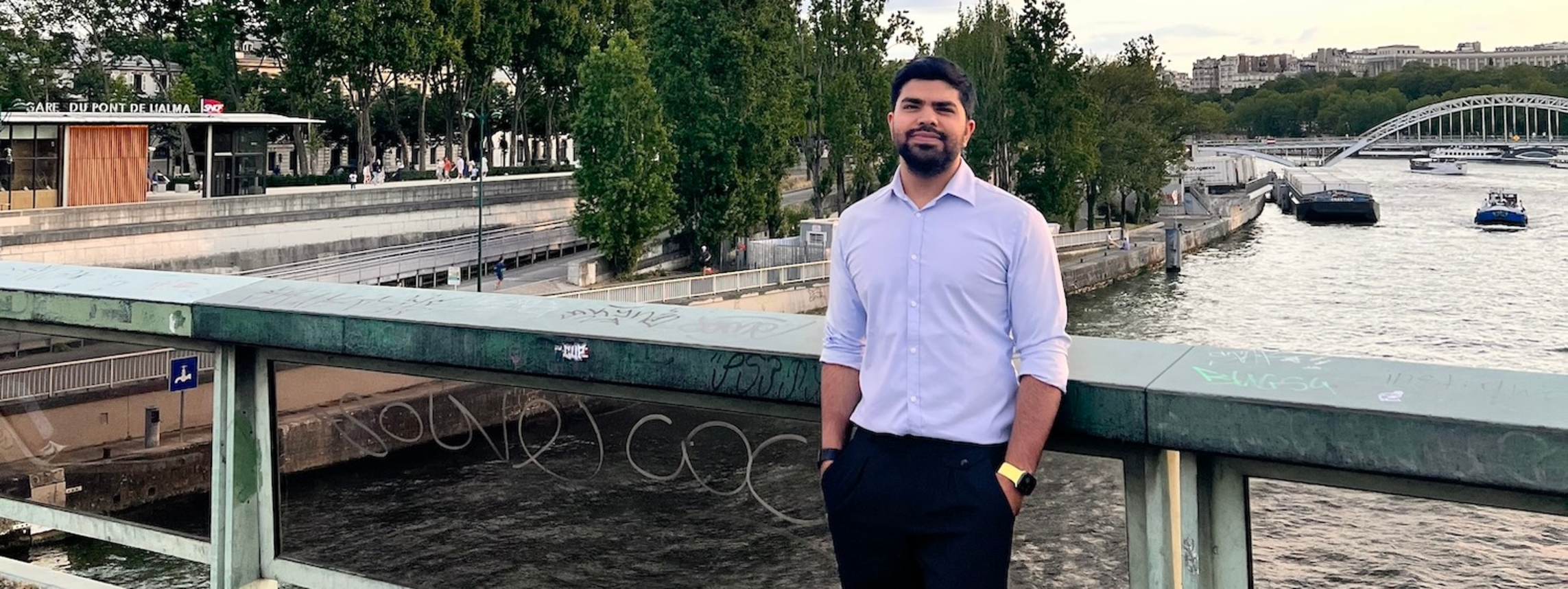
Surviving an 11,000-volt electric shock – How Sajan lost his legs and is now thriving
At just nine years old, Sajan experienced a life-altering accident when he received an 11,000-volt electric shock — enough power to illuminate an entire street. It was miraculous that he survived, but the shock left him with severe injuries. Two of his fingers were instantly burned away, and his legs caught fire, ultimately leading to the amputation of both legs above the knee.
Despite the challenges of growing up with a physical disability in India, Sajan showed remarkable strength and determination to overcome both physical and societal barriers. His life-changing injuries didn't stop him from studying hard and finding his passion for fitness, which led to huge improvements in his prosthetic control, mobility, balance, and overall quality of life.
Now, he's thriving in his career at Amazon and as an adaptive boxer in London. Sajan's story is truly empowering.
You can watch the full interview here, or continue reading a summary of our conversation below.
"If you see these legs, they tell you a story; if you see my scars, they tell you a story; and half of my burned body under my clothes tells you a story. It's a story of insurmountable pain and suffering, a story of tragedy. But if I had one chance to go back and change my life so that I didn't go through this — I wouldn't. I would still choose this path and this disability." – Sajan Seshdeva.
The accident
Sajan grew up in the small town of Jalandhar, India, and recalls the day of his accident. He finished school early and was playing in his father's industrial yard when he accidentally touched an electricity cable. The shock was immediate — he lost two fingers as sparks ignited the grass and set his legs on fire.
"To put it into perspective, 11,000 volts is enough to light up a large residential complex," he explained. "I later learned that if I had touched the cable with my left hand, the current would have passed through my heart, and I would have died instantly." Remarkably, he was the seventh person to be electrocuted from that exact spot — and the only one who survived.
Waking up to amputation
Sajan didn't wake up in the hospital until five days after the accident. His chances of survival were incredibly slim, and he remembers being aware of that, purely in survival mode. Twenty-one days later, doctors decided to amputate his legs, though Sajan wasn't told in advance.
This part of his story is particularly hard to hear. He was given anaesthesia, thinking it was just time for his medication. His next memory was waking up in bed.
"I told my mom I was feeling very hot and asked her to take the blankets off," he recalled. "She said, 'Promise me you won't cry if I do.' I said, 'Okay, I won't cry — just take these blankets off.'"
"When she removed them, I started feeling around, trying to find my legs. But I quickly realised they weren't there. And as promised, in that moment, I didn't cry."
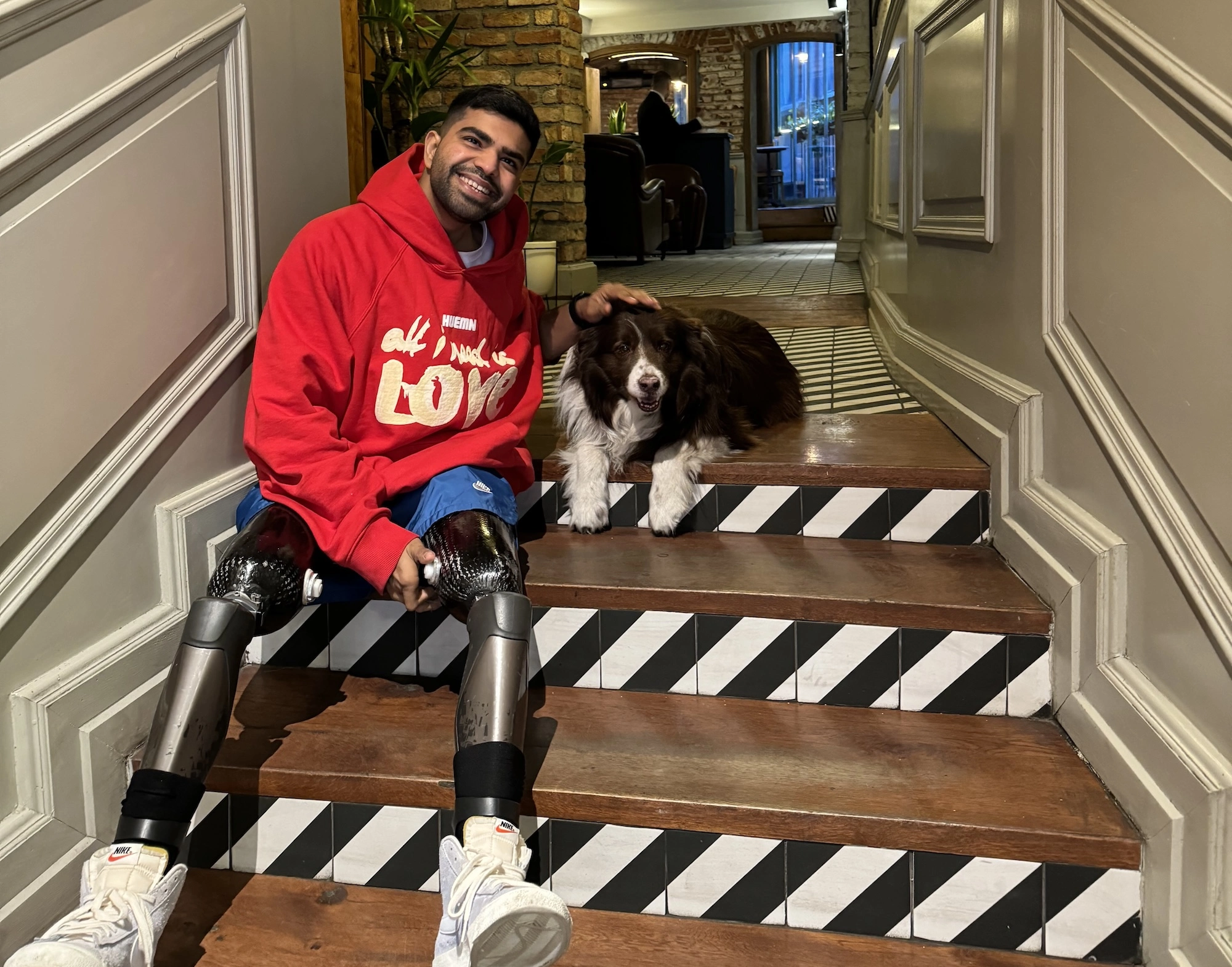
Tough love & learning to adapt
During his recovery, Sajan was dependent on others for even the most basic tasks. He was bedridden, frustrated, and often angry. "I was a rebellious kid," he admits. "I would throw things and lash out because I hated not being able to move."
Then came a pivotal moment. One day, he asked his mum for a glass of water. She was busy and didn't respond immediately, so he shouted in frustration. Her response was unexpected but powerful: "Why can't you get it yourself? You don't have legs — but you have hands."
Sajan grabbed a pillow, lowered himself onto the floor, crawled to the kitchen, pulled himself up, and poured a glass of water. "I wasn't trying to be innovative — I was just being stubborn. But when I finally got that water, I understood what my mum meant. It was a liberating moment I'll never forget."
That experience shaped his mindset moving forward. "It became my template. Don't overthink. Just move toward your goal and figure it out along the way — there's usually a solution."
Advice to others after amputation
Sajan has learned many life lessons, and one of the most significant is that no barrier, physical or emotional, has honestly stopped him.
"There isn't a single thing that has been able to stop me," he says. "I don't say this out of arrogance; it's rooted in honest humility from lived experience. God gives you the strength and the means to figure things out. Discovering those solutions holds tremendous power."
He's faced obstacles — inaccessible spaces, social judgment, and unsolicited opinions. "There hasn't been anything I've wanted to do that I haven't been able to do because of my amputation."
As a teenager, he struggled with confidence and body image. "I used to cover up even in summer because I didn't want people to see my legs. Now? I walk around airports and fancy places in shorts — and say, 'My legs are sexier than yours!' It's my fashion statement."
Sajan encourages others to embrace themselves fully. "There's this beautiful quote from Tyrion Lannister in Game of Thrones:
'Never forget what you are. The rest of the world will not. Wear it like armour, and it can never be used to hurt you.' That's exactly how I see it. Embrace yourself. Love yourself. That's where your true strength lies."
Fitness and sport
Sajan's fitness journey began in 2016, during a visit to the Golden Temple in Amritsar. He couldn't complete a single loop of the temple without exhaustion. He'd gained weight, was dealing with socket chafing, and didn't feel comfortable in his own body.
"It didn't make sense — I was 23 and struggling to move. That's when I knew I had to work on myself."
Without role models or fitness influencers with limb loss to look to, he started from bed, doing stretches and using light dumbbells. Over time, his confidence and abilities grew.
"I just kept telling myself, 'I can do more. I can try that.' One day, in a group class, the coach said we were doing deadlifts. I didn't think I could — but I gave it a go. And after practice, I achieved it. Something I never imagined was possible."
He didn't train his lower body for over a year, not realising how it could help with prosthetic use. Once he did, everything changed. He could walk longer, wear his prosthetics more comfortably, sit without back pain, and began to enjoy wearing them.
"Before fitness, wearing my legs all day felt like a chore. But once I got stronger, I started enjoying life with them."
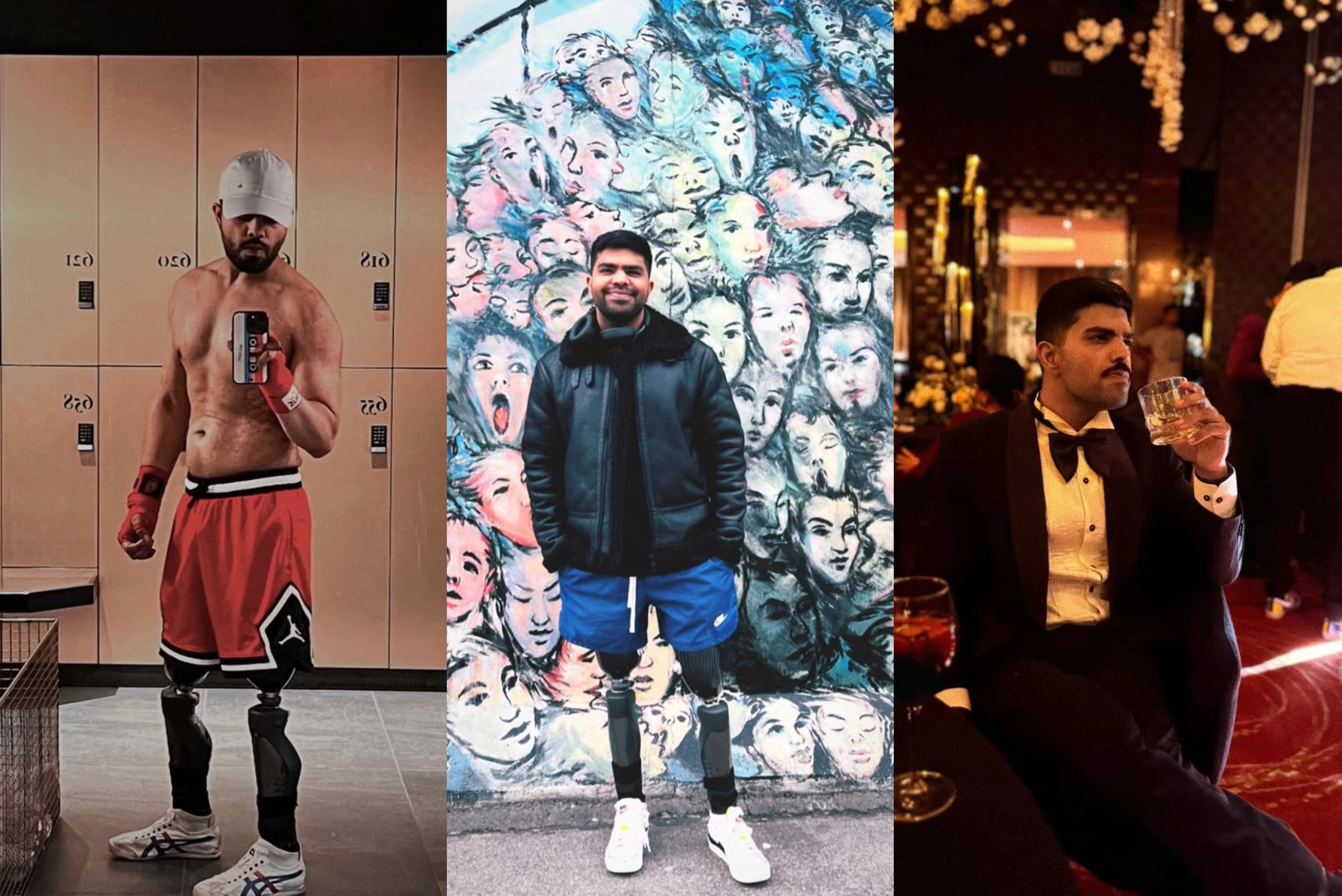
Adaptive boxing
Sajan took up boxing a couple of years ago — by accident, really. He signed up for a class and was amazed by how quickly he took to it.
As a kid, boxing just meant standing in his wheelchair and punching a bag. But as an adult, it became about adaptation. "I realised I just had to figure it out. That's shaped my whole life."
Boxing wasn't easy at first — throwing punches knocked him off balance. So he developed his own technique: "I can't throw quick combos like others, or I'll lose stability. So I focus on defending, stabilising my core, and landing fewer, harder punches."
Boxing boosted his core strength, gave him confidence, and helped him feel more in control. "Core is everything for amputees. Boxing helped me find that balance."
He's now training at an advanced level and is often the only amputee in the group. "Sometimes people go easy on me, but I go full swing. It's better for my training."
Marriage and love
Sajan recently got married, and the wedding was a big, colourful Indian celebration. When I asked how married life was going, he smiled.
"It's been fun. My wife is really supportive — and very funny." It was an arranged marriage, and he admitted that bringing up his disability had always been a fear, even since childhood. "I used to worry — would I be accepted? Am I enough?"
But when he told her he didn't have legs, her beautiful response was:
"The way I see it, we complete each other."
"I was sold," he laughed.
Words to his younger self
To close our conversation, I asked what advice he'd give to nine-year-old Sajan, lying in the hospital after the accident.
He thought for a moment and then said, "Don't live in fear or anticipation. Sometimes, God has even better plans for you than what you imagine for yourself. I spent too much time worrying about the future — about success, validation, and proving myself. But life unfolds in ways we can't predict - enjoy and embrace your uniqueness."
Thank you Sajan. If you would like to follow Sajan's journey you can find him on Instagram (here).