
Going out on a limb: Living life as an amputee
Squirrels are quite the acrobats among the high branches of the trees. They can walk carefully out on a limb of the tree. Just as they feel the branch wavering precariously, they fling themselves outward and attempt to land upon the bird feeder on top of a post nearby. If they don’t quite make it, they jump up and scamper back up the trunk of the tree to have another go at it. It’s like watching a circus act, only there’s no wires or safety net. If they finally land atop the bird feeder, then they delight in chowing down on all of the seed available to them. A buffet of edible and tasty treats beyond the usual peanuts that humans toss their way.
After losing my lower left leg and foot to cancer back in 2010, I realized how daunting it suddenly felt to see all of the challenges in front of me. For six months I was hopping around on the ‘good’ leg with a walker or in the wheel chair. My limitations were obvious and extremely frustrating.
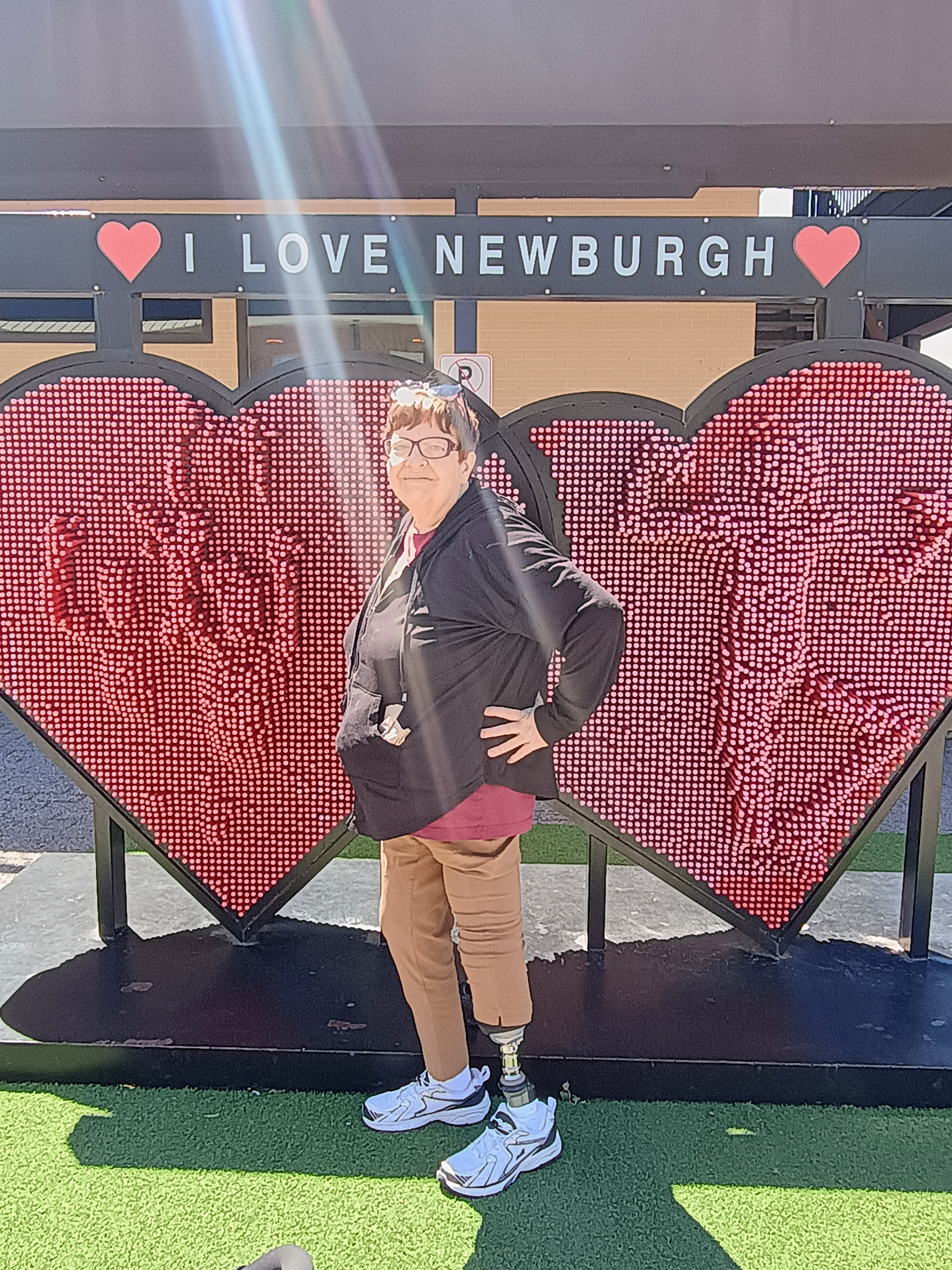
Then came the first time I put on my very first prosthetic leg and stood up to take my first step forward. This conglomeration of metal and hard socket felt like somebody put a weight around my foot. Only that foot was no longer there.
“Wow, this is heavy,” I exclaimed to my prosthetist.
To which he slightly smiled and said, “It’s only 3 and a half lbs.”
Yeah, right. Only a couple of pounds. To me, it was like wearing heavy winter boots and stomping through heavy, wet snow.
Being a below-the-knee amputee has its hurdles to jump daily. I feel like I am balancing every so delicately on my prosthetic, aka “peg-leg” to the two-legged freaks, in an attempt to reach a destination with a reward I’m supposed to look forward to once I’ve accomplished reaching it.
Instead of hanging out on a limb like my squirrel friends, I am literally relying on all the muscles above the knee to move me forward, backward and side-to-side. Learning to walk took a while. It was not an overnight success. And it wasn’t without pain and tears.
In the summer of 2010, I was diagnosed with synovial sarcoma cancer in my left foot and ankle. I was told I would need an amputation as soon as possible; like yesterday according to the doctors. It had spread up past my ankle and was climbing further up the leg.
After the surgery, I read the doctor’s notes. They had to go way up and only leave 8 inches of bone and skin below my knee. This was so they could get clear margins to hopefully keep the cancer from spreading. This kept me alive, and I have these doctors to thank for their hard work.
Every time I need a new socket, foot or other spare parts to replace the worn and no longer fitting ones, I have to drive over an hour to my orthopedic surgeon who originally did the amputation to see him in order for him to write out a prescription for these parts. Medicare insurance requires that we see each other face-to-face regardless of how many years its been that we’ve been doing this whole journey.
No one wears the exact same leg for the rest of their lives. We gain, lose volume or weight or both. We have skin or bone issues. We can also throw off our spines and hips and knees and mess everything up just by walking.
Proper fit and comfort are vitally important in order to have a good quality of life. No one wears the same socket and foot forever, at least in our case, as amputees.
One of the most frustrating things about insurance for prosthetic parts is that the government goes by what they think you need, not your actual needs.
I remember my first leg was awful. The foot and ankle were like walking with a boot cast on it. Uncomfortable, challenging on any surface, especially grass and rocks. My skin was constantly rubbing and causing friction.
Then I would develop blisters. When an amputee develops blisters, it means leaving off the leg until the skin heals.
Most of us do not have time to waste sitting around and doing nothing. We may live by ourselves or have to do most everything for ourselves. Once we get used to wearing and walking in a new leg, we don’t want to stay put and be forced to slow down.
But, if we don’t it could lead to very serious infections and maybe even sepsis.
I’ve been wearing a leg for about 15 years now. However, finding a really good fitting socket has been an ongoing challenge for both my prosthetist and me. I tend to swell at any given moment due to no lymph nodes left in the groin area. I have edema in that thigh, but it also affects my lower stump area.
I only wish there were the immediate technology covered by insurance to make a socket that fluctuates automatically as my stump fluctuates. I’m sure its being considered, but would insurance cover it?
My ankle and foot on the prosthetic allows me to move and walk as close to normal as possible. I can walk with more confidence and feel safer when I can automatically feel and determine my stride as I walk on many surfaces.
Although, steep hills and ramps are still out of the question. I’m not a mountain climber, just a middle-aged woman who just wants to get to point B from point A.
Going back to the day I had my amputation; I was up and hopping around with a walker the next day after it. The PT guys tried to teach me to get on the floor and get back up. I think that was a failure.
I couldn’t hop backwards up any steps or stairs either. My brain just screamed NOPE! I landed on my bottom a few times… I was in a wheelchair most of the time. I did have PT come to where I was staying at a friend’s house to do physical therapy with me.
Hopping around on the good leg ruined the knee on that leg and I will eventually have to have a replacement knee surgery in the future.
In between that I was also doing chemotherapy. One week in the hospital and two weeks back home. Four separate times. I was so sick and exhausted.
Just trying to get to the bathroom to pee before I wet myself was the epitome of my struggles with all the wires and being connected to a beeping machine that I wanted to shove out a window just to have peace and quiet.
After leaving my friend’s house, I went to stay for awhile with my mother. Tried maneuvering around and almost tripping on all of the throw rugs she had in front of every doorway and piece of furniture in her house.
The visiting nurse told her to take them up so I wouldn’t fall.
If you know my mother, she wasn’t having anyone tell her what to do. It was her house, her things, and her decision. She was born with a mean streak a mile long.
Being at the mercy of so many people really, really sucked. Yup. I got tired of the drama, trauma, and anything that triggered my fears of being helpless.
I hated not being able to do things for myself. I hated being told by others to be ‘positive’, ‘smile’, and have gratitude and be thankful.
Okay, sure. You try to attempt hopping around on one leg then we’ll talk.
Never tell someone going through it daily as they deal with cancer, amputation and trauma that they’re a trooper and a survivor. We absolutely hate those terms after a while. We are more than that. More than an illness. More than a disability.
I still have my brain and intelligence and use it. I think I do pretty well with it.
Driving. Let me tell you. I couldn’t wait to drive again. I was ready to run out of my mother’s house and drive everywhere—away from her and her antics.
She hated that the attention was on me for once and complained about how no one asked how she was doing and that she hated me and my cancer. People did ask. It is just that all of the attention wasn’t on her.
I spent my life being stuffed into a corner and taught to be quiet and not make a fuss. I see now how this made me so physically ill because of the mental stress I grew up with. Chronic stress. Chronic illness.
Falling. My fear and nightmare. Stairs are right up there, literally and figuratively!
The last time I had a major fall was last October while walking outside and stepping off a curb to walk to my vehicle. I suddenly felt like I stepped on something like a rock or pebble and suddenly started wavering.
I felt my balance go away as I spun and fell, landing on my right hand and wrist. I felt and heard the bones snap. I laid there for a moment until I saw someone come out the front door.
I pleaded for help because I couldn’t get up. I needed both hands to accomplish it and I was down a hand at the moment.
Surgery, rod and cast kept me from being able to do many things like driving, using a can opener or even pulling my pants down and back up in the restroom.
Doing everything with one hand made me appreciate that I still had both hands and at least the right foot.
Before that, I had slipped on a kid’s toy in the store and did the splits, blowing out the right knee on the good leg. This was during Covid.
I sat at home for two solid months. I was by myself, so I had to figure out how to do whatever I needed to do with this huge brace on my leg.
No sleep, no rest. Couldn’t get comfortable at all.
I’m glad that I survived that whole disaster. But my nervous system still remembers it like it just happened.
Yes—I make it look easy most days. But it is far from easy.
I have good days. Then there are days that I want to just succumb to an electric wheelchair or scooter. I can’t afford one, but I am at that point where a small, lightweight one that fits into the back of a vehicle would definitely be a blessing. Plus, a way to get it inside the back without lifting it myself.
For now, I do not have a vehicle so no worries!
Next, I will break down each of the situations I have faced while navigating how to live as an amputee. I will also share the challenges I have overcome and the new skills I have accomplished.
Nothing has been easy. Everything has been trial and error. The adventure keeps changing and the outcome is not known.
Let’s go out on a limb and venture out to the world of an amputee living with a disability.
Words by our Movao Champion Kim Ousley 💛
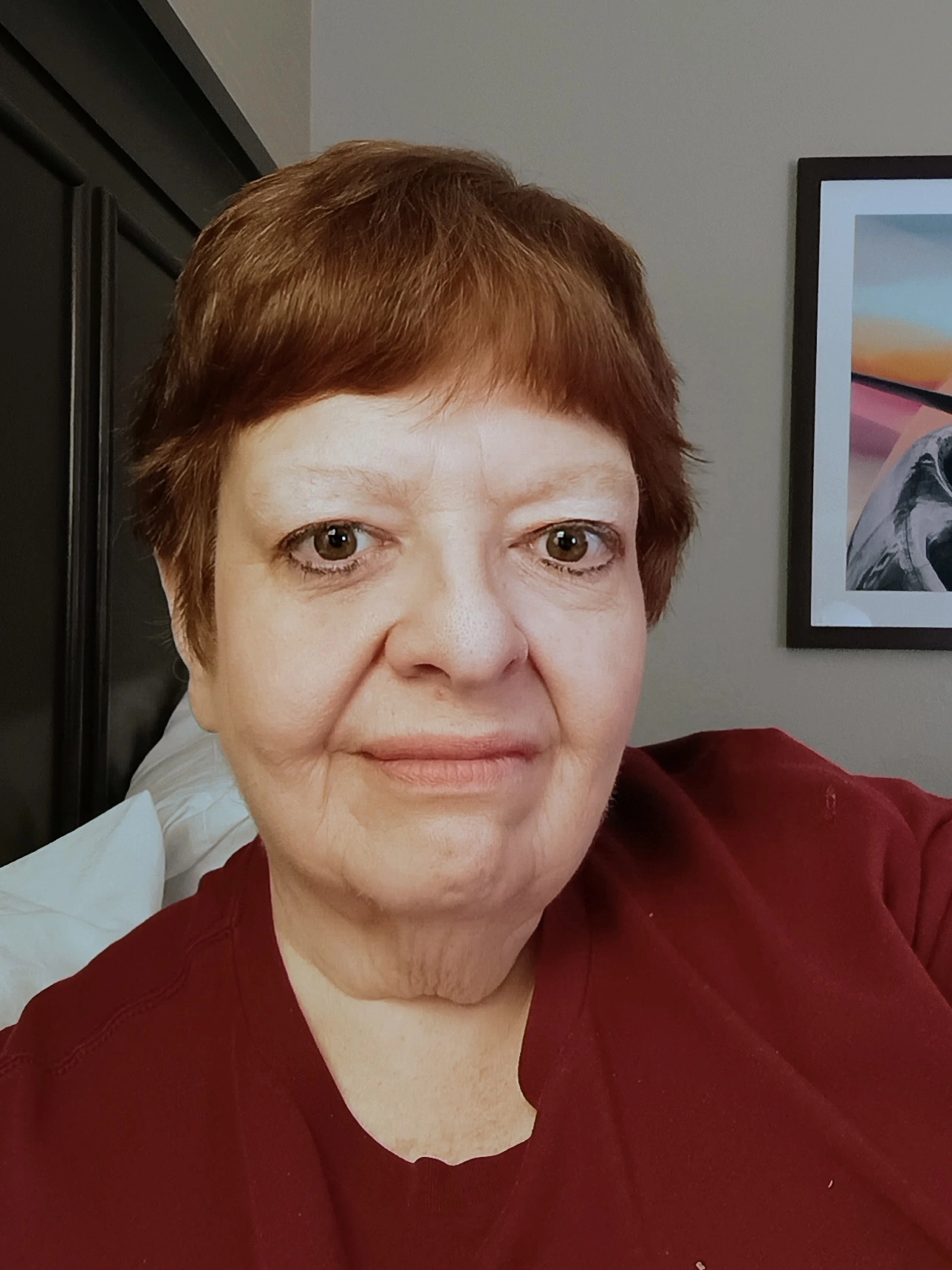
If you’d like to connect with Kim, do reach out and say hello — our community is built through sharing real stories, lived experiences, and supporting one another through the highs and lows of our journeys.