
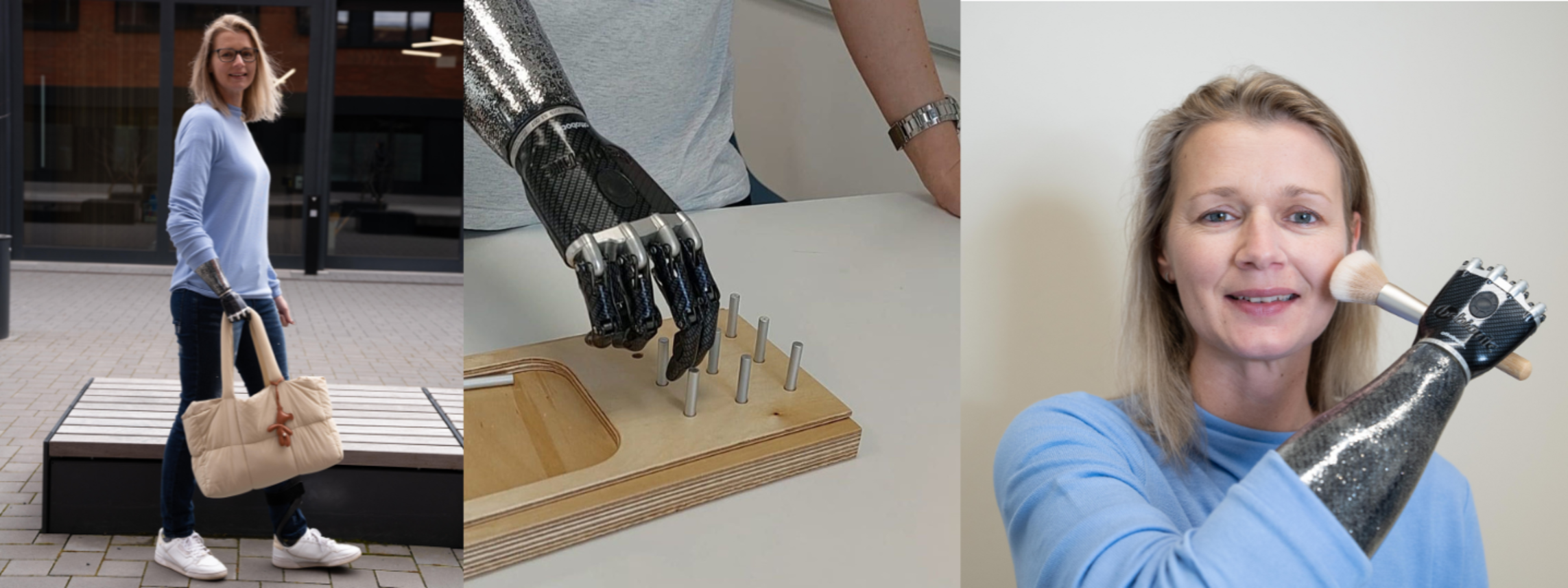
Impossible? That’s not a thing
I am Katja, 42 years old, and this is my story.
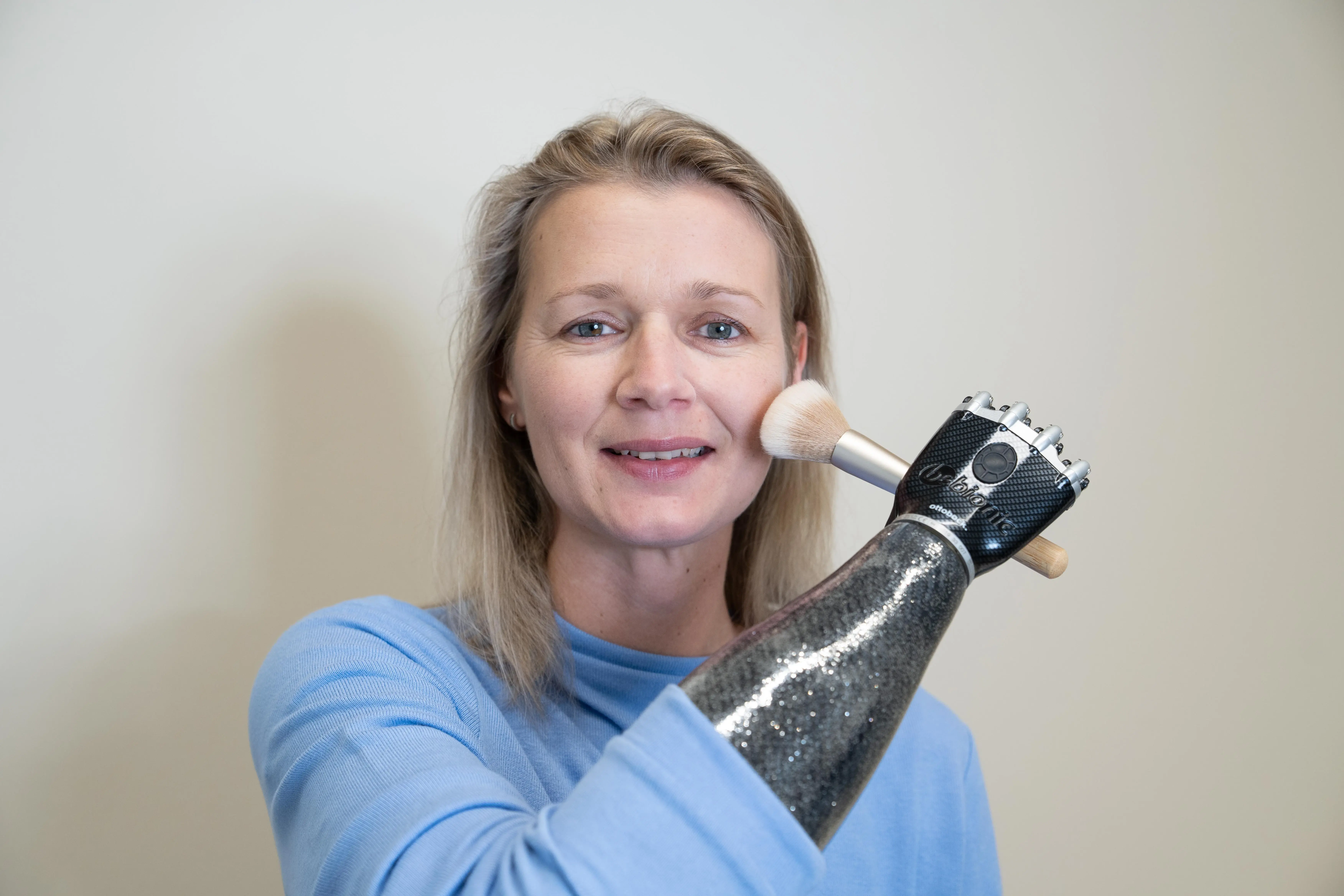
From Sepsis to Prosthesis
Six years ago, my right arm had to be amputated due to an impending sepsis caused by vasculitis, a circulatory disorder. Because of a pre-existing condition, the arm was already damaged, resulting in frostbite wounds on the fingers. During the operation, the doctors only decided spontaneously whether the amputation would be performed at the upper arm or forearm level. When I woke up after the surgery, my first question was where exactly the amputation had been done. When I learned that "only" the forearm was affected, I initially felt relief.
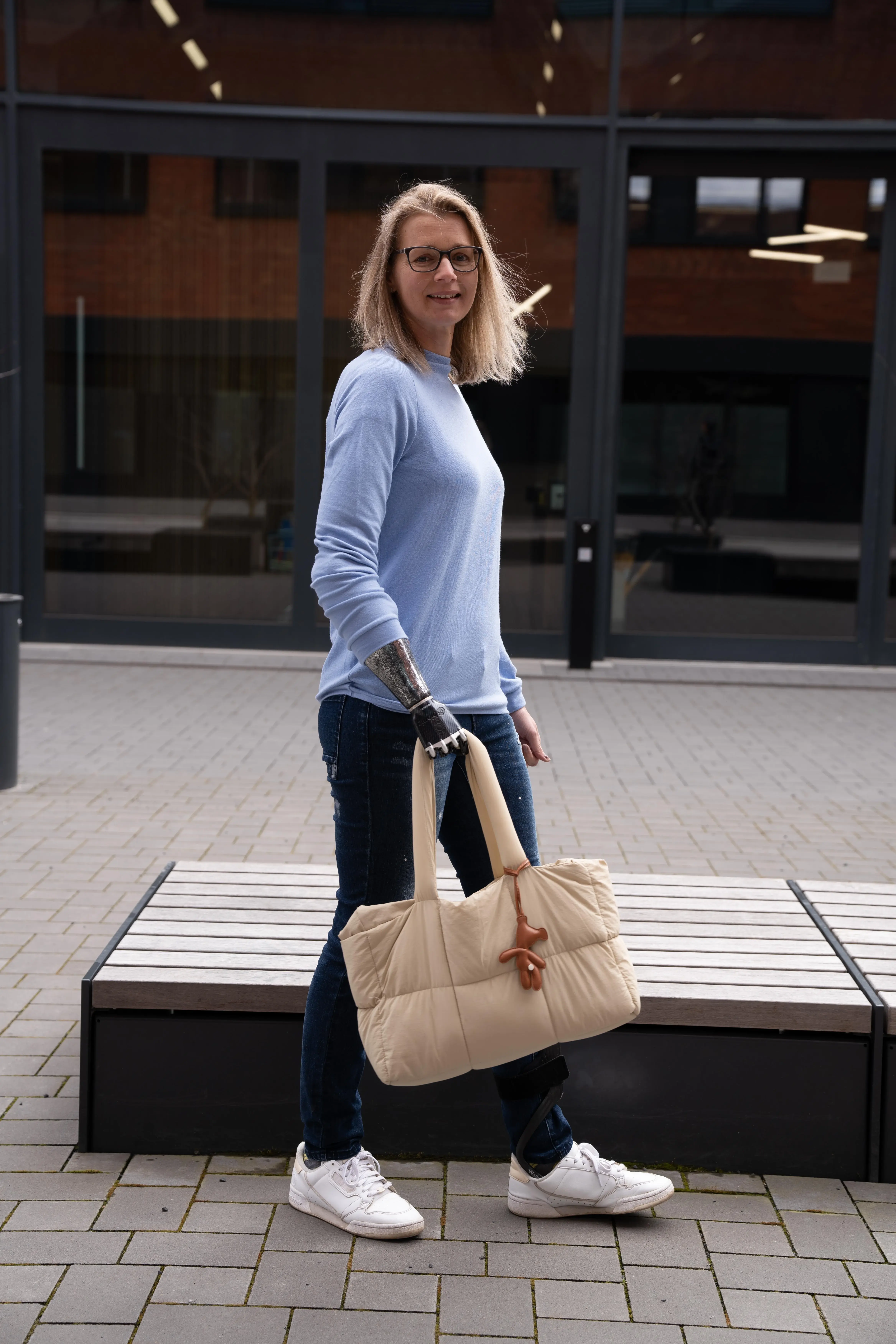
Training and Willpower
Just six months after the amputation, I received my first prosthesis. From the very beginning, I managed surprisingly well with it. But the journey there wasn’t easy. One of the biggest challenges was finding someone truly knowledgeable. Especially finding a competent prosthetist was difficult. Luckily, I met someone who was curious, committed, and took the time to really understand my individual situation. A particular challenge in my case was optimizing every gram and every material of the inner socket. It took three years until we found the perfect solution, and I was able to use my prosthesis to its full potential. At first, my thoughts revolved only around what I could no longer do. Even simple daily tasks like blow-drying my hair or brushing my teeth suddenly seemed impossible. But my motto is: “There’s no such thing as can’t!” So I looked for solutions and trained every day. My training began with a screen and a cuff on my residual limb. Electrodes detected muscle groups that were supposed to perform specific hand movements. I would imagine making the movement, and the signal would travel via the spinal cord to the electrodes. On the screen, I could see the hand opening and closing. I repeated this until it finally worked. Then came targeted gripping exercises in occupational and physical therapy. I wanted to progress faster, so I asked for exercises to take home and continued training there. Today, my therapy is much more active. I play badminton with my occupational therapist, holding the racket with my prosthesis — and it works surprisingly well! Table tennis is also going great, and I’ve even tried climbing with the prosthesis. I always want to find out what’s possible and test my prosthesis to its limits. But one thing I’ve learned: it’s not enough to rely only on therapy. You also have to practice a lot at home. It’s like getting a new smartphone — you get a quick introduction, but to really master it, you have to figure things out yourself.
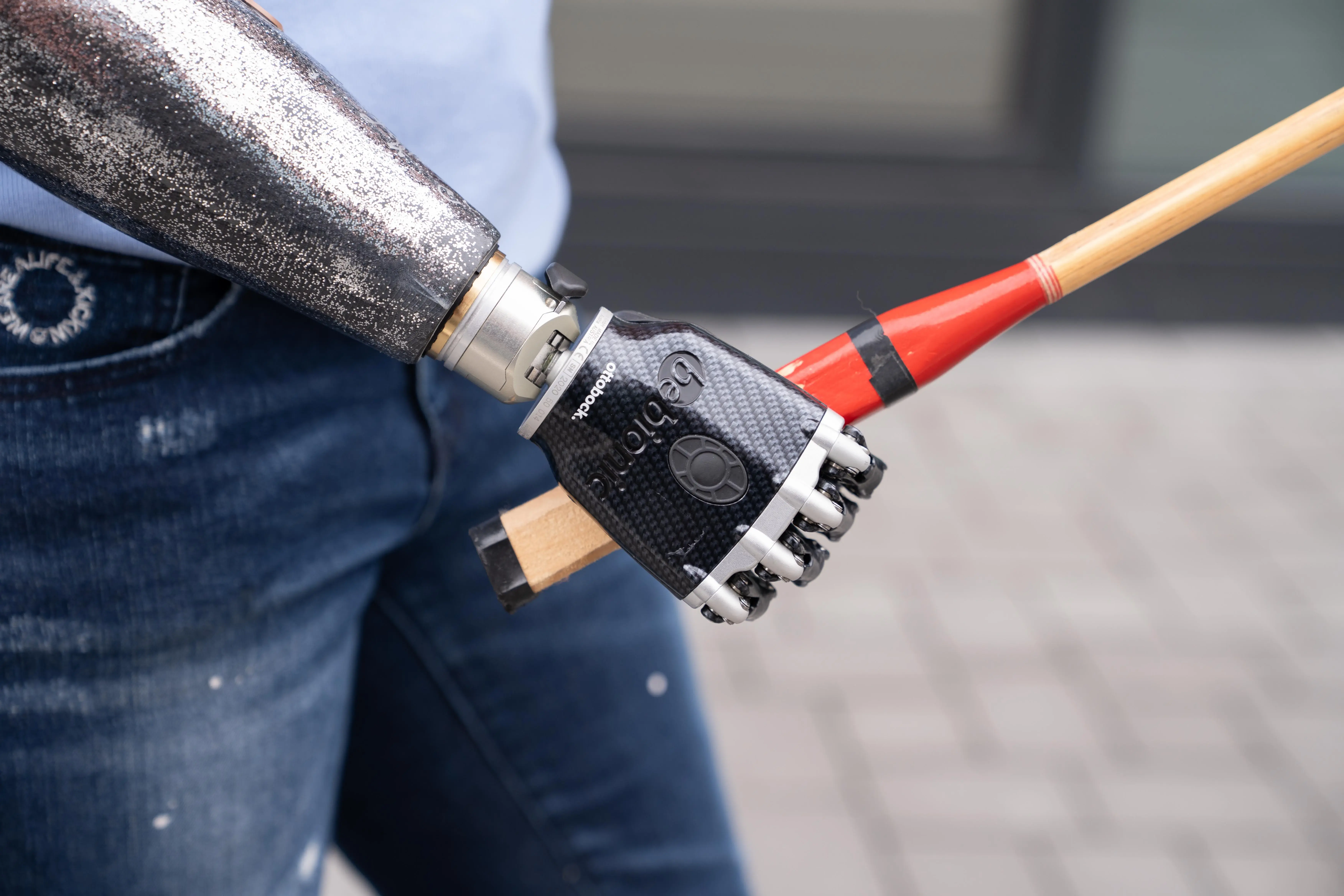
My Daily Life with a Prosthesis
I start my day by wearing my compression sock for half an hour while going through my morning routine. After that, I put on my prosthesis and use it for everyday tasks from getting dressed to slicing bread rolls basically everything others do as well. Although not everything works perfectly right away sometimes my roll gets squished while I cut it — I manage my daily life very well. I’m constantly working to improve and regularly try new things. For example, someone once told me I wouldn’t be able to pick up the playing pieces in a game of Ludo. That only motivated me more to prove them wrong. I love taking on challenges like that and recording my progress in videos to share with my therapists — not only as a success for myself but also as a recognition of their work. I rely on my intuition and on what feels right to me. What’s especially important to me is connecting with other amputees. That was something I really missed in the beginning. Last year, thanks to OTWorld, I had the opportunity to meet other prosthesis users and exchange experiences — sharing tips and tricks about phantom pain or pressure sores, for instance. That was incredibly valuable for me. I also connect with others through Instagram and am happy when I can help them, just as I’ve learned from their experiences. One thing I still haven’t gotten used to is how society reacts. The staring and careless comments can be exhausting. Kids, on the other hand, are great — they’re just curious and ask questions, which I’m happy to answer. For the first two years, I used to hide my prosthesis, until I realized I was withdrawing more and more from life and my quality of life was suffering. I didn’t want that anymore. So I made the conscious decision to face things head-on. If someone makes a rude comment, I clap back. If someone stares, I approach them directly. That’s led to much more positive responses than negative ones. Of course, not every day is the same. Some days go great, and others — when my stump is swollen or I’m not feeling well — things don’t go as smoothly. But I’m proud of myself when something works. My confidence in my hand and its capabilities grows with each day.
More about Katja: https://www.instagram.com/katjan82/