
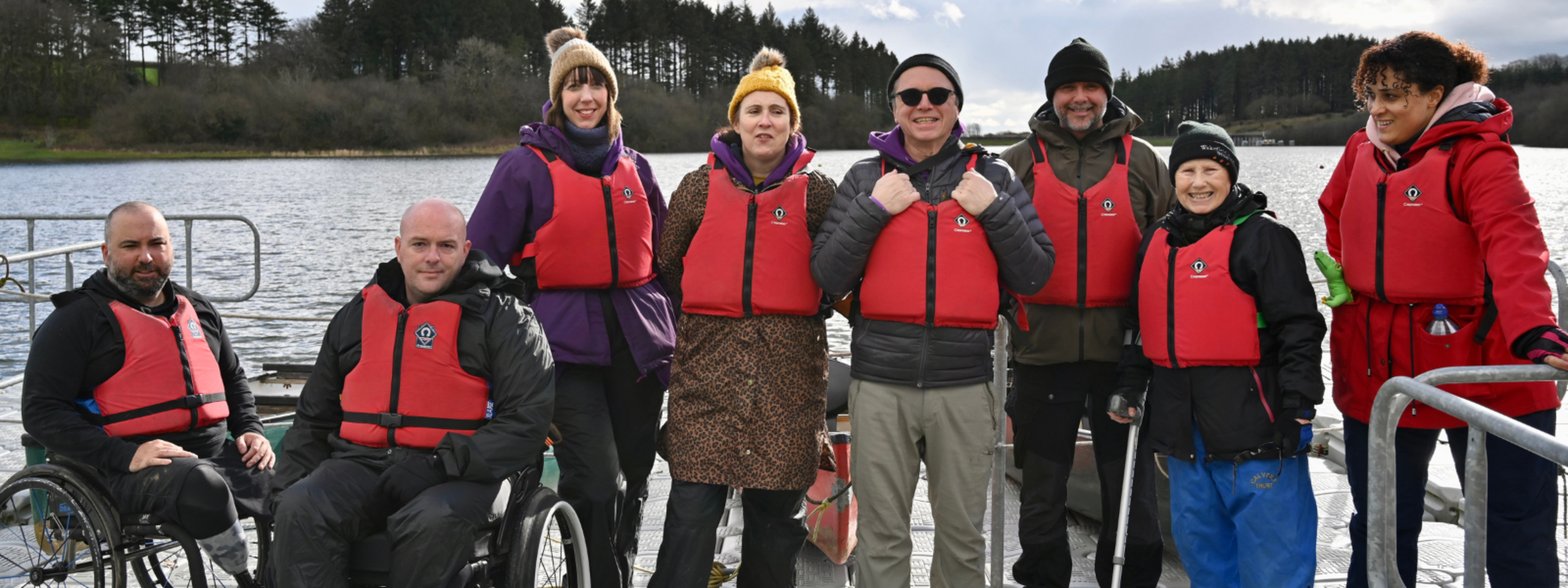
LimbPower: Redefining Fitness for Amputees
In this Movao LIVE I talked to Kiera Roche, the founder and CEO of LimbPower, a UK charity focused on supporting amputees and individuals with limb differences in returning to fitness and sports. Their flagship event, the LimbPower Games, is held at the iconic Stoke Mandeville Stadium, the home of the Paralympics, serving as a stepping stone for many Paralympic athletes as they discover their chosen sports. We delve deeper into Kiera's extraordinary journey and the incredible work she's doing to support and improve the lives of our amputee communities.
Continue to read the interview or watch the recorded version on YouTube
Let's start at the beginning. How did you become an amputee, and what inspired you to start LimbPower? In 2001, I was involved in a motorcycle accident in Paris, which resulted in the loss of my right leg above the knee and extensive injuries to my right side, including breaking my arm in six places, my shoulder blade, a punctured lung, and breaking my ribs. After my rehabilitation, I was eager to return to sports. However, I found limited opportunities and realised every amputee had to find this information out for themselves.
I read an article in The Times newspaper before the 2012 Paralympics stating the British Paralympic Association was fast-tracking military amputees, which I thought was brilliant. However, it prompted me to ask, who was supporting everyone else? I contacted the British Paralympic Association's Chief Executive and learned about the National Disability Sports Organizations, including WheelPower, CP Sport, British Blind Sport, Dwarf Sport, UK Deaf Sport, and the Special Olympics. There wasn't a sports charity supporting amputees, so I went home and registered LimbPower.
What is LimbPower, and how does it support our amputee communities? LimbPower started with the LimbPower Games. I wanted to create an event that brought amputees together in a social environment and provided opportunities to try different sports. However, after a couple of years, I realised that transitioning from being a new amputee to participating in sports is a giant leap. So, we began working backwards to determine how to support amputees through rehabilitation and then on to physical activity and sports.
We created Beyond Boundaries, an in-person fitness event designed to give people the fundamental skills of agility, balance, strength, and conditioning, focusing on improving mobility. We then introduced the children's fundamental skills, launched the LimbPower Junior Games and added "Prepare to Move" and "Prepare to Run" Clinics because running is the foundation of most team sports. We also have our daily online fitness classes, and participants can take part in these seated or standing classes from the comfort of their own homes.
What was your experience returning to fitness and sports as a new amputee? I struggled with running, and my partner, a keen cyclist, suggested I try cycling. I quickly fell in love with cycling and completed several challenges, such as cycling from Lands'Lands' End to John O'GroatsO'Groats, London to Paris, London to Amsterdam, and along the River Nile. When Ottobock launched the 3S80 knee joint, I resumed running and eventually built up to three miles. Having been a runner before my accident, I was surprised by how much I struggled to push further, which led me to reevaluate my motivations for running—my desire stemmed from past experiences. I realised running a marathon isn't necessary; if I can run a mile, that's plenty, as I'm still active.
Why is fitness so important for amputees to include in their lives? The significance of incorporating physical activity and exercise into an amputee's routine—well, anyone's routine—is immense. Physical activity makes us fitter, enhancing our mobility with a prosthesis, which boosts confidence, independence, and mental health. For amputees, the focus shouldn't be solely on being thin; it's about managing your weight so your prosthetic fits comfortably. A well-fitting prosthetic means improved mobility. As people age, go through menopause, or face challenges with metabolism or diabetes, managing weight becomes more difficult. However, maintaining a stable weight helps ensure comfort in your prosthetic, allowing you to engage more fully and spend quality time with your family.
I spoke with a physiotherapist I've known for over 20 years about our early discussions on sports. We agreed that the initial consensus was not to encourage people to participate in sports but to manage their expectations. However, the work we've been doing, along with many other organisations, emphasises that physical activity and sports are essential components of people's lifestyles and families. If we want amputees to experience inclusion and accessibility, they must have access to exercise, fitness, physical activity, and sports.
We met when we trekked Mount Kilimanjaro for a LimbPower charity challenge. It was one of the best experiences of my life. You recently returned from another charity challenge in Machu Picchu. How was that? It was stunning! The culture is fascinating, and Machu Picchu itself is just beautiful. The trek was extremely challenging. You're flying into altitude, so you're already facing an altitude deficit before even starting. That was tough, along with the time difference, which made it more difficult. As an above-knee amputee, this was gruelling—it was much more challenging than I anticipated.
My favourite day was the last one when we walked up the steps from Aguas Calientes, a lovely small town that only exists because of Machu Picchu. Trekking up from the valley to the top of Machu Picchu took us about two hours and 40 minutes. It was stunning—simply beautiful! The actual ruins themselves are incredible. We had horses with us at one point during the trek, and I got on one. I felt a twinge of guilt—like I was cheating—but then I thought about how many people have trekked on horseback in the Andes and what an incredible experience this was!
Can people globally get involved in LimbPower charity challenges, or is it just for people in the UK? Generally, most participants are from the UK; however, we've had people from America join, and for Machu Picchu, we had three Europeans and an amputee from America. Four of the 32 participants were from other countries, so everyone is welcome.
Do you have any upcoming challenges for people to get involved in? We are considering organising something in the UK—Snowdon is a stunning mountain trek and a tremendous one-day challenge. After that, we're debating between Iceland and Jordan for 2026.
What advice would you give those struggling to regain their fitness after limb loss or unsure where to start? It's always tricky because we're all different. We've all lost limbs for various reasons, whether it's trauma or illness. It's essential to understand the starting point for each individual. So, I would always advise people, "Do your research." Contact LimbPower, talk to our team, speak with your hospital physiotherapist, consult your prosthetist, connect with other amputees, and check in with a personal trainer. Explore articles on adapted fitness and nutrition and set your goals.
One challenge many people face, especially concerning weight loss and improving fitness, is that it takes a lot of work. Progress takes time; it's not a quick win. It can be disheartening if you start and don't see immediate results. I prefer not to diet—because the moment I restrict myself, it makes me crave those things even more. Instead, I focus on incremental changes. Rather than choosing a chocolate bar, I may have nuts or look for healthier swaps. I favour making small changes rather than large ones since large changes often aren't sustainable for me—and I think many people feel the same unless they have strong willpower.
What is the LimbPower reVAMP programme? reVAMP is a 12-week fitness and nutrition programme designed for LimbPower by myself and Jack Eyers, a GB elite athlete, Paralympian, and Fitness Instructor. This programme specifically caters to amputees and people with limb differences. Alongside Jack, we have a professional physiotherapist who adapts exercise movements for those who may struggle and a life coach providing motivational support. This ensures participants have all the necessary tools to maintain their exercise routine.
reVAMP includes seated and standing programmes, and in January 2025, we're launching an upper limb programme. It's an excellent initiative, and anyone can join worldwide as all training circuits are recorded online—allowing you to participate at home or take it to the next level in a gym. Results from reVAMP have shown improved mental health, with participants reporting increased confidence and mobility with their prostheses.
With winter now in full swing, do you have any tips for our amputees on keeping warm, caring for their prostheses, or gadgets that can help with safety on snow? I have so many tips! Safety is my top priority. First and foremost, make sure your paths are clear; leaves are an amputee'samputee's nightmare. Last Christmas, I slipped on leaves, and falling can be painful—especially if you go down fast and hard. It's crucial to look at your environment and ensure your paths are safe and clear.
Additionally, some essential preparations can make a big difference. When travelling, keep a blanket and water in your car in case you break down—especially during snowy conditions—because assistance might take a while to arrive. Always inform your breakdown service that you are disabled, as they will list you as a priority.
There are also several small measures you can take. I use snow chains for my boots; if conditions are really icy, these can provide extra grip. However, I advise that if it's extremely icy, avoid going out unless necessary. If you need to work, your circumstances might differ, but it's best to stay off the ice whenever possible since it can be very hazardous, especially black ice.
Using hiking poles can also provide extra support. Ensure they don't have rubber tips, as a metal tip can give more grip. I find walking poles handy because they offer a wider stance and create more contact points with the ground, enhancing stability. Lastly, wear appropriate boots or trainers—avoid regular shoes that lack grip. Proper footwear is essential for everyone, regardless of ability.
Finally, reflecting on everything you've learned throughout your journey—from your accident to starting LimbPower to where you are now—what advice would you give to yourself as a new amputee? It's simple: be braver. Push yourself out of your comfort zone because there is a world of opportunity out there. There are countless possibilities—not just in becoming an elite athlete but in living life fully without limiting your experiences.
For those not part of our LimbPower community, I encourage you to research organisations and adaptive fitness and sports available in your area. Socialising and being with people like you can profoundly impact your life, especially as a new amputee, opening up doors to opportunities you may have never considered.
To find out more about LimbPower, visit www.limbpower.com.