
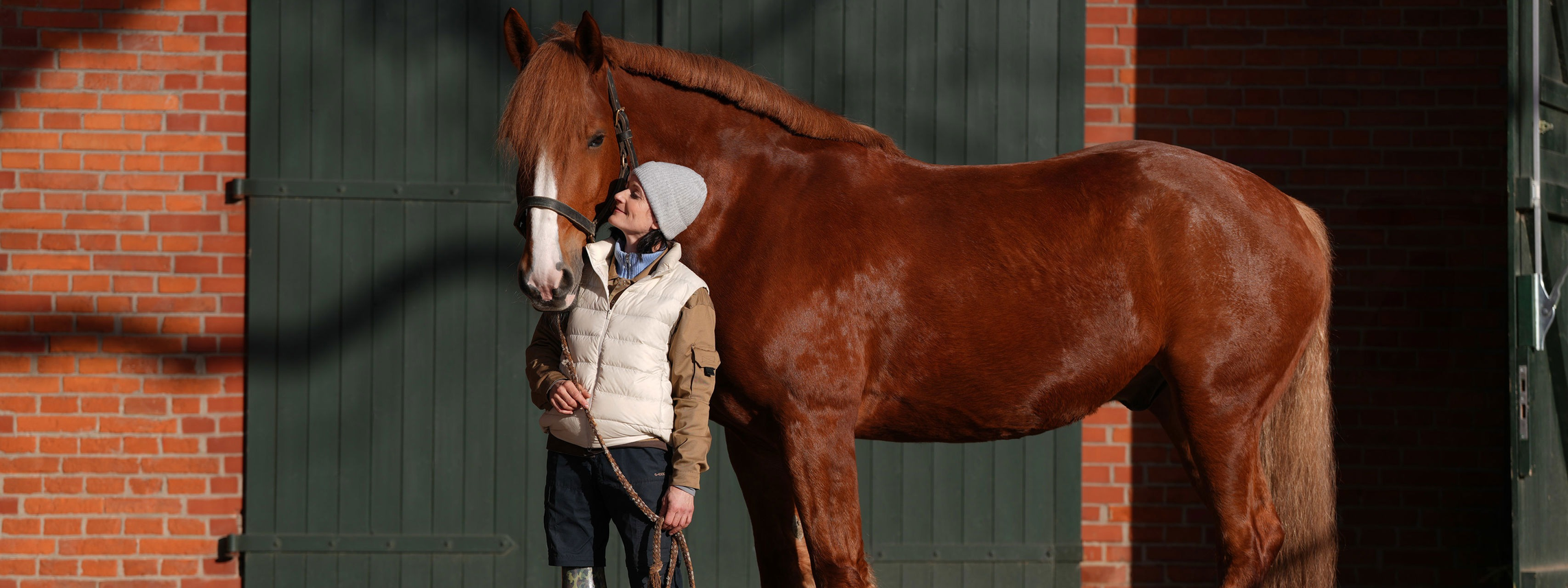
40,000 steps every day with a leg prosthesis: Police horse manager Siglind is always on the go
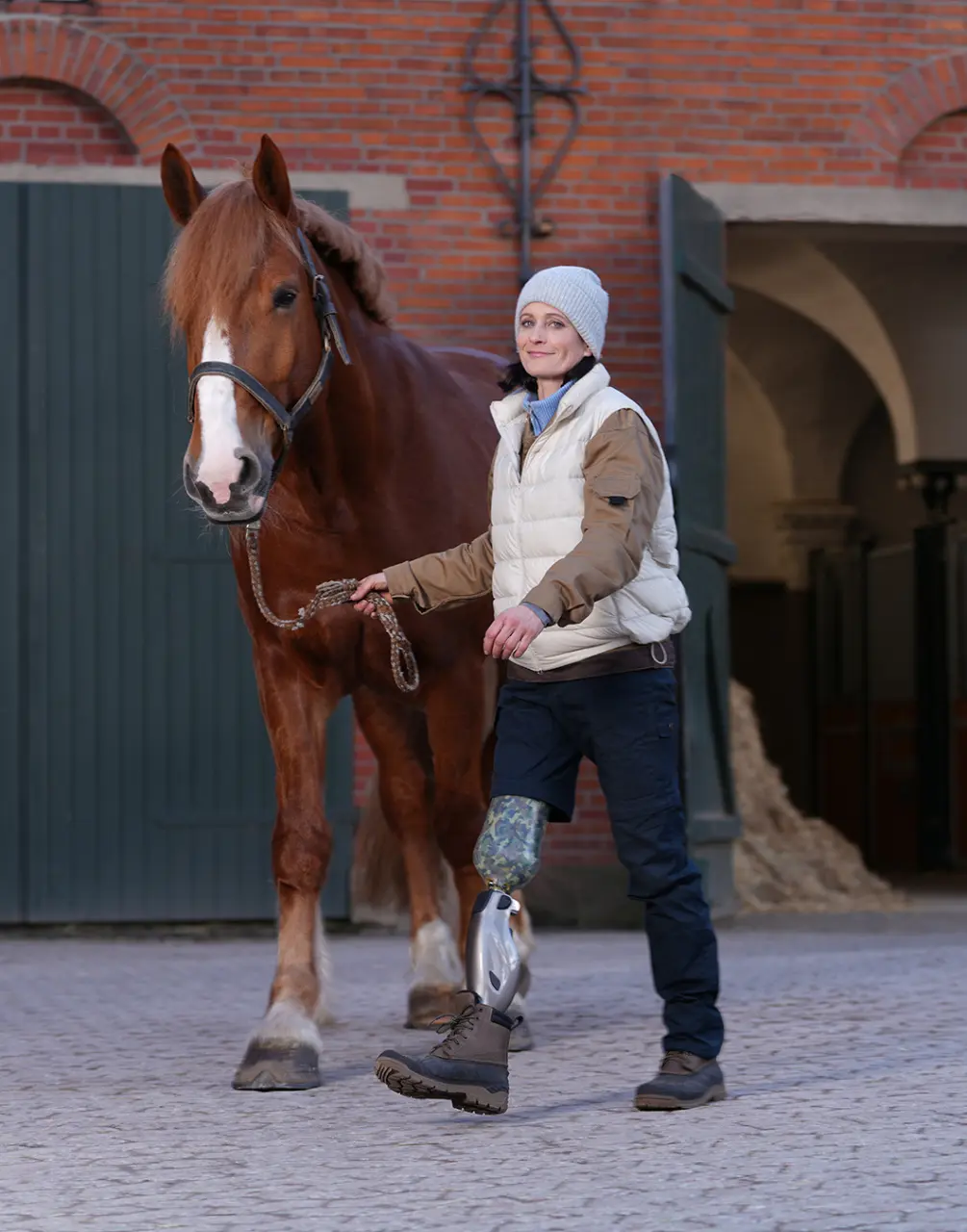
After a leg amputation, Siglind is back to her dream job. Her special high-tech prosthesis is always with her for the demanding day-to-day work at the mounted police unit.
After the amputation: “My horse was my therapist”
Since her childhood, Siglind (46) has loved horses and knew that she wanted to work with the animals later on. When she completed her professional training as a horse manager, she found her dream job. Her next goal: an amateur jockey license. But she lost her right leg due to an accident in 2000 caused by third parties, which completely changed her life. “Then the dream was over, not only of becoming a jockey, but also of being a horse manager,” recalls Siglind.
Already in the hospital, she started training with dumbbells. “My goal was to get out of here very quickly and walk properly again. And that was a step by step process.” She also showed her residual limb directly in the open. “So that I also understand and accept That’s how it is now,” she says. “The accident naturally changed me. I don’t take some things so seriously anymore and value the little things in life. Everything is more intense.”
Nevertheless, the recovery was a challenge for Siglind. For the first time, she falls into a mental hole. When she left rehabilitation, her boyfriend at the time gave her a former racehorse that could no longer walk due to a hoof bone fracture. “That was my therapist. I had to go there every day, take care of it, sometimes on crutches. At first I thought, what am I supposed to do with it? I can't ride anymore anyway. But then it turned out that it can be done after all.”
Siglind’s interim stops: Therapeutic riding in South Africa and rowing at the Paralympic level
At the time, working as a horse manager with an amputated knee joint was unthinkable in Germany. But Siglind did not give up: She quickly realised that her alternative professional training as an office communication assistant was not the right thing for her. Through her friends, she learned that in South Africa it is possible to work with horses even with an amputation and a prosthesis. She emigrated there in 2005. She distributed flyers and showed what she could do at tournaments – until she finally started offering therapeutic riding on a farm to physically disabled children and adults. “I just chanced upon it. But I had a knack for this type of work, so they let me do it,” says Siglind. “My work has given me a lot in return. You could see people sitting in wheelchairs and then straightening their bodies upright again on the horse. They became one with the horse, communicated in a very different way and that was really nice to see.”
In South Africa, Siglind discovered another passion: rowing. She was a natural talent and joined the South African national para-rowing team. To compete at the 2008 Paralympic Games in Beijing, she would have had to become a South African national. A step she was not prepared to take – and so Siglind returned to Germany to join the national team there. Together with Harald Wimmer, she competed at the Paralympic Games in Beijing 2008 in para-rowing mixed doubles (class TA) and made it to the final. When the classification changed and only bilateral amputees were allowed to row in her class, the sports enthusiast had to rethink again.
Back to work as a horse manager
In her hometown, Siglind randomly noticed the equestrian police passing under her window. A decisive moment. “It kind of made a click: they also need horse managers … and I just sent in an application.” Her initiative paid off: In January 2010, she began working for the equestrian Police Unit in Hanover, Germany
At first, she faced a mixture of scepticism and interest, precisely because the job is physically demanding: shift work, plenty of walking, pushing, carrying, pulling – and horses weigh quite a lot. But the scepticism quickly subsided, and Siglind proved that she was in no way inferior to her colleagues, despite the prosthesis. It’s important to her not to receive any special treatment due to her amputation and to work just like a non-disabled person, even though her boss keeps an eye on making sure she doesn’t necessarily climb a ladder. As she works, Siglind wears her Ottobock high-tech prosthesis from 4 a.m. to 8 p.m. 16 hours. The initial scepticism quickly subsided. Today, the other employees inquire about “Stumpi”, which is how Siglind’s residual limb was dubbed, when, for example, a blister has formed due to the summer heat and puts strain on walking.
Siglind does everything she can to stay physically fit and regularly goes to the gym so that she can ideally remain in her dream job until she retires. “I’ve found a niche for myself: This equestrian team is in the middle of the city. We have short distances, everything is central. I still walk 40,000 steps a day, of course, but that wouldn’t be possible with longer commuting times. Everything is tailored to my disability.”
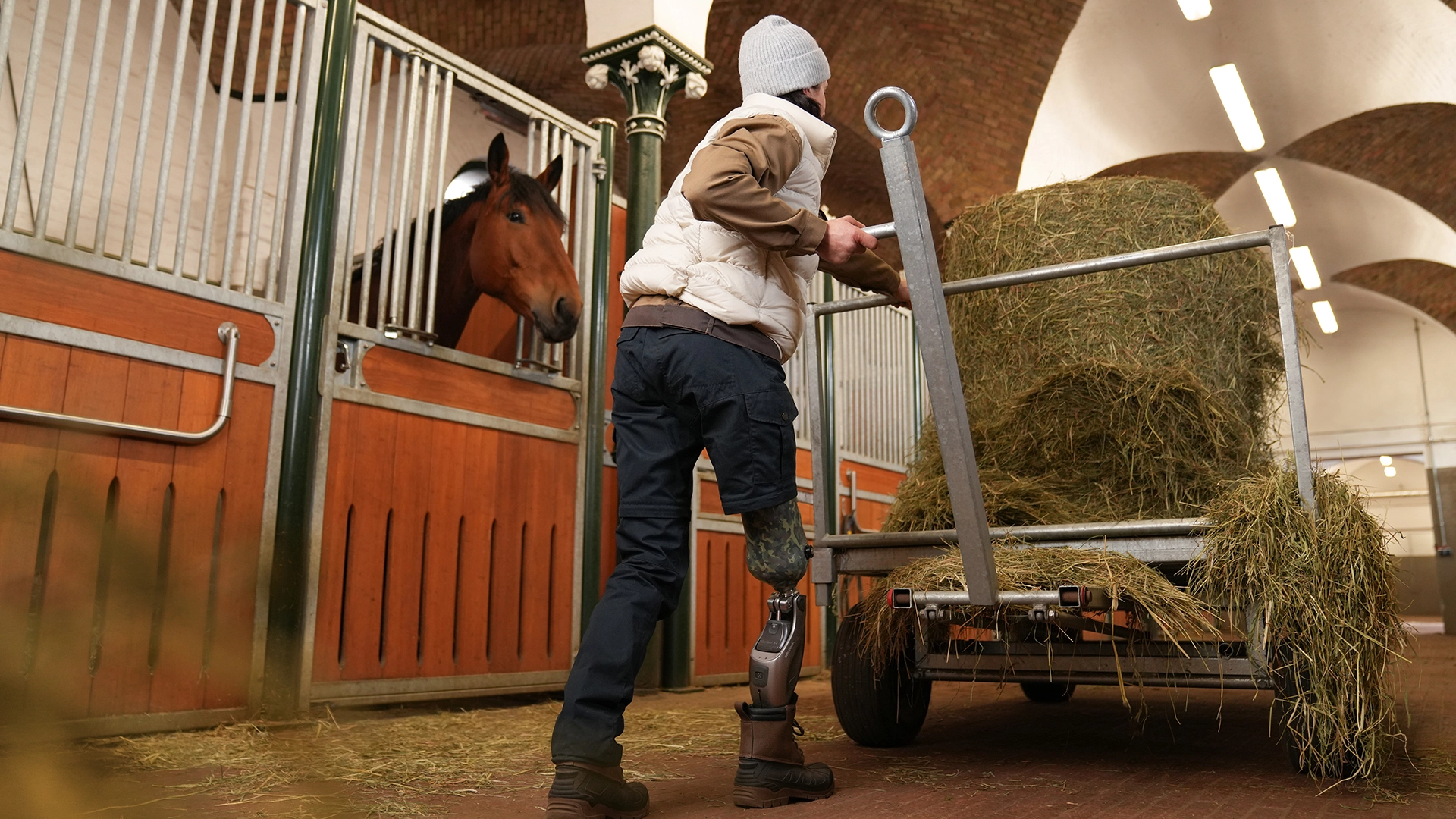
Thanks to a high-tech prosthesis: How Siglind masters her daily work more easily
Siglind’s enabler is the leg prosthesis with the microprocessor-controlled knee from the Genium range. For years, she worked hard to for treatment with the smart leg prosthesis that helps her cope with her daily work more effectively: “Everything is easier. Standing is already comfortable because the strain on the back is reduced, since you don’t just stand on your sound leg. I don’t have to lift my hips as much when walking. As a result, I have less pain and tension in my neck, back, shoulders and buttocks. And it’s easier to climb stairs as well.” Siglind finds the new Genium X4 more energy-efficient than her previous prosthesis: Her leg is slightly bent instead of constantly in extension – which reduces malpositions and secondary damage. “I’m not so tired in the evening anymore. It relieves my joints and my whole body more.”
Another new feature of the Genium X4: Although the knee joint is controlled using microprocessor technology, it is fully waterproof. For the first time in 23 years, Siglind dares to go into the sea with her feet.
Further benefits include the start-to-walk function, which allows the first step to be initiated with the prosthesis side as well, making dynamic backward movement and negotiating uneven ground and slopes easier. These are all functions that make Siglind’s movements through everyday work much easier.
Thank you Siglind for sharing your story with us. Do yu have questions for Siglind? Comment below!