
Freedom to Move: Regaining Mobility After Amputation
Being able to move freely and go wherever you want is crucial for fully participating in society. Ruud Schweren, Prosthetics & Orthotics Account Manager and trainer at Ottobock, emphasizes the importance of staying active, both before and after an amputation. In this series, we explore his insights on the journey to mobility. In the previous article, Ruud explained how to prepare for an amputation. This time, we’ll focus on what comes after. Why is regaining mobility so important, and how can you achieve it?
“Getting back into motion is different for everyone,” Ruud explains. “Not everyone can regain the same level of function they had before amputation, but goals vary greatly. For some, being able to move independently around the house is enough. Others aim to walk again or even return to sports. Regardless of the level, mobility is crucial—not only for circulation but also for independence and self-reliance.”
Core Strength and Recovery
What does recovery after an amputation look like? Ruud outlines the stages, starting with the surgical phase in the hospital.
The first stage focuses on wound care, with drains or compression bandages to manage swelling. During this time, muscle-strengthening exercises begin, such as moving the residual limb to prevent stiffness and training core stability and strength. “Core muscles are vital for controlling your limbs and eventually guiding a prosthesis,” Ruud explains.
Additionally, patients work on moving within small spaces—like from the bed to the bathroom—to maintain strength and prevent pressure sores. Recovery doesn’t wait until the wound is fully healed.
From Routine to Relearning
Once the wound has healed, light loading can begin. “The residual limb isn’t yet fully shaped, so its volume is regularly monitored,” Ruud explains. In this stage, exercises continue to prepare the limb for a prosthesis, if desired.
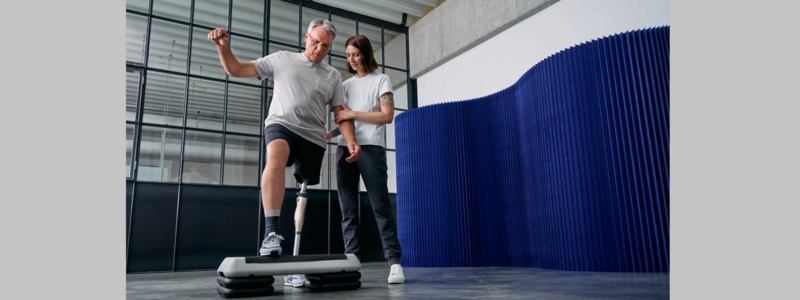
In the next phase, a prosthetist creates a custom socket for the prosthesis. Patients then relearn how to walk with two legs, starting with basic exercises like standing and shifting weight. Moving with a prosthesis differs greatly from natural movement. “Walking, climbing stairs, or even sitting, which were once automatic, now require conscious effort,” Ruud says.
For example, sitting involves distributing weight evenly and using muscles to lower yourself gently. This is harder to replicate with a prosthesis. Proprioception—the body’s ability to sense the position and movement of muscles and joints—changes. “With a prosthesis, you rely on visual input to understand what’s happening. Building trust in the prosthesis takes time, practice, and patience.”
Don’t Hesitate to Ask for Help
Patients are supported by a multidisciplinary team, including doctors, occupational therapists, physical therapists, and sometimes social workers or psychologists. Ruud stresses the importance of setting realistic goals early on.
Ultimately, regaining mobility is something you have control over. “Listen to the advice of specialists—it helps your recovery. Doing the exercises your physical therapist provides makes a big difference. Think about your goals and communicate them openly. Specialists are there to guide you.”
The key takeaway? “Don’t be afraid to ask for help. There’s no shame in seeking support!”