
How Do You Prepare for Getting an Arm Prosthesis? Pinar shares her tips
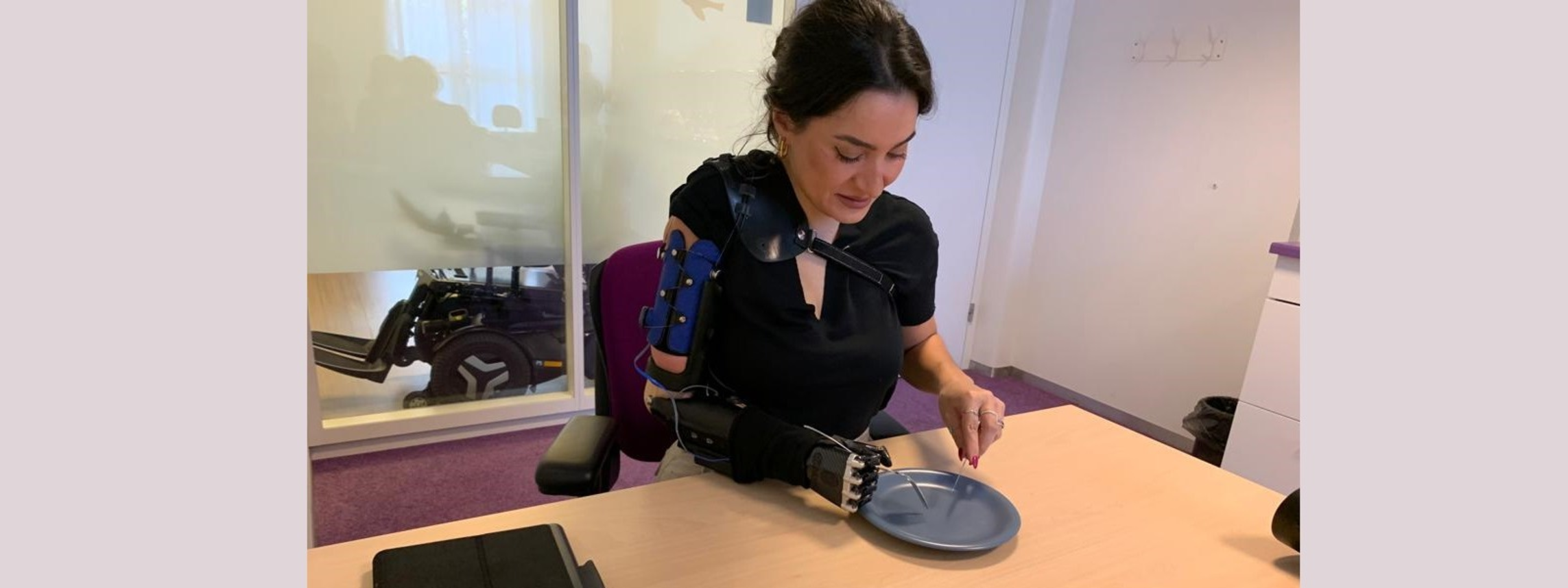
At the age of nine, Pinar Özad (35) got her first arm prosthesis. However, she didn’t have a good experience with it: the (silicone) prosthesis was too heavy and impractical. She wore it twice – and never again after that. Five years ago, she decided to give it another try. Now, she wears her BeBionic arm prosthesis daily and is still happy with her choice. How did she find a prosthesis that truly suited her this time?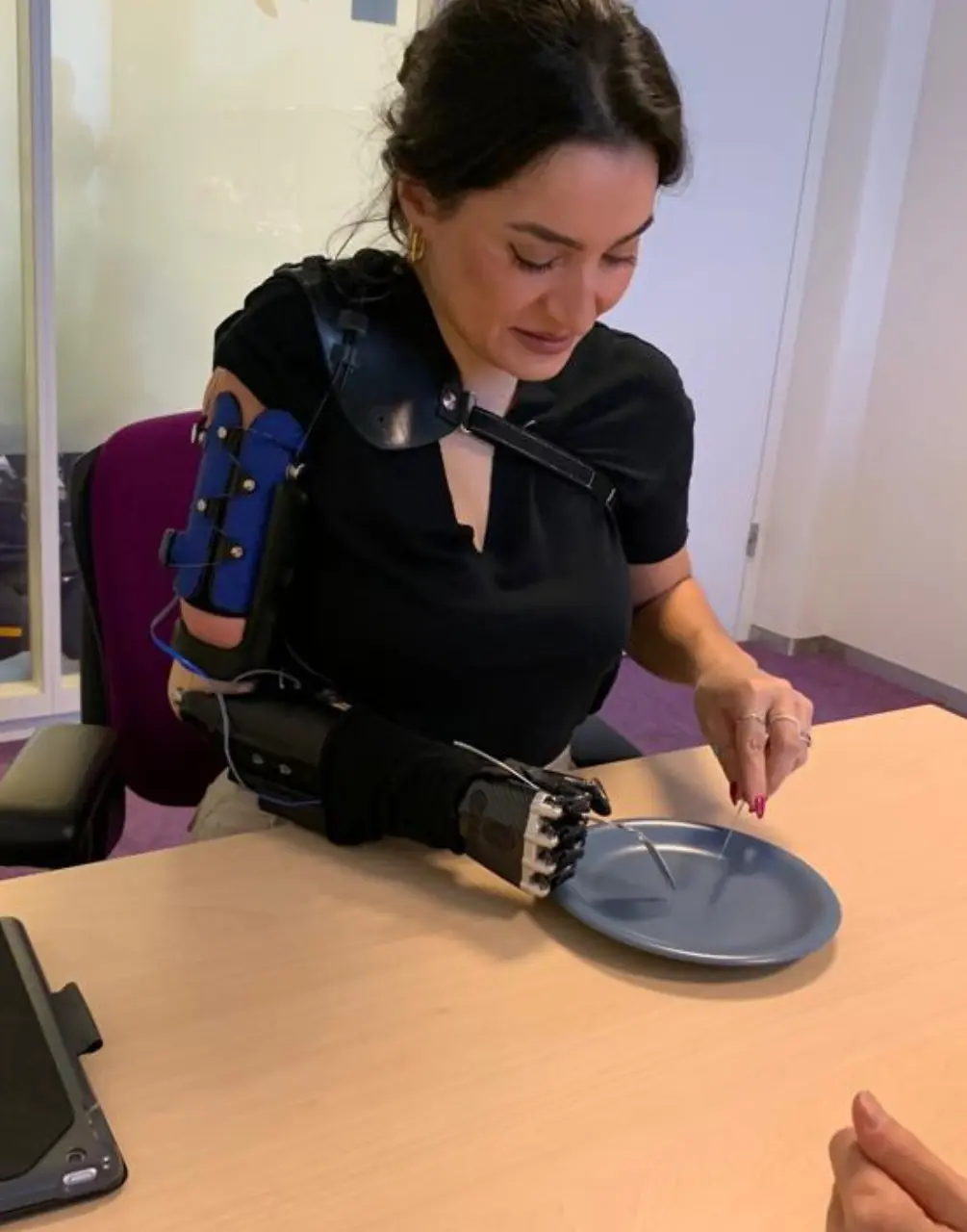
Pinar was born without her lower right arm. Living with just one lower arm didn’t pose any challenges for her; it was all she knew. But on the advice of her parents and the specialists around her, she opted for a prosthesis at a young age.
Bad Experiences
“At De Hoogstraat Rehabilitation Center, my parents and I were shown several prostheses,” Pinar recalls. “Including a silicone hand, which was new at the time. Everyone around me thought it would be a good fit for me. I didn’t have much of an opinion on it, as I was still young. The prosthesis was custom-made, and I practiced with it. But once I got home, it turned out to be too heavy, and I couldn’t do anything with it. Besides, I didn’t like the way it looked. I wore it twice.” That’s when Pinar decided she didn’t need a prosthesis at all. She didn’t want to stand out, and the best way to achieve that was without a prosthesis.
Turning Point
Even as she got older, she wasn’t open to a prosthesis—until she saw a female model with a bionic hand on Instagram. She thought it was cool! “It got me thinking: could a prosthesis actually help me in my daily life, especially as I get older? And could a prosthesis not only be practical but also beautiful, making me feel complete again? The answer to both questions turned out to be yes.”
A Conscious Choice
Pinar decided to try again, this time opting for a bionic prosthesis. She approached her doctor, and the whole process was set in motion. This time, she was confident it would work out. “The big difference compared to the first time was that this was a very conscious choice. By then, I had learned to accept myself. I no longer felt the need to act tough or prove that I could manage everything with one arm. I finally realized that a prosthesis could actually help me. This time, I was open to it.”
“And yes, of course, I had doubts. I didn’t have good experiences with a prosthesis before—why would it work now? Maybe it would disappoint me again. But on the other hand, there was only one way to find out. I really wanted to give it a chance.”
Intensive Process
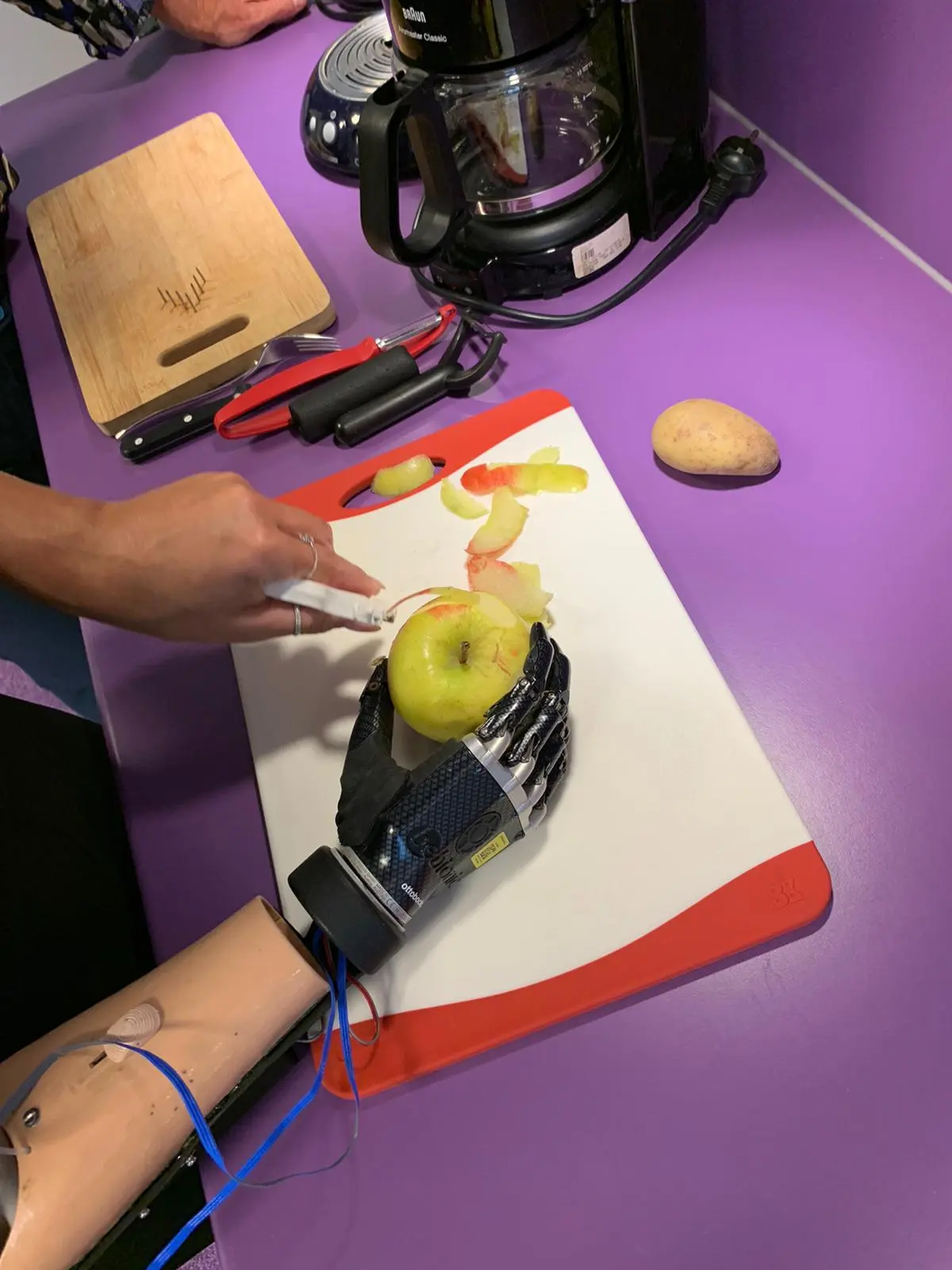
An intensive process followed. Even before Pinar was assigned her bionic prosthesis, she had many consultations with doctors and caregivers. “I had to prove that I was really going to use it this time. Understandable, of course, but after so many talks, I sometimes thought, ‘Just give me the arm already.’” Pinar laughs. “But I get it. A prosthesis is a big deal. Once I was assigned the prosthesis, the process became much more enjoyable. The physiotherapist checked if my arm, shoulder, and back muscles were strong enough and if the muscles in my stump were functioning properly. I went to the prosthetist to have the prosthesis custom-made, got a test prosthesis to try it out, and worked with the occupational therapist to practice using the hand. That’s when it all became real.”
And eventually, she had it: her very own matte black BeBionic.
Feeling Complete Again
That was five years ago now, and Pinar still uses her prosthesis every day. “I knew exactly what I wanted, and the specialists around me took that seriously. My prosthetist, in particular, guided me very well throughout the process—I couldn’t have asked for a better advisor. That was great and helped me find a prosthesis that truly suits me.”
However, not everything went as smoothly as Pinar had hoped. “The prosthesis I wanted initially came only with a strap around my shoulder and neck. Since I’m missing my arm just above the elbow, the weight would be better distributed with a strap. That was a disappointment; it wasn’t what I had envisioned. But I had no choice, so I wore the prosthesis with the strap. Until one day, the strap broke, and the prosthesis stayed on! My upper arm was able to bear the weight just fine; the socket and prosthesis were very secure. Since then, I’ve worn it without the strap. My wish had come true after all.”
“I’m still very happy with my choice back then. My prosthesis has improved my life and made me feel complete again.”
Well-Prepared
When Pinar decided to go for a prosthesis for the second time, she prepared thoroughly. She shares three tips that helped her make the right choice at the time.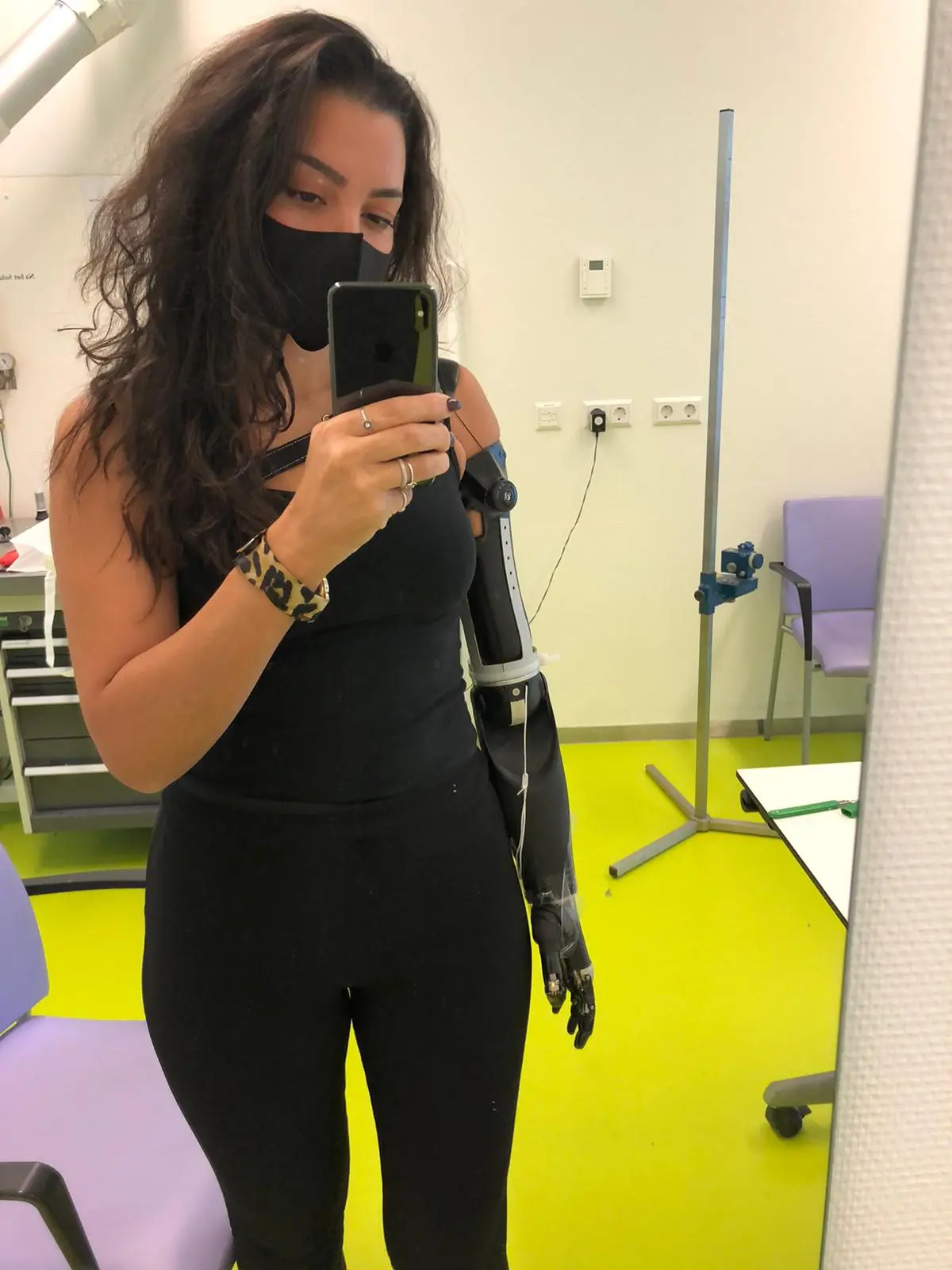
Tip 1: Know What You Want
“Think carefully in advance about what the most important goal of your prosthesis is for you. For me, appearance was very important from the start; I wanted to feel confident wearing it. That worked: I feel more beautiful and confident with this prosthesis. Maybe you have a completely different goal. Look around at others with prostheses or on YouTube and see what appeals to you, what would suit you. Only when you truly know what you want can you choose a prosthesis that fits.”
Tip 2: Stand Behind Your Wishes
“Once you know what you want, be clear about it. Throughout the process, you’ll deal with many different caregivers and specialists. It helps a lot if you’re clear about what you want—and what you don’t—and why. That way, they can really think along with you, even if you think something isn’t possible.”
Tip 3: Ask About Developments
“My last tip is to always ask your prosthetist about the latest developments. There may be new technologies, improved functionalities, or smarter techniques that are relevant to you. And if not today, then maybe tomorrow.”