
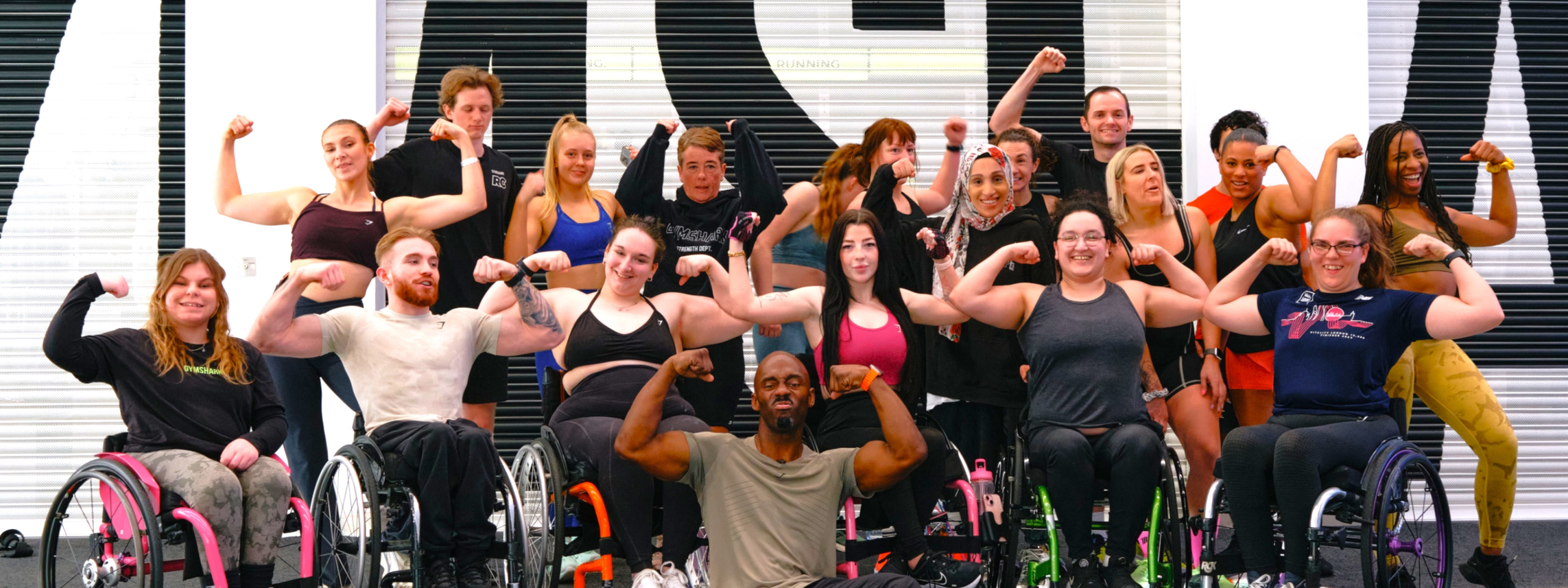
Tyler Saunders: Pioneering Adaptive Fitness and Creating an Inclusive Space for Everyone and All Bodies
Tyler is a qualified Fitness Instructor, Motivational Speaker, Wheelchair Basketball Athlete, and Inclusive Model whose journey into fitness began by chance.
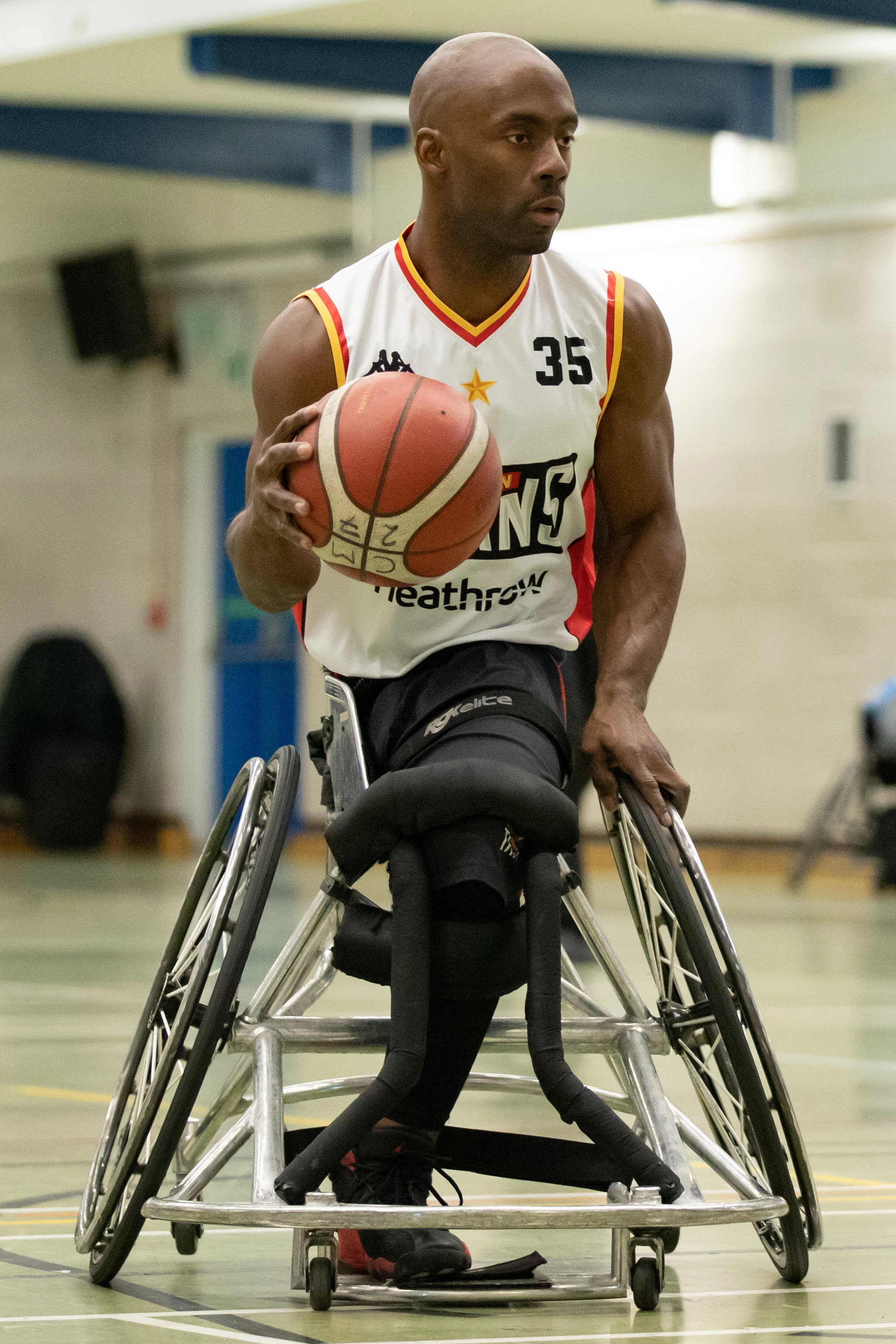
Born in the eighties with a congenital limb difference that left him without his right leg from the hip and half a pelvis, he grew up in an era with limited awareness and acceptance of people with disabilities. His struggle to keep up with his peers in activities like football and basketball led him to abandon fitness, with his parents encouraging him to focus on his studies.
A pivotal moment in Tyler's life was when he discovered wheelchair basketball. Despite starting training at the relatively late age of twenty-six, his dedication quickly earned him a spot on the GB men's team in 2008. Despite missing out on the formative years of athletic development, this achievement only fuelled his determination. Playing semi-professionally in Germany marked a turning point, where elite training led to a dramatic transformation. Embracing rigorous routines and combining them with a healthier diet, Tyler experienced firsthand the life-changing effects of dedicated fitness on his physical form and mental wellbeing.
Fuelled by a desire to help others with disabilities experience the transformative power of fitness, Tyler became a qualified Fitness Instructor. Today, he leads the charge in adaptive exercise with his brainchild—Adaptive Throwdown with Gymshark, the first all-inclusive fitness event designed for people of all disabilities and abilities. Having recently participated in an Adaptive Throwdown session, I experienced firsthand its incredible atmosphere and what everyone is raving about. I spoke to Tyler after the event about this new adaptive fitness wave and his journey to inspire and empower others to overcome their fitness barriers, proving that it's never too late to start on the path to self-improvement.
What was it like growing up with a limb difference during a time with little awareness of disabilities? "As a kid, you just want to blend in and not feel different, but wearing a prosthesis made that nearly impossible—especially back then. Today, people are more open-minded, and differences are more accepted, but it wasn't like that when I was growing up. Back then, you had to try to be as 'normal' as possible. I wore my prosthesis even though it was very uncomfortable because I didn't want to stand out. I was the only disabled person in my social circle and didn't know any other disabled people in my community—not even in our church. My parents did their best to make me strong, but I always had those insecure feelings in the back of my mind that I wasn't like everyone else. I wanted my disability to be invisible and go unnoticed. I'd see the cool, popular kids and wonder what it would be like to be them. I had good friends and wasn't bullied, but being the disabled kid, I was never 'the cool guy.'"
During your teens, did you ever imagine an alternate version of yourself with two legs? "I used to daydream about how different things would be if I had two legs—especially about playing football. If I had two legs, I'd be a striker rather than in goal, which was my position because I wasn't fast enough to play on the pitch. I used to imagine how much cooler I'd be and how different my life would be. Now, with greater awareness around disability, I no longer feel those same insecurities, and it's great that kids today don't have to feel so alone and isolated."
When you started your fitness career, did you teach adapted sessions, or is this something new in the industry? "No, adaptive fitness hadn't kicked off yet. Initially, I didn't think I'd be taken seriously as a Fitness Instructor with a disability in an industry driven by aesthetics and performance. My insecurities kicked in, and I felt like I had to wear my prosthesis to fit in and be taken seriously. People see me now and think I'm a natural performer, but it wasn't always that way—it's been a long journey of self-acceptance and feeling free to be seen as I am without wearing my prosthesis."
When did you start to feel confident as a Fitness Instructor with a visible disability in a perfection-driven environment? "My growth and self-acceptance developed over the six years I've been in the fitness industry, partly through sharing my journey on social media. By pushing myself into challenging situations—whether participating in events, competitions, or activities I once thought I'd never do— after turning every uncomfortable challenge into a positive result, I realized my capabilities and my confidence grew stronger. Although not reaching the Paralympic level in wheelchair basketball initially knocked my confidence, this led me to become a qualified Fitness Instructor; starting my training programs and working with clients showed me I was capable of much more than I had believed. This realization led me to say yes to other challenging opportunities, like public speaking and competing on Ninja Warrior. I don't think I'd be the person I am today without discovering fitness by chance."
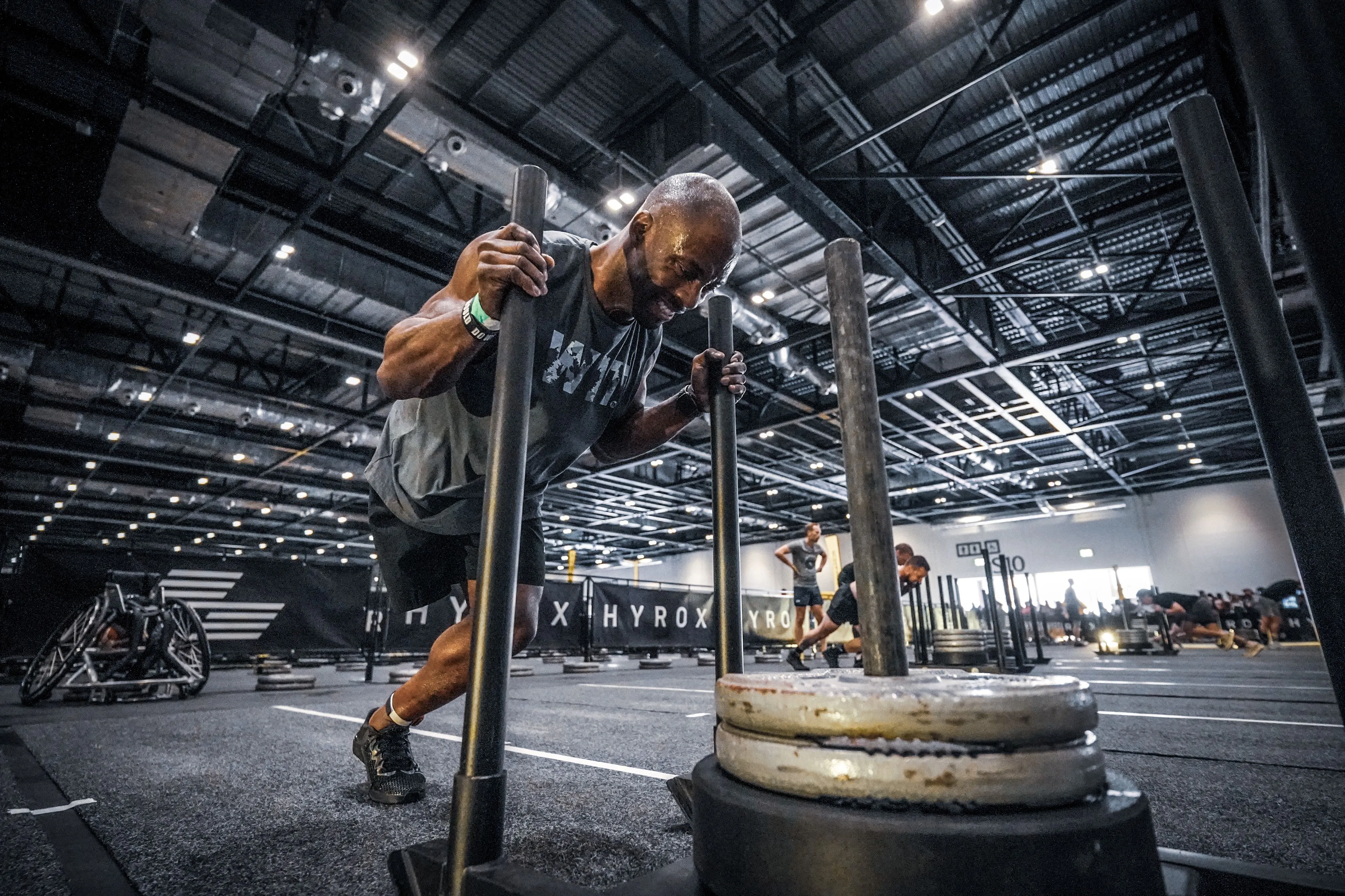
Tell us about Adaptive Throwdown and how it started. "I joined Gymshark in 2023, and shortly after, the idea for Adaptive Throwdown came to me. Gymshark is committed to inclusion and representation, with mannequins showcasing visible differences like wheelchairs and running blades. I thought, 'That's sick! We need more of this.' The diverse athletic looks of the mannequins were refreshing; as such, representation before this has been rare in other sports retailers. During my interview with Gymshark, I envisioned creating a space where the adaptive community felt they belonged, as many gyms still fail to address our needs.
Thus, Adaptive Throwdown was born. Unlike a typical fitness class, this event focuses on teamwork with mixed abilities and disabilities. Teams of four work together on high-intensity workout rounds, each lasting 12 minutes. We started a year ago with just seven participants, and today, on our first anniversary, we've grown to forty-six participants. Our event now includes a wide range of people—wheelchair users, those with limb differences, amputees, individuals with neuromuscular conditions, short stature, and those who are deaf or blind. Adaptive Throwdown is a fully adapted, inclusive fitness space that welcomes everyone."
As a Fitness Instructor, is it important to include exercises that don't require wearing a prosthesis when creating an exercise program for an amputee? "Yes! In fact, I've developed a plan specifically for this called 'Single Leg Strength,' which focuses on building strength and stability on one leg. While it's possible to use a prosthesis for extra stability and balance, the goal is to also train without it. This approach helps individuals become more adept at stabilizing themselves, reaching for objects, and performing tasks without relying on the prosthesis all the time. This includes dedicated balance training days that allow individuals to shift their weight on and off the prosthesis, which enhances balance and coordination. My plan encompasses a variety of exercises, such as squats, deadlifts, and core work, all of which strengthen the muscles and improve overall function for single-leg strength."
Do you worry about your knee as you do not wear a prosthesis? As amputees, we're often advised not to hop or put too much strain on our remaining limb. “Yes, people usually ask me if I'm concerned about the impact of my activity on my knee. However, as a qualified Fitness Instructor, I understand muscle engagement and proper technique can enhance joint longevity. While our bones deteriorate with age (Osteoporosis), other age-related conditions like Sarcopenia (muscle deterioration) affect our ability to generate force; therefore, hopping and jumping in the correct form is crucial for maintaining joint health and extending mobility.
Many amputees land heavily on their heels, which puts more pressure on the joints. Hopping lightly on the balls of your feet reduces the impact on the knee. However, hopping flat-footed increases joint pressure and can be harsh on the knees, similar to running with a flat-footed gait—so this must be avoided. It's essential to land correctly to prevent excess strain on the knee.”
What is the importance of staying active as we age? Does it help our joints remain robust and healthy? "Absolutely. While we may need to adjust our exercise routines as we age, staying consistent with training significantly benefits joint health. One of the biggest risks for the elderly is falls, which can lead to severe injuries like hip fractures, which can be life-threatening for the elderly who aren't active. When people lose strength in their feet, legs, glutes, and hips, they become unstable and more prone to falls, so regular exercise is crucial for maintaining strength and stability, reducing the risk of falls.
Walking involves a lot of hip and pelvis movement, which can strain the lower back for amputees. Strengthening the back and glutes is vital, and exercises like glute bridges are particularly effective, especially with limb loss; one side is weaker than the other. Including exercise actually helps alleviate back pain and overall discomfort. I always tell people I'd much prefer the temporary aches and pains from lifting weights to the stiffness from doing nothing and watching TV."
How does physical activity improve mental health and wellbeing? "Exercise is so important because it releases endorphins, the 'feel-good' chemicals that naturally enhance our mood. Whether walking, dancing, swimming or any activity that increases your heart rate, moving your body is essential for improving mental health and overall wellbeing. It's easy to become complacent, especially when isolated at home and consumed by work or personal issues, leading to temptations like watching TV or endlessly scrolling on your phone. However, the sense of accomplishment after a workout—or even just a brisk walk—is incredibly uplifting. My personal training clients often share how proud they feel after a session, acknowledging the effort it took to overcome the temptation to stay inactive. I often tell people, 'Just show up!' You might not always feel like doing it, and that's completely normal. But once you've decided to show up, you're already winning. The mental clarity, emotional stability, and endorphin boost that follow are well worth the effort."
Where do you see the future of adaptive fitness, and do you think the industry is doing enough to drive change? "I don't think we're doing enough, and that's one of my life missions. I'm visiting gyms and universities to conduct seminars on adaptive exercise for gym employees and healthcare professionals. Many gym settings still need to do more to improve accessibility and inclusivity. We should collaborate more with people with disabilities—rather than focusing on what they might not be able to do, we should emphasize what they can do and what help they need to feel included and achieve their goals. In my experience as a personal trainer, working with clients—whether they have a disability or not—is about collaboration. It's about understanding their needs and supporting them in reaching their goals.
Even when gyms are designed with accessibility in mind—having lifts and disabled bathrooms—they often still fall short in creating a truly welcoming environment. If a disabled person joins a class, they might be asked to sit at the back or be told to do what they can, which can leave them feeling excluded. Visibility and representation of disabled personal trainers in the industry are still lacking. Ideally, every gym would have a disabled member of the workforce, but unfortunately, there are still barriers and doubts about hiring qualified Fitness Instructors with disabilities. In the past year, I've seen at least eight people with a disability become qualified, so there is hope for more representation in the future."
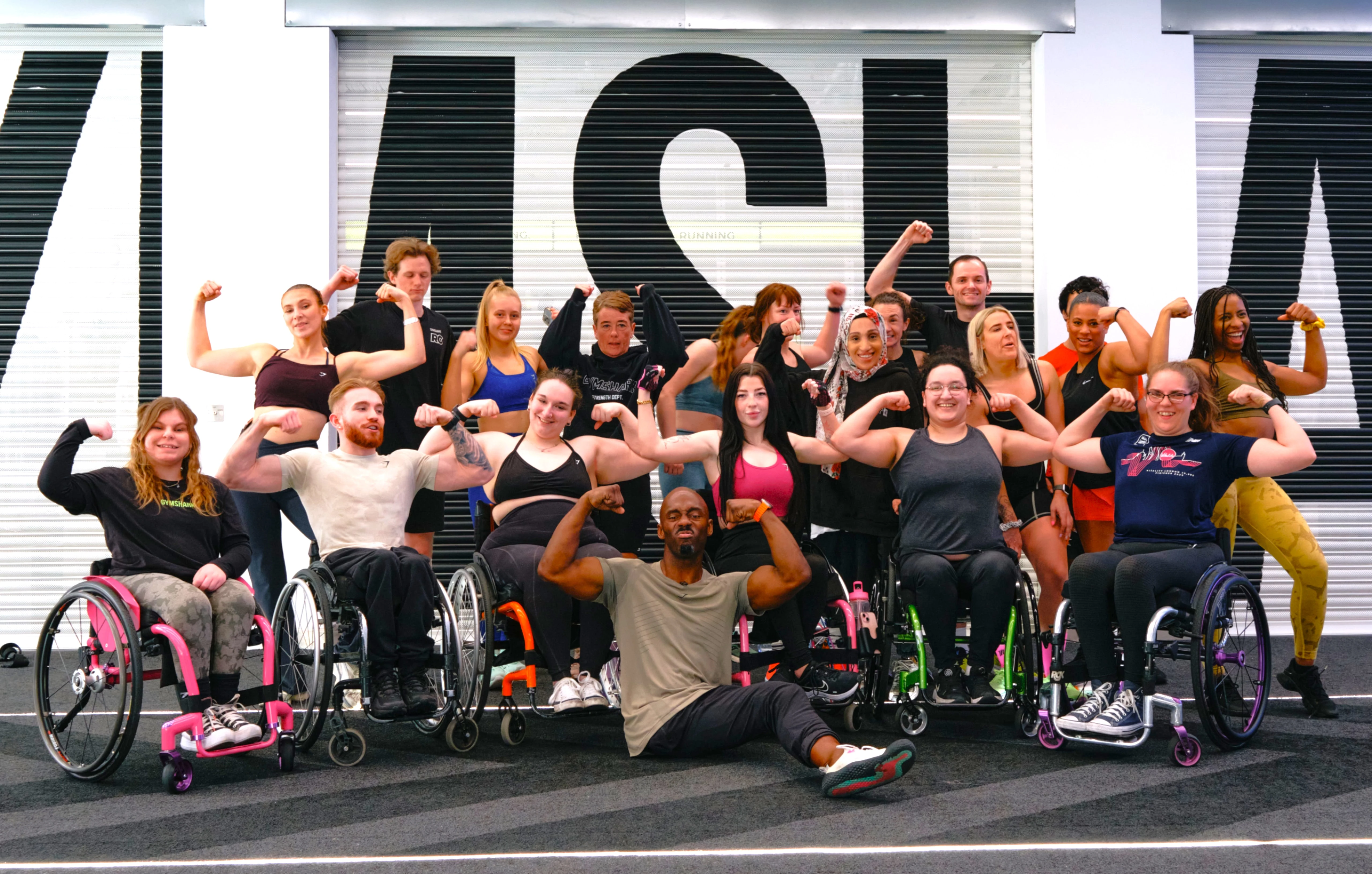
Thank you, Tyler, for sharing your incredible journey and insights. Your passion for empowering others will undoubtedly inspire many people with disabilities to find the confidence to embrace adaptive fitness.
For fitness motivation and updates on upcoming Adaptive Throwdown events, follow Tyler on Instagram.
The next adaptive throwdown is on October 20th 2024!
Watch out for our Movao events —we'll keep you posted on future opportunities to get involved in this inclusive fitness movement.