
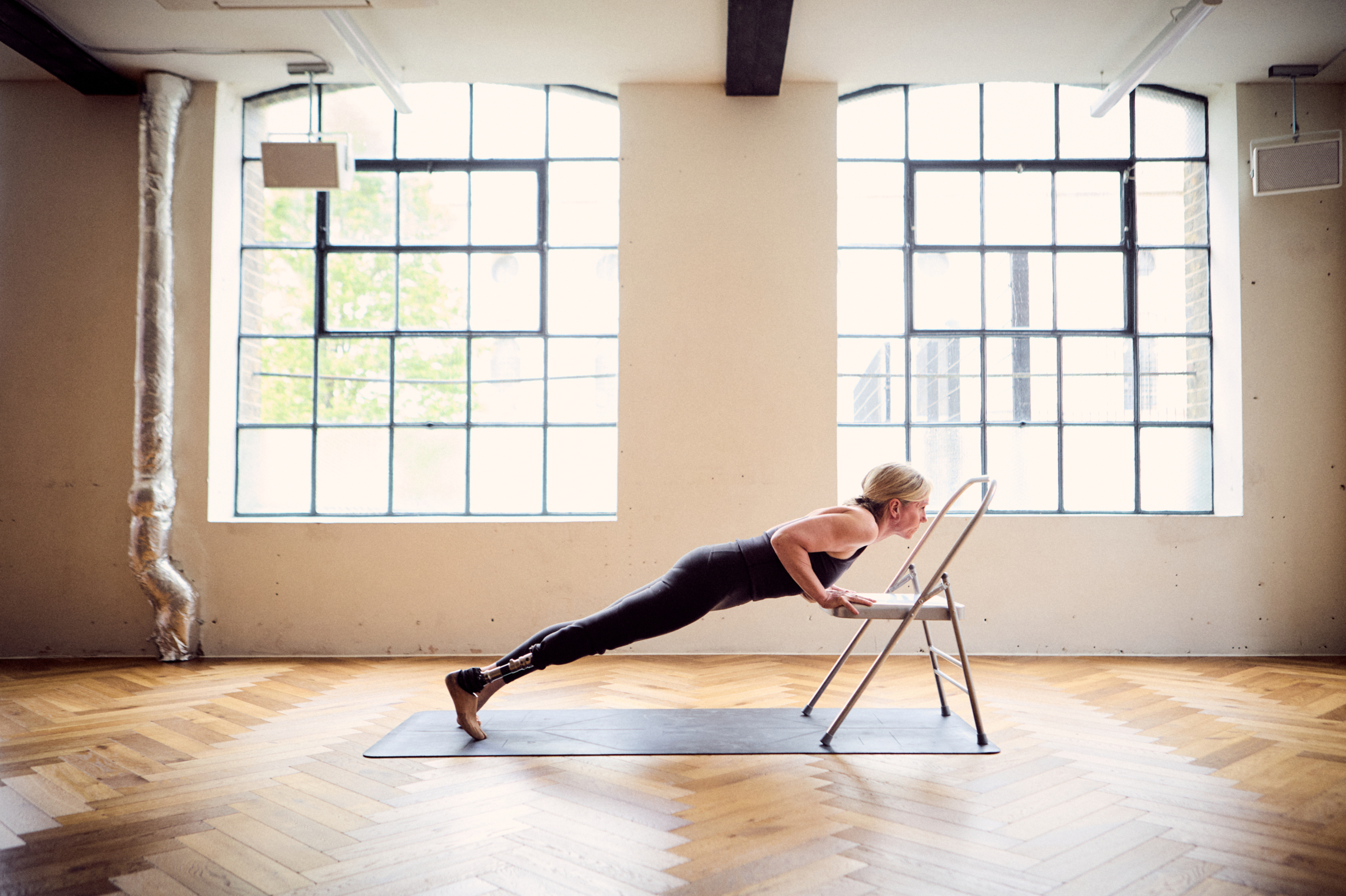
Fiona's Journey: Finding Love in Yoga After Surviving the 2004 Thailand Tsunami and Advocating for Accessible Yoga for Everybody and All Bodies.
Movao talks to Fiona Callanan, a yoga teacher who tragically lost her leg during the 2004 Tsunami in Thailand. Fiona showcases the inner power of self-belief and resilience by not letting this life-altering catastrophic event define her. Only after recovering from her amputation did Fiona gain the strength and determination to push the boundaries, finding a newfound love for fitness. First, she took on two arduous bike ride challenges and then discovered her passion for Yoga, followed by training to become a qualified yoga teacher. Teaching both regular and adaptive yoga practices, Fiona advocates the astonishing health benefits of including Yoga in your fitness routine for everybody and all bodies.
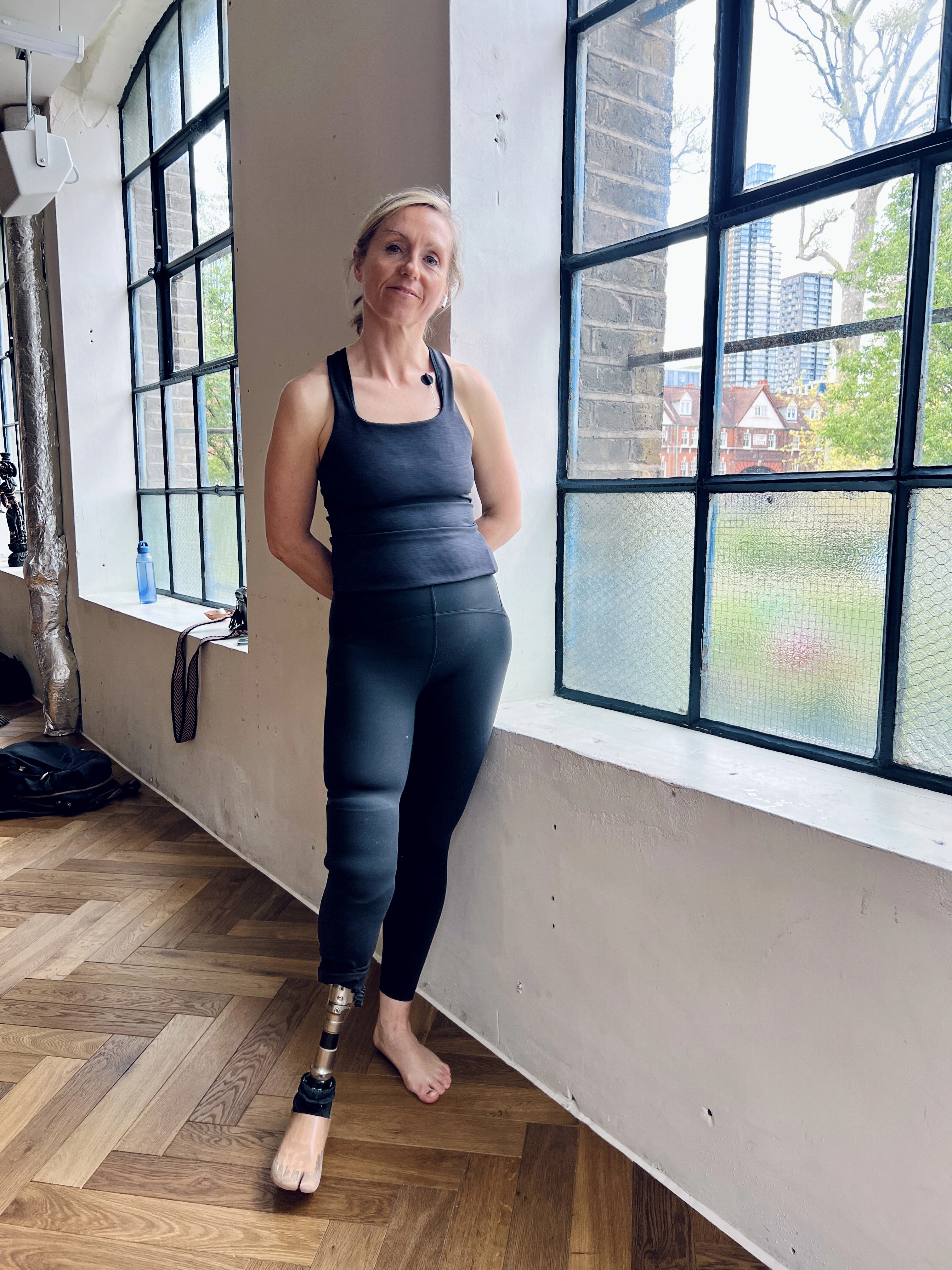
Hello Fiona, please introduce yourself and share your story and journey of becoming an amputee and overcoming the devastating 2004 tsunami? "Hello, everyone. In 2004, I was in the midst of my legal training when my law firm sent me to work in the Bangkok office for a few months. During that time, my boyfriend and I visited Krabi in southern Thailand for Christmas. Tragically, during this trip, the devastating Tsunami struck that Boxing Day, changing everything instantly. I consider myself incredibly fortunate to have survived; although I did lose my leg, many others didn't make it, and I am grateful to be here. Several remarkable events aligned that day, each of which I feel is crucial to my survival. First, our tour guide bravely sought us out amidst the chaos. Second, there was an undamaged speedboat on the opposite side of the island, sheltered by its horseshoe shape, which provided crucial recovery assistance. Third, despite sustaining severe injuries, I was deemed to have the best chance of survival among a group of 25 critically injured, and that is why rescuers chose me and kayaked me out to the speedboat for a hospital transfer. We waited, hoping others might join us, too, but sadly, no one else made it. Once on the mainland, I received immediate medical attention from the doctors, significantly contributing to my recovery. So many lives were lost as people were stranded and unable to reach a hospital. I truly believe that if these events hadn't aligned at just the right time, I wouldn't be here today. It's a story of luck and fate working simultaneously, and I am forever grateful."
What inspired you to become a yoga instructor, and how has Yoga impacted your life? "After recovering from the Tsunami, I channeled my energy into training for charity bike rides. By conquering the demanding distances of 500/600km, from Ho Chi Minh in Vietnam to Ang Kor Wat in Cambodia, achieving these marked mental milestones. I felt inner power, believing I could overcome anything if I could achieve this. Shortly after, I qualified as a lawyer and moved to Hong Kong. While remaining active, I encountered daily challenges with my prosthesis; walking around Hong Kong and its mountainous terrain is physically demanding, and I struggled with strength and dexterity. However, I accepted these challenges as my new normal. Everything changed in 2014 after the birth of my second child. Encouraged by a friend to try a yoga class, it wasn't until this hardcore yoga session ignited an interest and confidence that I began attending regularly, finding solace and strength in each practice. Living in a city filled with athletic individuals, I initially doubted Yoga's impact on my life. However, during a Personal Training session, I suddenly felt compelled to attempt the complete wheel crab position – and I succeeded! This moment made me realize that my mind had been holding me back and limiting what I thought my body could do. I shed these preconceptions, and my dedication to Yoga grew, leading me to qualify as a yoga teacher. Yoga offered profound mental, emotional, and physical benefits beyond what I had imagined. I wanted to understand it deeply and share its impact, especially with fellow amputees and people with other disabilities, showing them the incredible possibilities that exist beyond perceived limitations."
Has including Yoga in your life enabled you to adapt and become stronger using a prosthesis? Physically, I'm now at 100%. My right leg and overall body strength are much stronger, and I have a better quality of life. The most significant advantage I've gained from Yoga is acknowledging and embracing my leg. Yoga, mentally and physically, challenges you to confront obstacles during practice by balancing and putting weight through your residual limb and prosthesis and also by the fact that some (but not all) of the poses require a level of strength and mobility in the limbs that amputees don't automatically have. I've adapted many poses to suit my body, making them my own even if they look different from how people without missing limbs perform them. This shift in mindset has been transformative, showing me how capable and resilient I truly am. I've gone from hiding my prosthesis and disguising myself as an amputee to being proud of it and recognizing the opportunities it has brought me. Yoga has taught me to find beauty in my situation. It's helped me accept my limb loss, turn my amputation into an advantage, and express myself in new ways I never thought possible. Physically, Yoga has had a profound impact for good in me, but mentally, its positive effect has been much bigger. It has helped me come to terms with my journey and see it as a source of strength. Yoga has shown me that our inner power lies in the qualities we develop to overcome daily challenges, which teach us resilience, tenacity, and strength. Recognizing this inner power is where Yoga truly shines, helping me realize my capabilities beyond physical but mostly mental limitations.
What advice would you give someone hesitant to try adaptive Yoga due to concerns about their physical limitations? I understand the anxiety that comes with trying something new. It's natural to doubt and worry, especially concerning Yoga, as many people often focus on physical demands, and the idea of moving the body in various ways can be slightly intimidating. However, much of this negativity stems from our minds. There's always a way to adapt yoga practices to suit your mobility and body, and you'll often find yourself surprised by what you can achieve rather than what you can't. So, if you muster the courage to try it, you'll discover that you can do so much more than you imagined. I guarantee it!
It can be overwhelming for a person with a physical disability to find the courage to join a yoga class. Can you share some tips and advice to help them make that step? The key lies in discovering a practice that is accessible to you, a teacher you trust and who understands your mobility needs, and a community that embraces and supports you. Admittedly, this may involve some trial and error. You'll need to explore different studios and communities, seeking those you connect with and can work well with. One thing that continues to astonish me is how our minds tend to magnify new experiences; we build them up to be monumental and unachievable, only to realize upon starting that we are far more able than anticipated. The other thing I see compared with the other students I teach is that people with disabilities work hard at their practices; we are often used to putting in a level of physical effort in our lives that people without physical disabilities don't need to do, and this translates to our yoga practice, meaning that we naturally push ourselves to find creative ways to adapt the practice to fit our individual needs. Once you achieve this, you start seeing the changes in your mind and body, which are so powerful – you will keep on going back".
What common misconceptions do people have about Yoga for amputees, and how do you address them? From my perspective, the misconceptions about yoga mirror those commonly held by many: the belief that you must possess exceptional flexibility to participate. This fact is entirely false. While you may witness others seemingly effortlessly engaging in technical looking poses and feel intimidated, it's important to remember that they, too, started somewhere and have likely been practicing for years, even decades, that how a pose looks on the outside often bears no reality to the way it is 'being experienced' on the inside, and that it is what is 'being experienced' on the inside through our Yoga practices that matters the most. Yoga encompasses many styles, each offering unique opportunities to individuals of all abilities and body types. There's no one-size-fits-all approach; instead, there's ample room to explore and discover the practice that best suits you.
What yoga practice would you recommend to an amputee, which may be a good starting point? You can join my class! The type of yoga practice you experience depends on various factors, such as the teacher, the studio environment, and your preferences as a student. Even within the same style of Yoga, a practice can be experienced completely differently depending on the teacher and the way they decide to teach it. I advise always reaching out to both the studio and the teachers beforehand. It's essential to connect with the person you'll be learning from and ensure they understand your mobility level and adaptive requirements. A good teacher will be responsive to your inquiries and prioritize your comfort and learning experience by working with your unique abilities.
How do you envision the future of adaptive Yoga, and what role do you see yourself playing in creating awareness in the wellness community? Adaptive and accessible Yoga has an incredible future! Over the past decade, yoga teaching and the Yoga practice globally have been moving away from traditional and outdated ways and towards adopting a much more accessible and inclusive approach. So, anybody interested in practicing Yoga has a much greater chance of finding a practice that works for their individual body and mind in a studio close to them today than they would ever have in the past. As someone actively promoting inclusive and accessible Yoga, I am proud to be part of this positive change and new movement in the industry. I invite individuals of all abilities to join my classes, where we can create a supportive and inclusive community together.