
"I want to be as independent as possible"
When Dennis Rhode from Göttingen talks about the events of February 4, 2021, he seems composed. Even though that day changed his life. The 24-year-old was working as an industrial cleaner at the landfill site in Deiderode. Together with a colleague, he was removing residue from a conveyor belt when his high-pressure lance suddenly got caught in the conveyor belt. "It wasn't a conscious decision, I just reached in to pull the device out." With fatal consequences: His right arm was pulled into the belt. The fire department had to use cutting tools to free him.
The arm could not be saved
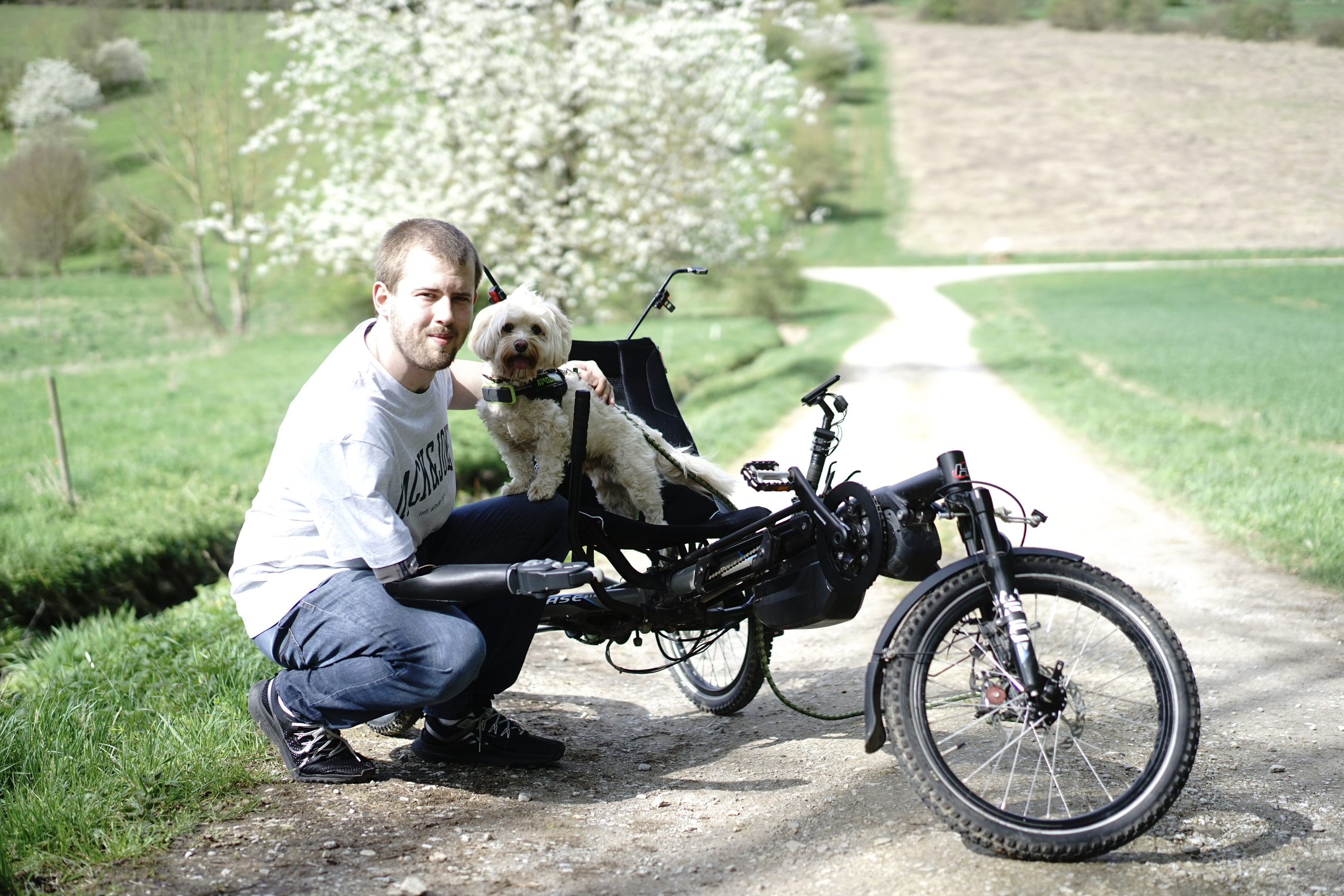
Dennis Rhode was taken to the University Medical Center Göttingen. His injuries were treated in an emergency operation. The arm could not be saved and had to be amputated below the shoulder. "I was very depressed in hospital," Rhode recalls. "How can you play computer games or ride a bike with just one arm? Cut a steak?" But instead of giving up, the trained electronics technician began researching on the internet. There he found a computer mouse for left-handers. Later, an e-bike with three wheels, which he now uses in his free time and which he rides to the shops. At the Ottobock Patient Care Center in Göttingen, where he was treated after his operation, he relearned everyday movements - with a prosthetic arm.
"With every bit of independence I was able to regain, I felt better. That motivated me to keep going."
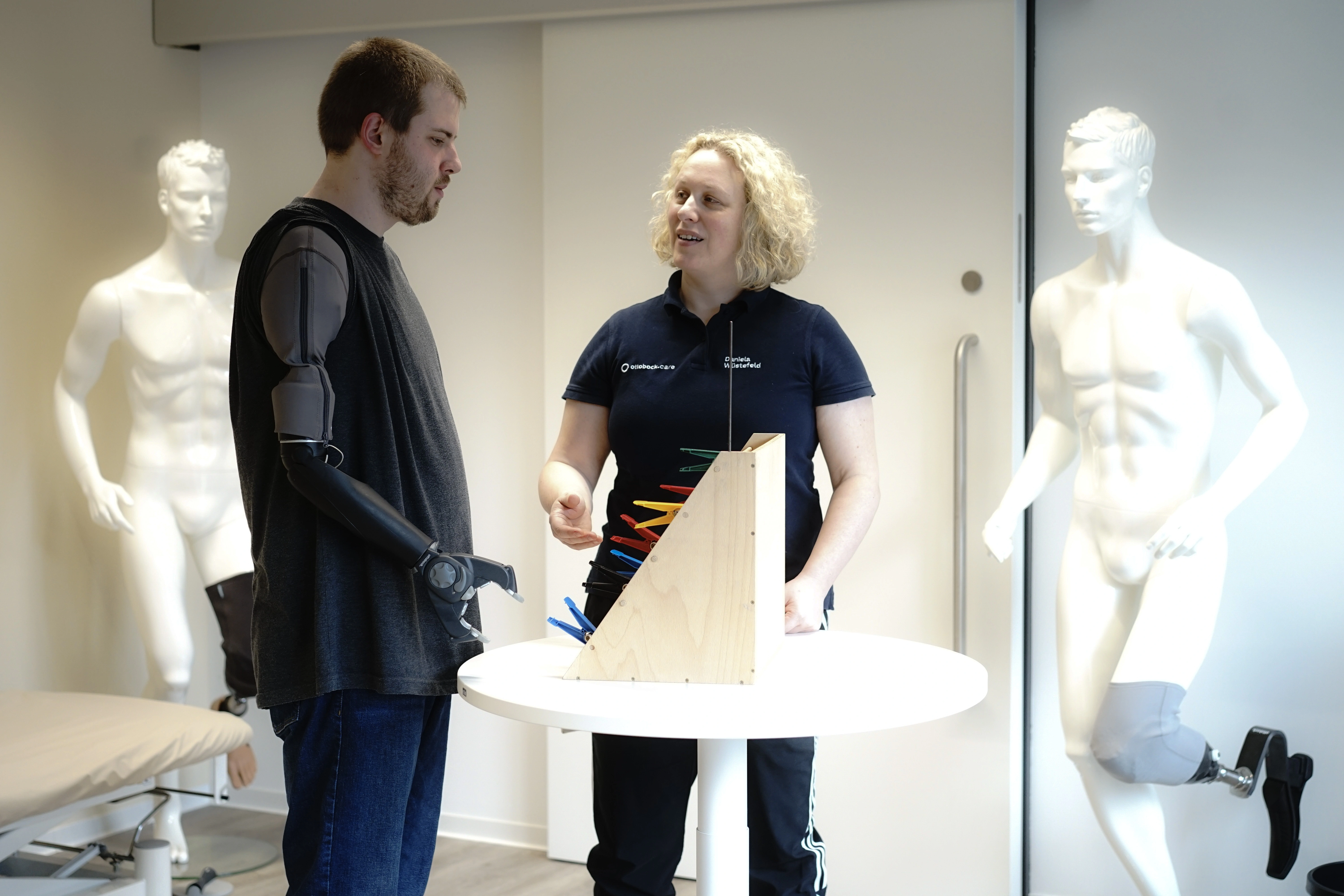
But the socket that attached the prosthesis to the stump of his upper arm gave him a hard time. He sweated under the silicone and had to remove the prosthesis several times a day to dry the stump. "That was annoying and took a lot of time," summarizes Dennis Rhode. Through his therapists at Ottobock, he learned about an alternative method of prosthesis fixation - osseointegration. This involves implanting a connection for the prosthesis into the bone using a type of thread. Prof. Frank Braatz, one of the few specialists for this particular surgical method, was also on site in Göttingen. Together with Prof. Rickard Brånemark from Sweden, a pioneer in the field of osseointegration, he performed the procedure in July 2022. Once the wound had healed, the training began, as the bone needs to be accustomed to stress and bone tissue growth needs to be stimulated. This involves using a type of dumbbell that is gradually loaded with heavier weights. The aim is to reach at least the weight of the future prosthesis. "Dennis was already incredibly stable shortly after his first operation and had a very positive attitude," says Daniela Wüstefeld (occupational therapist at Ottobock), who has been with him since his first operation. "This allowed us to concentrate fully on his care."
Thoughts control the prosthetic arm
A few months after osseointegration, Dennis Rhode decided to go one step further. Using TMR surgery (Targeted Muscle Reinervation), the remaining muscles in his upper arm were surgically divided in August 2023 and the original nerve supply to these muscles was severed. The nerves that were still functional, which had previously controlled the arm along with all the complex functions of the hand, were relocated so that they could grow into the individual muscle bellies and trigger contractions there. This creation of a targeted new connection is known as reinnervation. Following successful surgery and subsequent training, patients can control their prosthetic arm by imagining movements and activating the corresponding muscles.
activate the corresponding muscles. Once again, Dennis Rhode benefited from the fact that Prof. Gunther Felmerer, a proven expert in this special surgical method, is also based in Göttingen. "That's one of the great advantages of this location," says Erik Andres (Head of International Patient Care, Ottobock). "We work on an interdisciplinary basis here. Technology, medicine and therapy are in constant communication. This also makes special fittings like Dennis' possible." It is estimated that there are only 30 to 50 patients worldwide who have been treated with both osseointegration and TMR. Treatment options in the upper extremity are developing rapidly.
The next goal: implantable electrodes that can be used to pick up signals directly at the nerve-muscle interface rather than via the skin. "Dennis will experience a few more milestones in prosthetics and benefit directly from them," Erik Andres is certain. Today, Dennis Rhode lives a largely independent life again. He has a clear goal for his future: a new job. "I've been at home long enough now, I want my everyday working life back!"