
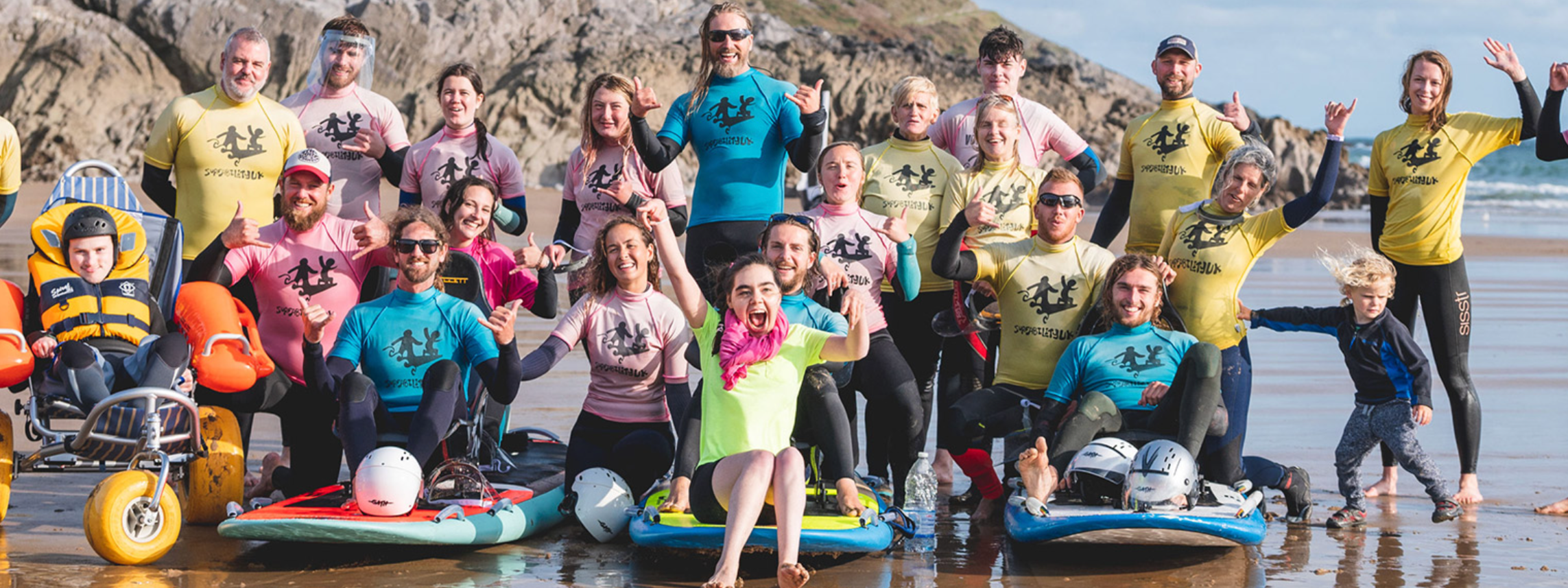
Adaptive surfing: the ocean is for everybody
Surfing, for me, has always seemed to epitomise pure freedom. I have often imagined what it would feel like to surf the waves effortlessly, moving through the water with the ease of a dolphin. It looks wild and liberating.
Being born with a limb difference, water has always held a special kind of magic for me. As a child, I used to pretend I was a mermaid, swimming with my one leg and feeling completely free of my prosthesis.
Whether I was diving, swimming or somersaulting underwater, my body never felt limited in the same way it sometimes did on land wearing my prosthesis. In the water, I felt light, strong and free to move in my own way.
For a long time, I never imagined that surfing could be possible for me as an above-knee amputee. I loved the water, but surfing felt like something separate — something that required perfect balance, two strong legs and a body that moved in a very specific way, completely different to how I can move.
Today, that idea is beginning to change. It is exciting to discover so many adaptive surfing communities emerging around the world, creating new pathways for people to experience the sport in ways that work for their bodies.
It is fantastic that more amputees, people with disabilities and those with physical limitations are now able to take part in adaptive surfing and enjoy the power, calm and tranquillity of the ocean in safe, supported environments.
For many of us, surfing may still be perceived as a sport that requires perfect balance, strength and movement. But adaptive surfing challenges that stereotype. Some people surf standing. Others surf seated, kneeling, lying on the board or with a tandem instructor. Boards can be adapted in various ways, beach access can be supported, and coaching can be tailored to the individual.
The focus is not on making every surfer look the same. It is about adaptation, creativity and finding the safest, most empowering way for each person to connect with the ocean and enjoy the sport in their own way.
That is what makes adaptive surfing so powerful. I know from my own experience, and from others in the community, that beaches can be difficult places to access. Sand, uneven ground, changing facilities and safe routes into the water can all create barriers before we even reach the waves.
But with the right organisation, equipment and people to support us, those barriers can begin to shift.
Across the world, many organisations are helping to make that happen. There are incredible adaptive surfing communities, charities and surf schools creating access in different regions, so it is always worth exploring what is available locally.
Here are three inspiring organisations demonstrating how adaptive surfing is growing worldwide.
Surfability UK is a world-leading adaptive surf school based in Wales, helping to make the ocean more accessible for people with all disabilities.
Founded in 2013 by Ben Clifford, Surfability began as Wales’ first adaptive and inclusive surf school, with a clear mission to make surfing accessible for everyone. Since then, Ben and fellow coach Toby Williams have helped lead the Welsh Adaptive Surfing Team at multiple international competitions, including the World Adaptive Surfing Championships in California.
Their work goes far beyond simply getting people onto a board. Surfability combines specialist coaching, safety knowledge, adapted equipment and a deep understanding of individual needs, creating sessions that allow each person to experience surfing in a way that works for them.
You can get a real sense of their work by watching this video.
Life Rolls On is a United States-based non-profit organisation using adaptive surfing, skating and fishing to improve quality of life for people living with various disabilities.
It was founded by Jesse Billauer, a former surfer who broke his neck in a surfing accident at the age of 17. After returning to the water himself, Jesse wanted to create opportunities for others to experience the same freedom, confidence and possibility that surfing had given back to him.
The name Life Rolls On came from the phrase “life goes on”, but its work feels much more active than that. Through its adaptive sport events, the organisation helps people move beyond limitation and into community, showing how the right support can open up experiences that once felt out of reach.
You can get a real sense of their work by watching this video.
Of course we must feature Hawaii — one of the spiritual homes of surfing. AccesSurf Hawaii began with humble roots: a few pickup trucks, plenty of duct tape and a determination to make the beach and ocean accessible for people with disabilities.
Founded in 2006 by Mark Marble and Rich Julian, alongside original board members Kate Julian and Amen Somal, AccesSurf launched with its first “Day at the Beach” and has since grown into a leading adaptive water sports community. Its programmes now include adaptive surfing lessons, beach access days, adaptive swim clinics, outrigger canoeing and multi-day surf camps, as well as hosting its own international competition for elite adaptive surfers from around the world.
AccesSurf’s story shows how a simple idea, built with community spirit and determination, can grow into something life-changing — helping thousands of people experience the ocean every year.
You can get a real sense of their work by watching this video.
Alongside these community-led organisations, adaptive surfing is also growing as a competitive sport. The International Surfing Association supports para surfing globally, including classification systems and the World Para Surfing Championship.
For some adaptive surfers, the dream may be to compete internationally. For others, the goal may be much simpler but just as meaningful: to get into the water, catch a first wave, or feel safe enough to try something they once thought was impossible.
This is why representation matters. When disabled people see other disabled surfers in the water — standing, seated, prone, tandem, with prosthetics, without prosthetics, with support or independently — it changes what feels possible.
Adaptive surfing reminds us that inclusion is not about lowering expectations. It is about changing the environment, the equipment and the support so more people can fully take part.
The ocean does not ask everyone to move in the same way. It simply offers the wave.
And with the right support, that wave can belong to everyone.