Harley-Davidsons, Traffic Cops and Amputation
When Andrew Simister joined me for a Movao LIVE interview, he spoke openly about the moment his life changed in an instant.
Continue reading the interview summary below, or watch the full, unedited video on YouTube for even more heartfelt moments.
On a typical Friday morning, Andrew was riding his Harley-Davidson Street Glide when he noticed his belt flapping in the wind. It was distracting, so he made a sensible decision: he pulled into a lay-by on the dual carriageway, switched off the engine, put the bike on its stand, and took a moment to fix it.
Seconds later, everything changed.
The driver of a Ford Ranger pick-up truck was momentarily blinded, straying into the lay-by and struck Andrew from behind. The incident later featured on Traffic Cops and Helicopter ER, showcasing both the police investigation and the emergency medical response.
Andrew was conscious for most of what happened next and recalls: "I was fastening my belt when suddenly I heard a massive explosion, and a powerful surge of energy propelled me forward. I remember thinking, 'What the hell's just happened?’
My vision shifted from colour to black and white. I don't know how long I was unconscious, but when I woke up, I found myself on the dual carriageway, lying on my stomach and watching cars passing by slowly. People were leaning out of their windows, taking photographs of me."
Andrew recalls the people around him trying to comfort him while they waited for emergency services to arrive. First came the fire engine, followed by the ambulance, and finally the air ambulance. Despite the pain he was experiencing, his focus remained on one thing: asking someone to get his phone from his pocket so he could call his wife, Tess.
Andrew was conscious for much of the incident because of his sleep apnoea, which prevented paramedics from administering the full dose of ketamine. He vividly recalls: "I was disoriented and in a lot of pain. My leg felt bent and suspended in the air, and I asked someone to put it back down. I think my leg had twisted around inside itself — it was shattered beyond recognition and nearly amputated, just held on by skin."
Andrew prioritised safety while riding his motorcycle and, as always, was wearing full protective body armour, which likely saved his life. Later, in the hospital, he learned that, in addition to his severe leg injuries, he had suffered a non-displaced fracture of the L4 vertebra in his back, which was just millimetres away from causing paralysis. In other words, he was mere millimetres from losing his life.
Hospital hallucinations
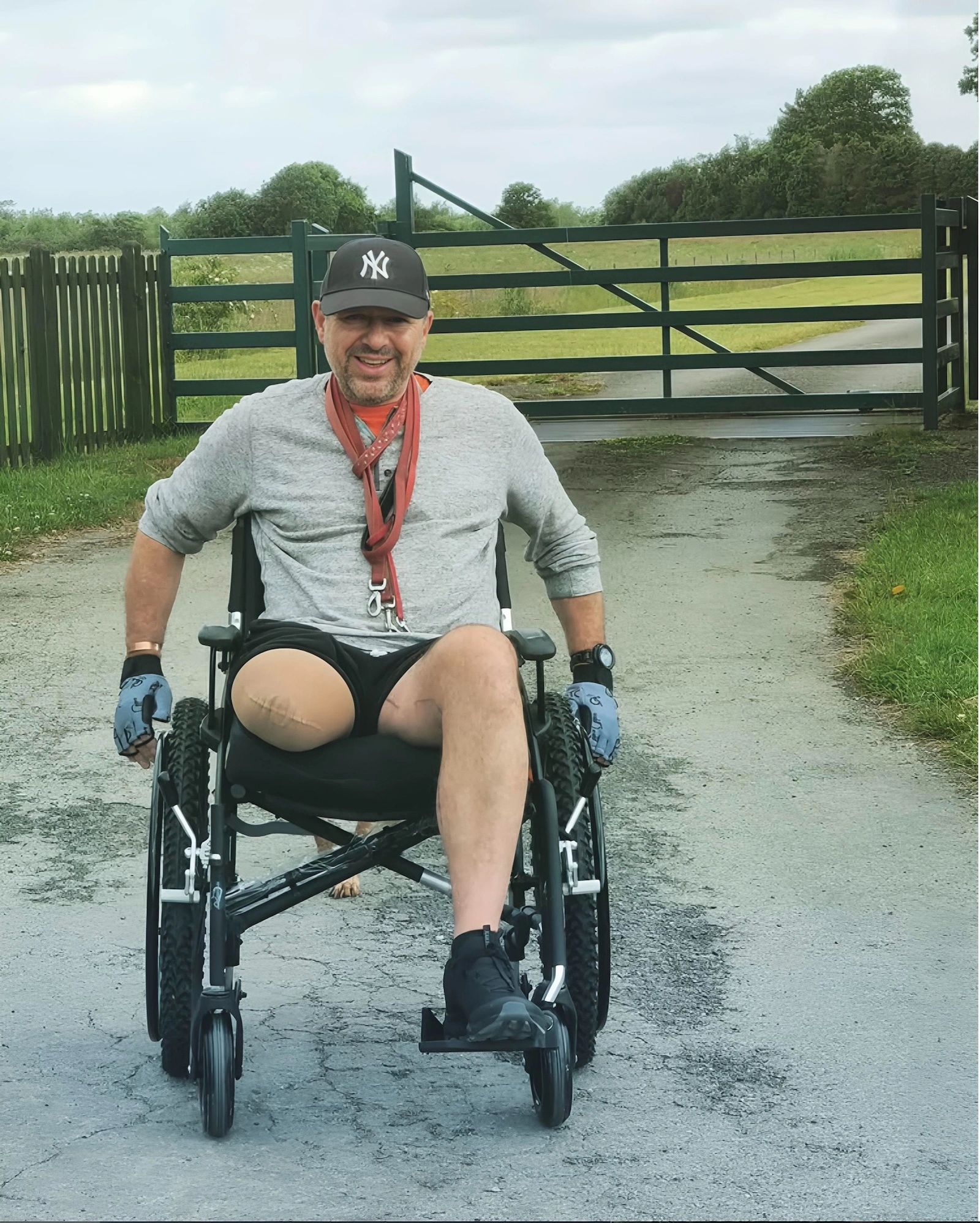
Andrew's leg was not amputated right away. While he was in the hospital, doctors began discussing the possibility of amputation, and his immediate reaction to this news was: "You can't amputate my leg. You can't amputate my leg."
Surgeons worked to save the injured leg by taking a donor vein from his uninjured leg and grafting it into the damaged one to restore blood flow. For a brief period, circulation returned to his foot, offering hope. However, the damage to the calf, shin, and surrounding muscles was severe enough to pose a high risk of infection. In total he had five operations, including his right leg being amputated above the knee, and received seven blood transfusions.
When Andrew regained consciousness after surgery, his wife Tess was there to deliver the news. He later described that moment: "I was hysterical. I couldn't process it at all. I was heavily medicated and confused, and I was actually hallucinating for most of the time."
Andrew's time in intensive care was profoundly disorientating. The drugs, trauma, and shock blurred his sense of reality to the extent that he struggled to understand where he was. "I didn't even know I was in a hospital. At one point, I thought I was in a factory."
While he can talk about it now, it was frightening at the time. "My solicitor later explained it as ICU mania — something many trauma patients experience because of the medications."
Andrew draws an unexpected parallel to Jimi Hendrix's song Purple Haze, which had never really resonated with him before. As he describes it, everything suddenly clicked. "During my hallucinations, it finally made sense. The whole room was purple. I could see angel feathers. Anyone who walked into my room seemed to have angel feathers surrounding them. But then, at times, I would see these devilish eyes staring at me from the corner."
As he experienced both the heavenly and the hellish sides of the hallucinations, Andrew found himself grappling with two overwhelming emotions at once — deep gratitude for being alive, and devastation over the loss of his leg.
Coming to terms with amputation
Accepting his amputation was the moment Andrew struggled the most. In the day after his amputation, he found himself in despair and in floods of tears — emotions he had never experienced before. He asked the nurses if they could arrange for someone from church services to come and see him — not because he was particularly religious, but because he was desperate to make sense of what had happened.
As Andrew puts it: "I don't care who they are or what faith they follow — man, woman, Christian, Muslim, Jew — I need to speak to someone close to God. I was going out of my mind at that time."
Coincidentally, a Church of England Reverend — also called Andrew — came to visit him in hospital. Andrew remembers trying to explain something he couldn't yet make sense of himself: how he felt pulled between two overwhelming emotions. He was deeply grateful to be alive, but at the same time utterly devastated by the loss of his leg.
As Andrew explains: "Reverend Andrew spoke to me about my grief — about the fact that a part of me had died in the accident and that it was gone. I burst into tears, grabbed his hand and just said, 'Thank you.' I asked him to pray to God on my behalf and to thank God for saving my life."
Before leaving, the reverend gave Andrew a small wooden heart. Andrew kept it with him throughout his hospital stay and wouldn’t let it out of his sight. "When he left, I knew I was going to be okay. That moment shifted something in me — from devastation and self-pity to asking myself, 'How do I make the best of the life I still have?'"
Learning to walk again
Rehabilitation started almost immediately, and it was much more challenging than Andrew had ever anticipated. Before the accident, he was fit and active, regularly participating in Insanity training, which focuses on building upper-body strength — something may have helped him more than he realised during rehabilitation.
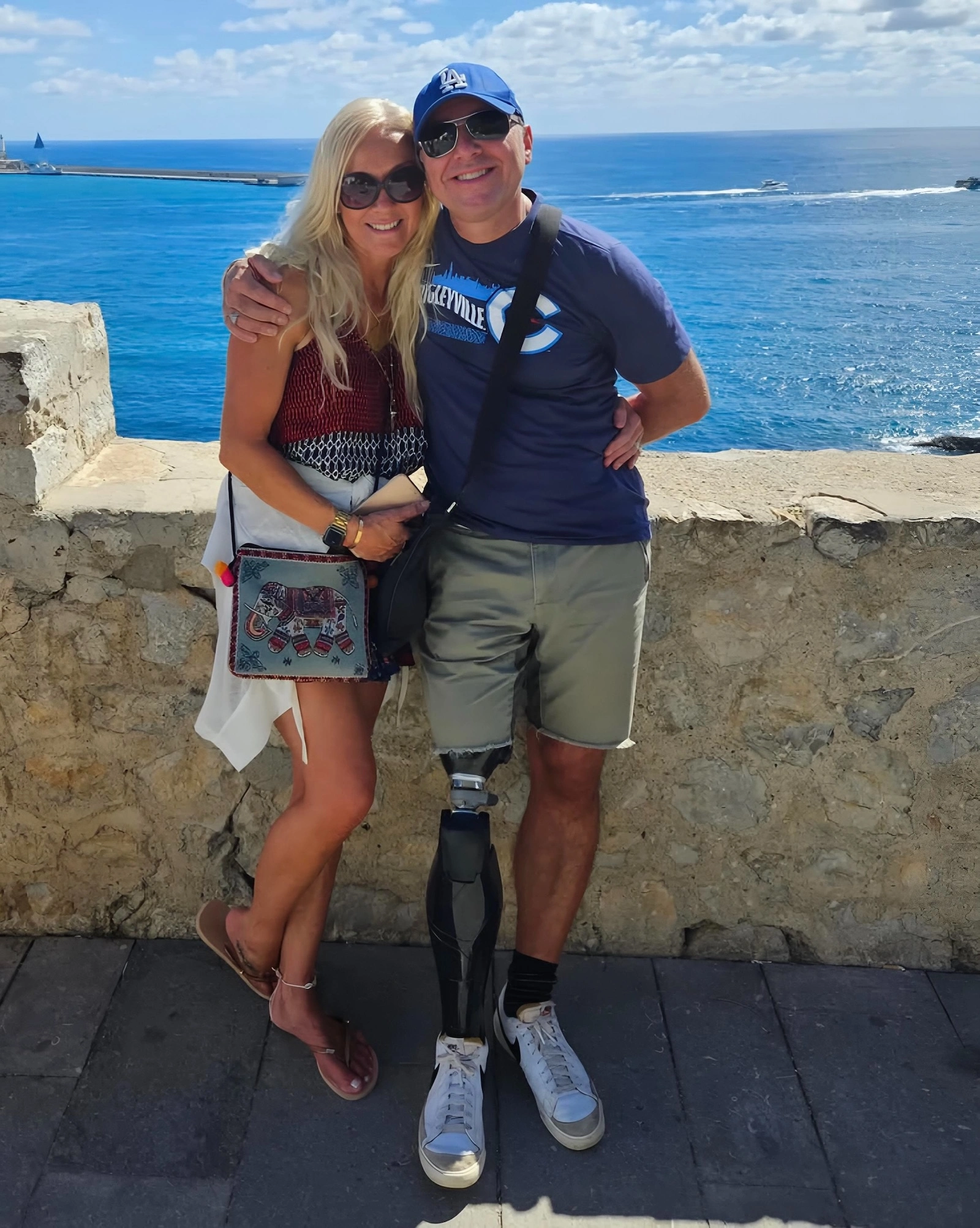
However, despite being fit, nothing prepared him for the path ahead. He had to relearn the basics from scratch: standing, balancing, and eventually taking his first steps with a prosthesis. "I couldn't believe how difficult it was. I assumed that you'd stand up and walk — but it was so much harder than I imagined. Your centre of gravity has completely changed."
In those early stages, Andrew began seeking inspiration from other amputees — like Billy Monger and Richard Whitehead — and by following amputee para-athletes online. Watching what others were achieving and seeing them living fulfilled lives after trauma and amputation, fuelled his determination that he could do the same.
But reality hit hard, and learning to walk again was more challenging than he ever imagined. Andrew explained something during our conversation that really opened my eyes — even as a lifelong above-knee amputee myself.
When amputation happens suddenly in adulthood, the body and brain must relearn balance and find their centre of gravity all over again. Rather than the weight naturally centring, everything shifts onto the sound side. You lean. You compensate. Not because of weakness — but because your body and mind are protecting itself while it learns to trust again.
Progress was slow. Walking was exhausting. Walking just ten metres wiped him out. Andrew stayed focused and set himself small, practical goals — walking from bench to bench, resting, then continuing again. It was a process built on patience, repetition, baby steps, and celebrating small victories.
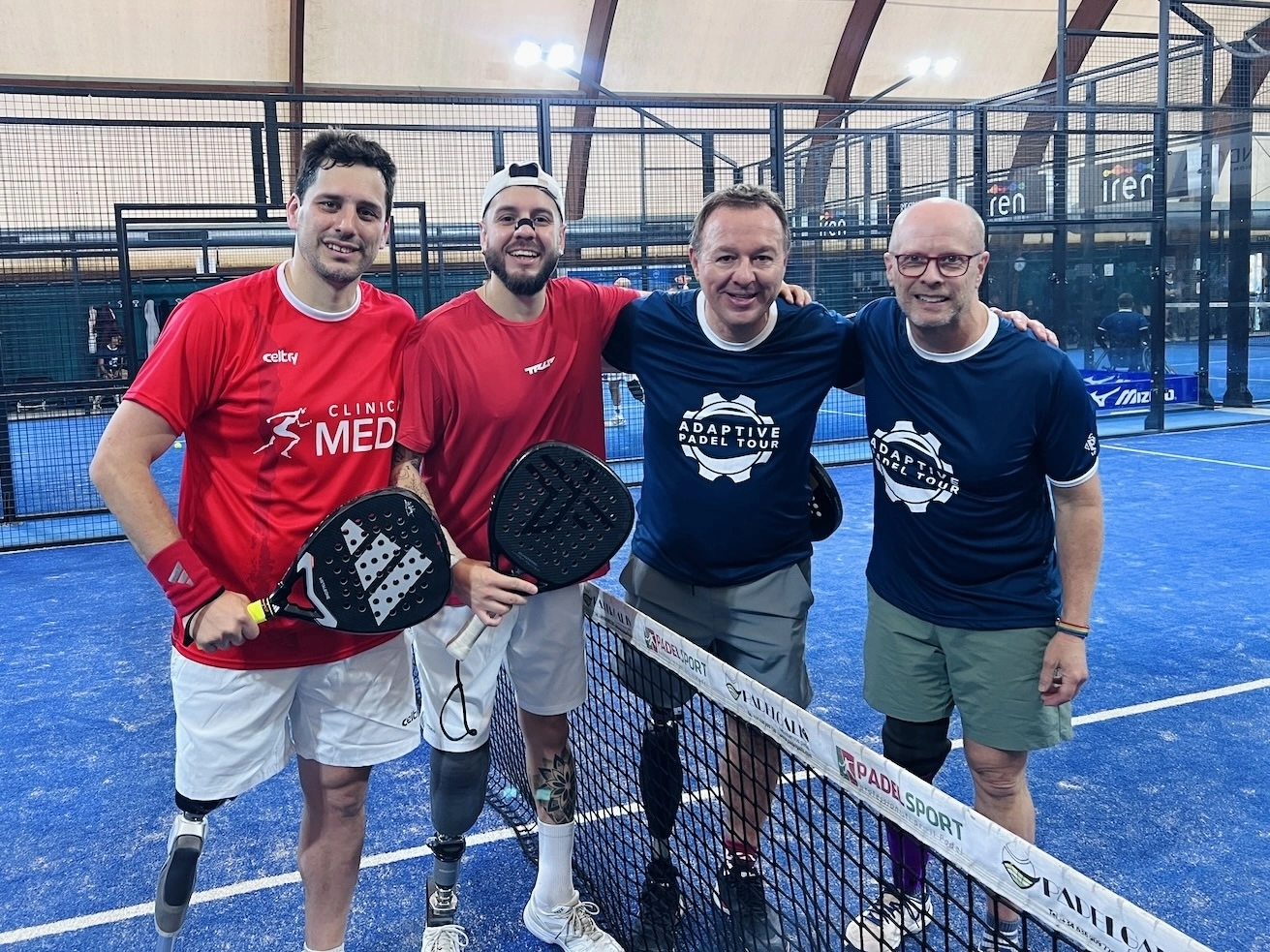
Finding padel — and finding his people.
Adaptive fitness and sport became a turning point for Andrew — but not in the way he expected, and not something he went looking for. Padel entered his life almost by chance. Introduced to the sport by friends and his son, Andrew tried it for the first time and immediately loved it.
Curious, he began following the Inclusive Padel Tour and its Italian founder, Alessandro Ossola. Andrew reached out, saying that if the Inclusive Padel Tour ever came to the UK, he'd love to watch.
The response changed everything.
Alessandro replied simply: Why watch? You should play."
From that moment, Andrew didn't stay on the sidelines. He joined the Inclusive Padel Tour and went on to become one of the first British amputees to compete internationally. What mattered most, though, wasn't the competition — it was the community. The camaraderie. What many players now affectionately call the padel family. Andrew reflects: "What's truly special is that everyone has a disability or a limb difference. We're all from different countries, with different stories — but the same challenges, experiences, and mindset."
For the first time since his accident, Andrew found himself in a space where no one stared, judged, or needed explanations. Conversations shifted away from what happened to you, and toward which socket you use and how you manage it.
"It just felt normal."
Padel gave Andrew more than just a sport. It gave him connection, confidence, and belonging — a place where his limb loss wasn't questioned and his lived experience of amputation was understood.
Padel gave Andrew more than movement. It gave him his people.
Andrew's advice to others
Reflecting on his experience, Andrew is sure that amputation didn't end his life; instead, it redirected him onto a new path filled with opportunity and adaptation. His advice for anyone going through their own amputation journey is simple: "If you need help, always ask for it. There's no strength in pretending you're fine."
He firmly believes mental recovery must come before physical recovery:
"Recovery is 80% mental and 20% physical."
He encourages others not to let their minds create barriers when trying new things: "Don't tell yourself you can't do something — question it. Adapt. Find a different way. There's always a route. If I can do it at 60, then anyone — whether young or more mature amputees — can too."
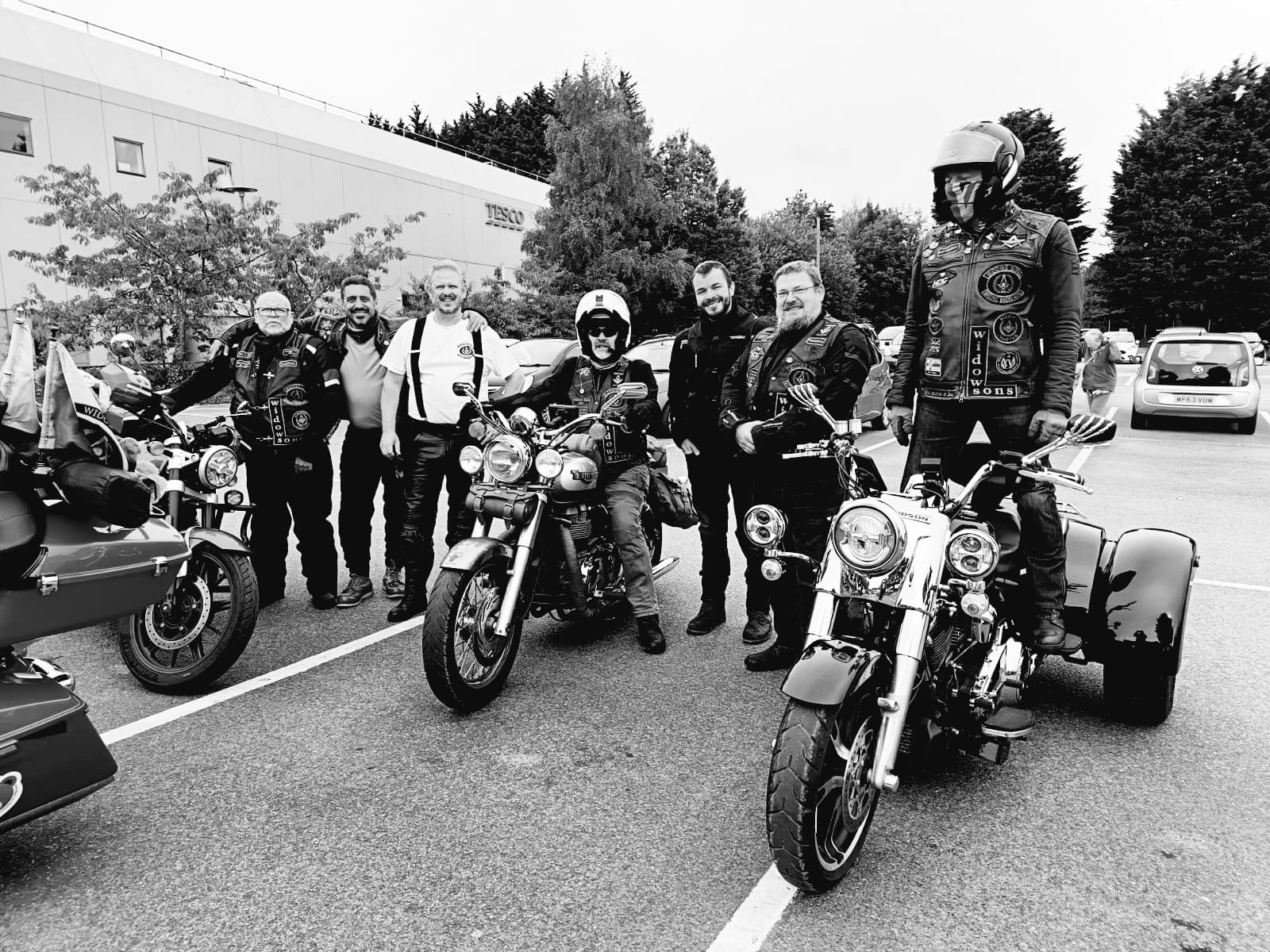
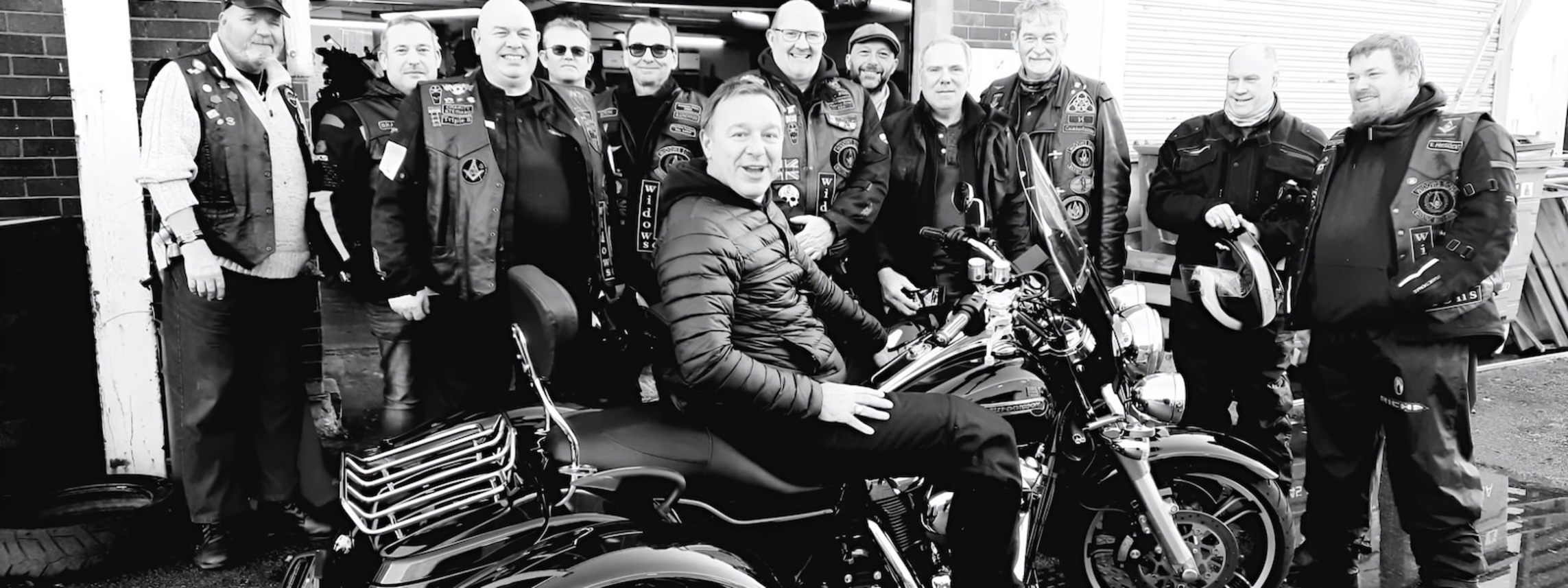
Today, Andrew leads a fulfilling life. He rides an adapted Harley trike, stays active, supports fellow amputees, and continues to set new goals for himself.