
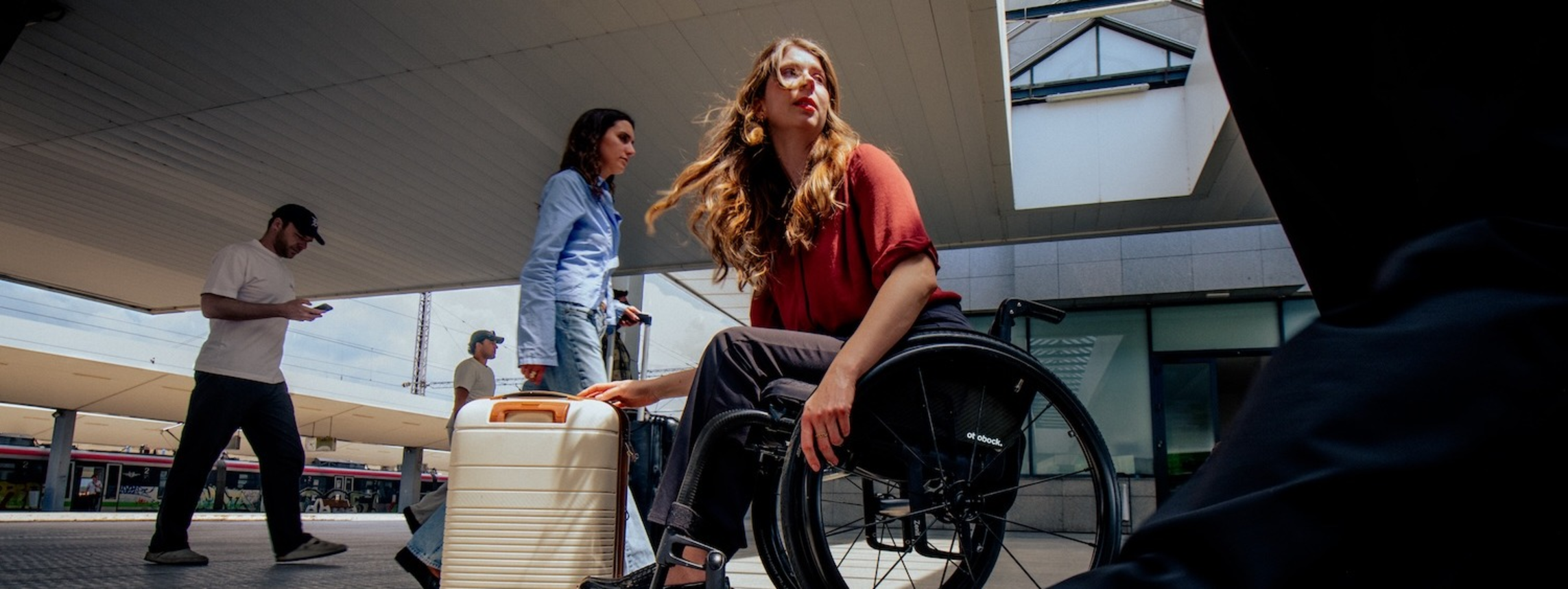
What I wish I knew before travelling with limited mobility
Travel should embody freedom. Whether you are counting down the days to your next vacation, planning a weekend escape, or commuting to a new job, the initial feeling should be one of excitement. However, for many individuals with disabilities, that excitement is often overshadowed by anxiety—memories of past challenges and concerns about what could go wrong.
On a recent trip home, a delayed flight left me frantically rushing to catch our connecting flight, only to discover the escalator was out of order. For most travellers, that would be a minor inconvenience. For me, it presented another invisible barrier—hand luggage in one hand and my children in tow, with no accessible alternative available. We just made the flight, but as I sank into my seat, exhausted and mentally drained, I couldn't help but wonder: why does this keep happening?

I am not alone. Approximately 1.3 billion people worldwide live with some form of disability and continue to encounter daily barriers. In fact, 84% of individuals in Europe and 94% in the United States report facing challenges while travelling. As part of Ottobock's Invisible Class campaign, which highlights the obstacles disabled passengers face continuously—from lost or damaged wheelchairs to inaccessible transportation and accommodations—Zainab El-Equabi shared:
"The first time I ever faced a security checkpoint that forced me to take off my prosthesis, I cried a lot. My prosthesis is my leg. It's a part of me. It felt vulnerable being stripped of a precious part of my body and put in the scanner in front of all the other passengers."
Experiences like Zainab's remind us that these barriers are not just statistics—they are lived realities. However, there can be a glimmer of light at the end of the runway, as wheelchair user Ayleen Walter expresses:
"In the past, travelling was often a spontaneous affair for me – I would just decide where to go on the spot. Nowadays, travelling involves meticulous planning. However, it's not impossible – with enough preparation, courage and the confidence that you will always find a solution, it's entirely possible."

Ayleen reminds us that travel is still possible — it just takes more planning and support. To help, we've gathered insights from our Movao and Ottobock communities and created an accessible travel checklist, packed with advice to make each step of your journey easier.
Before you go
- Plan every stage – map out airports, stations, rest stops, and transportation. Always have a backup route.
- Take extra time – adding an extra hour (or two) reduces stress and gives you breathing space.
- Use accessibility apps – start with apps like Google Maps, Wheelmap, and AccessNow for wheelchair routes. Many transportation apps also provide real-time accessibility information.
- Know your rights – research the laws regarding passenger disability assistance both at home and abroad. This includes understanding support services, compensation rights, and legal obligations.
- Check accessibility everywhere – don't just focus on your hotel; research nearby restaurants, attractions, walking routes, and local transport options.
- Service your equipment – ensure your prosthesis, wheelchair, or any mobility aids are in good condition and ready for travel.
- Research local centres – identify prosthetic or rehabilitation centres at your destination in case of emergencies.
- Pack a "just in case" kit – include medication, spare parts, prosthesis chargers, a fully charged power bank, and important documents such as prosthesis and wheelchair passports.
- Don't skip insurance – invest in good travel insurance that covers cancellations, medical needs, and damage to your mobility aids.
- Keep emergency contacts – store them in your phone, but also write them down.
- Learn key phrases – apps like Duolingo or Google Translate can help with quick communication abroad.
- Travel off-peak where possible – fewer crowds mean less stress and more accessible support
Booking and planning
- Book with an accessible travel agent – share your itinerary with experts who can arrange trusted accessible accommodation, transport, attractions and support.
- Learn from others – follow accessible travel influencers for guides and inspiration for your travel bucket list, and read trusted reviews from disabled travellers for honest insights.
- Always get it in writing – if a hotel or attraction promises accessibility, don't just trust a tick list. Ask specific questions and confirm which accessibility amenities they provide in writing.
Transportation options
Plane
- Notify the airline of your needs when booking, and again 24–48 hours before departure. Check rules for wheelchair weight and battery restrictions.
- Arrive early and book airport assistance to get through security quickly and easily.
- Wear comfortable clothes—shorts can make prosthetics visible, helping staff direct you through accessible lanes and speeding up security checks. Plus, if you need to remove your prosthesis, be aware that the rules for this differ in each country and airport.
- Bring your own travel wheelchair to conserve energy on long airport journeys. This way, if you arrive at a busy lounge, it guarantees you'll always have a seat. You can also find travel bags that attach to your wheelchair.
- Request early boarding to the aircraft to settle in calmly.
- Carry medical documents for your mobility equipment or prescribed medication (always check if you can take this medication to your destination).
- Clearly tag your mobility device with your contact details and handling instructions.
Train
- Book assistance 24–48 hours in advance for ramps and boarding help.
- Check departure and arrival stations for step-free access, lifts, and accessible toilets.
- Reserve accessible seating near facilities you may need.
- Allow extra time at large stations—they're harder to navigate, especially in a rush.
- Mentally prepare for unexpected platform changes with a backup route in mind.
Bus & Taxi
- Call ahead to confirm low-floor vehicles with accessible ramps.
- In many cities, specialist companies offer wheelchair-accessible taxis—book in advance.
- Have a backup plan if services are out of order or full.
- Use real-time bus apps to check accessibility before boarding.
By sharing experiences and raising awareness, we can make invisible barriers visible—and push for a future where accessible travel is the standard, not the exception. Because when accessibility is built in, not added on, travel becomes what it should be for everyone: freedom.
What are your top travel tips? If we have missed anything, please share it in the comments—we'd love to hear from you.
Ottobock has also created an informative guide for fellow travellers and staff—helping people better understand how to approach and support those with limited mobility while on the move. (attached to this story).