
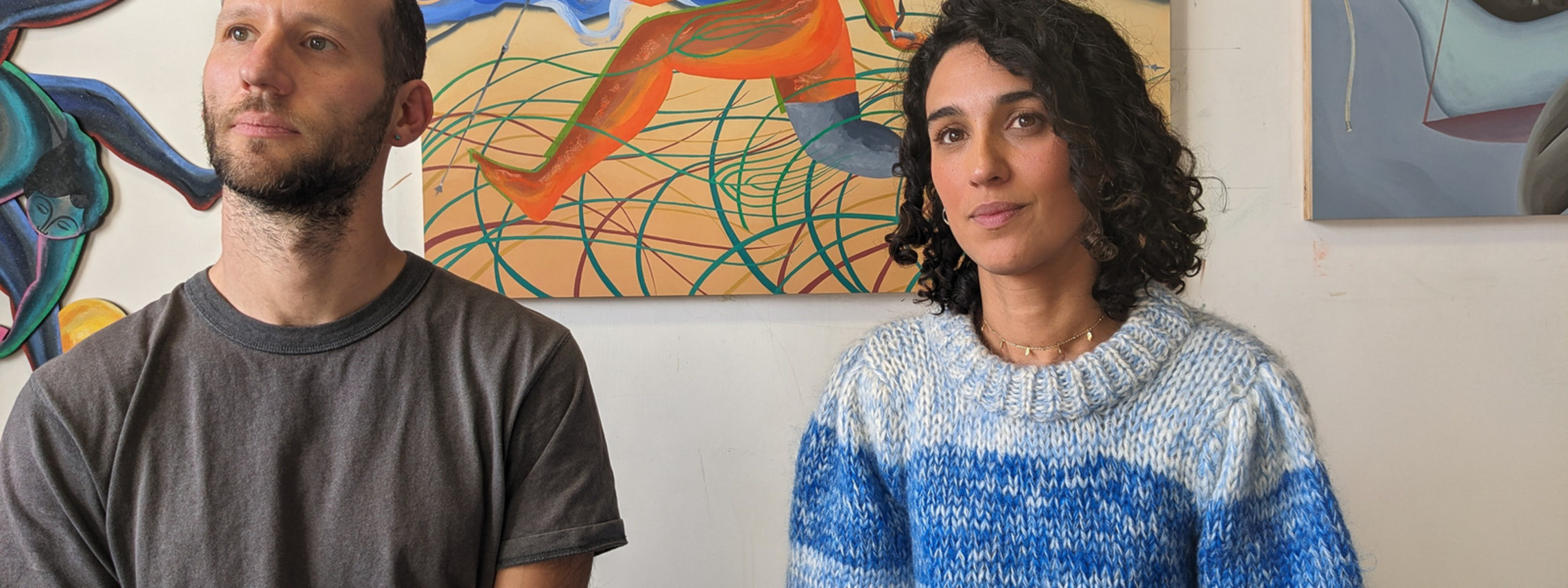
Resilient Brushstrokes: A Husband's Journey Through Art, Love, and Amputation
Expressing oneself through art is a personal journey transcending reality, allowing artistic intuition to guide the creative narrative. But what happens when life takes an unexpected turn, altering the path of a loved one? One Step at a Time Art Collection, showcased in Lewisham, UK, and featured on BBC News, chronicles a husband's emotional journey through his wife's traumatic crash and amputation. It offers rare insight through powerful words and captivating paintings, portraying a life-altering event through the eyes of those closest to it. Tom's story captures the raw essence of their experience - from the initial shock of the crash to the arduous rehabilitation and recovery process.
Tom, an artist and illustrator based in South London, works in various mediums, including painting, printmaking, and galleries. In January 2022, Tom's wife Nedah lost her leg below the knee in a traffic crash when she was run over by a lorry while cycling to work. I was excited to speak with Tom and Nedah, share their story, and delve into the mind and inspiration behind this extraordinary collection.
What inspired you to create an Art Collection showcasing Nedah's amputation journey?
Tom: I often respond to many things through art. One Step at a Time naturally emerged as a way to help process my thoughts and feelings after such an intense event. It all started organically from the very early days when Nedah had her accident. While visiting her in the hospital, images flooded my mind, and I began writing down my thoughts and feelings, helping me cope emotionally during this worrying time. This exhibition includes a lot of writing, which is new for me since I don't usually write. Still, in this instance, it was a great way to express my emotions, leading to ideas for many paintings and ultimately evolving into a complete collection.
Have you always used art to express your feelings and inner thoughts as an artist?
Tom: I believe so, especially more so with what happened with Nedah. Art is a form of storytelling. Through my storytelling, I reflect on my feelings about Nedah, the people around her, and others involved in the narrative. It's a blend of Nedah's emotions, mine, and those of others around us. By telling and retelling the story, we've better understood our experience, and for anyone facing similar life-changing events, this can be a valuable practice and gives you a form of control - something you can express and not be told.
Nedah, were you involved in helping to create the artwork?Nedah: It was primarily Tom's endeavor. While we discussed some personal themes together, the ideas, thoughts, and feelings expressed were all Tom's. I knew he was creating beautiful art, but I only saw the paintings when the collection was finished. Seeing them for the first time was impactful; I was surprised by the amount of work and love Tom had put into them. The writing was particularly moving and emotional for me.
When tragedy strikes due to being in the wrong place at the wrong time, how can art help release the emotions tied to such experiences?
Tom: Many of my paintings reflect this sentiment, especially in light of Nedah's crash. While some may perceive it as bad luck, the experience had incredible aspects. The assistance from those at the crash site and the enduring support over the months and years were remarkable. Although I wish it hadn't happened, we've learned much from it - it's been a significant life change. This experience encompassed various emotions: tragedy and bad luck, but also elements of gratitude, occasional anger, and joy. Our love and connection have undeniably grown stronger over the past two years. It was a mix of emotions, and that's precisely what I aimed to convey with One Step at a Time.
Nedah: It has been challenging for me in some ways, and at the time, it was traumatizing. However, I now see my life differently, which has opened up many experiences I might not have had otherwise. I have returned to studying and am now developing my skills in disability and inclusion in my doctor role. I am learning so much and meeting various wonderful people that I would never have met otherwise. There is sadness and grief, along with lots of other feelings. Many people were drawn to One Step at a Time in various ways. Some learned about it through the news or TV, while others connected with it due to having different disabilities. You don't need to be an amputee to relate to it; anyone who has experienced a life-altering event can resonate with the story. Seeing numerous individuals connect with Tom's work was powerful, as each person uniquely linked their own experiences and emotions to the creative narrative.
Did you anticipate that One Step at a Time would resonate with such a wide audience?
Tom: I hoped it would be a story enriched with human experiences that people could connect with, especially those who have witnessed or been directly affected by significant life-changing events. Whether it's the loss of a parent or a positive life-changing event like having a baby, I want people to relate to my work in various ways. Many conversations revolved around my reluctance to speak for Nedah during the exhibition. While she was always okay with it and happy for me to showcase our life in this personal display in art, I wanted to be mindful of her feelings, which were my first priority. The collection is introduced with the words, "I speak for myself and not for Nedah. It is with her support that I make this work and share it." Many conversations occurred during the exhibition about when it is and isn't appropriate to speak for others and how experiences are more often shared than individual.
Nedah, do you have a favorite painting from the collection?
I loved them all, especially Solace. It depicts both of us and encapsulates the emotions and feelings we experienced together. It conveys a lot of love between us.
Tom, where do you draw inspiration from for your art?
I draw inspiration from various sources. In many of my works, I like to incorporate decorative elements, and the imagery of trees represents regrowth - emotionally, physically, and mentally. There are many mythical associations with trees, such as people being changed into different forms, which I found intriguing considering Nedah's transformation. This motif from classical mythology resonated with me as Nedah's form has changed, and over time, we all naturally undergo transformations, albeit not as rapid or violent. So, the trees symbolize this regrowth.
How's life now for both of you? Do you have any more art projects planned?
Tom: I have other projects in the making, but they are entirely different from One Step at a Time. They will focus on something other than personal real-life events; typically, my work doesn't. However, this project was exceptional and evolved from being so close to my heart. Perhaps in the future, I'll add editions reflecting a new chapter of our journey. There are many different subjects we can explore and discuss, but at the moment, I would like to tour the collection of pieces if I can find places of interest to showcase it. I had students from primary schools visit the exhibition, and they responded to it well, understanding things I wouldn't have expected them to grasp at their age. It was a lovely experience for everyone, and I would love to tour the show and share it with different people, including younger audiences.
Nedah: I believe the collection portrays disability in a nuanced way. Often, we're presented with either an image of someone struggling to overcome their disability or a portrayal that it's terrible to be disabled. But in reality, it's neither of these extremes. Disability is a part of life, with its ups and downs, challenges, and joys. One Step at a Time captures all these aspects and challenges misconceptions of disability as portrayed in the media. It offers empowering messages that resonate deeply with audiences.
To view and read about One Step at a Time, visit: One Step At A Time