Angus Simpson: 60 Years as an amputee and the evolution of prosthetics
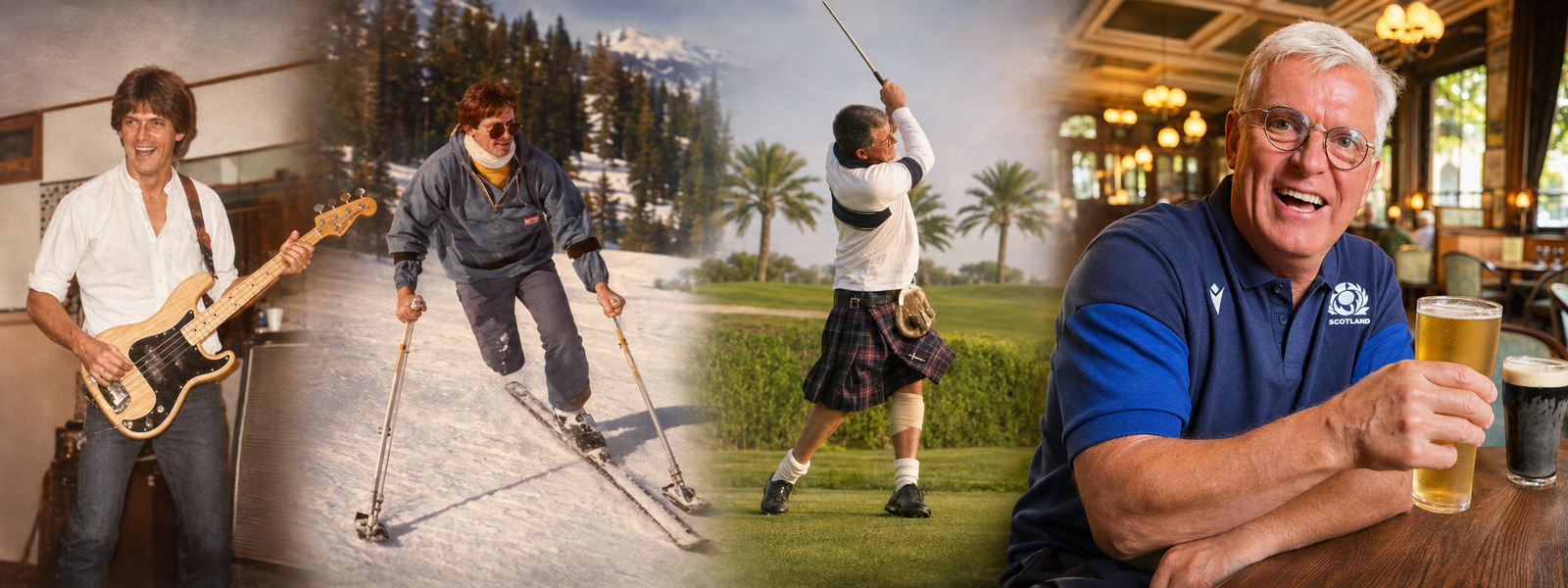
Angus Simpson was just two and a half when he fell into a grain auger on his family's farm in Scotland in 1961 and lost his leg. More than six decades later, his memories of the accident still come to him in fragments.
"I have images in my head, and I talked with my brother recently, and he was the same. We've both had images of the event in our heads, perhaps formed by discussions we've heard from family members over our lifetimes."
Watch the full Movao LIVE interview or continue reading the interview recap below.
Newly digitized newspaper clippings from the UK have helped confirm what Angus and his brother had always been told.
Angus says his childhood was shaped less by what he couldn't do than by all the things he could.
"People today might not want the childhood I had, but it was the only one I knew. It didn't feel tough or difficult. I just did everything I wanted to do: played around the farm, rode my bike and got involved in farming. I never considered it tough. It might have been tougher for my parents than it was for me."
He was walking again just six weeks after the accident, and his first prosthetic leg was a world away from today's technology.
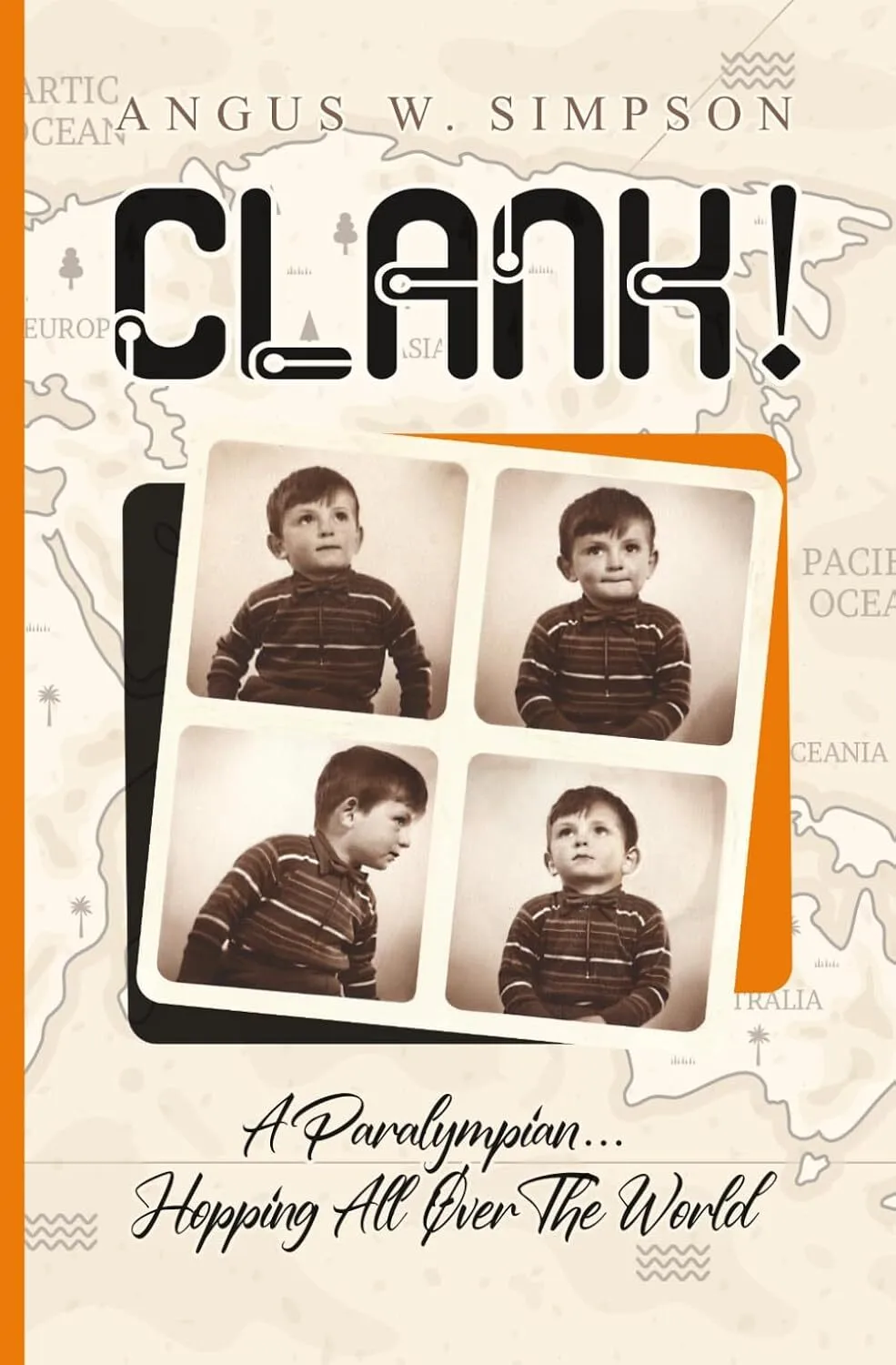
Its distinctive sound also gave him the nickname that inspired his book's title.
The story behind Clank!
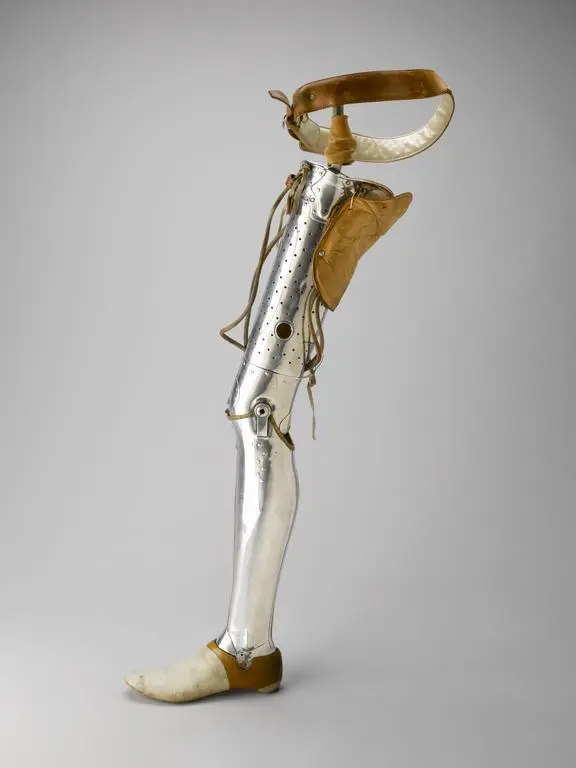
In the 1960s and 1970s, Angus's prosthetic leg was made from aluminum.
"The prostheses available at the time were very rudimentary legs made just of aluminum. It was all made by a similar process to an aeroplane, you know, the same material and all riveted together."
When the leg occasionally fell onto the tiled floor at school, it made a distinctive clanking sound. The nickname stuck, and some of Angus's old school friends still call him Clank.
The leg was noisy, but wearing it was harder.
"It was skin on aluminum. There were a huge amount of skin problems, boils and rashes and skin breakdown, and it was quite horrible, actually. I had many, many days off school or later off work because I couldn't stand to have it on. It was too sore."
Turning his socket into a percussion instrument
Angus also found ways to have fun with his prosthesis. He discovered that air escaping from his socket could make a sound, then learned to control it.
"A lot of above-knee amputees will have some experience of when they allow their residual limb to separate from a socket and release air. It's not always silent. Sometimes it gives a good, resounding raspberry."
He put the sound to good use during music lessons.
"I practised it, perfected it to a science. We would listen to various pieces of classical music. I would sit at the back of the class. I could vary the frequency of these raspberries and use them to punctuate the music, almost as a percussion instrument."
His classmates loved it. "The rest of the lads in the class, they just laughed and laughed and laughed, and I usually ended up in a detention."
Finding his way into the water
Angus was just as determined to find his own way in the water. Before joining a club or training with a coach, he taught himself to swim one length at a time.
"Back then it was all self-taught. You've got to do it; you've got to figure out how. So I persevered, got across the pool, then back, and then increased the distance. You know, it just grew from there."
Two swimmers with cerebral palsy invited him to train with them. Later, he joined a non-disabled swimming club in Edmonton, Canada.
"It was hard work, but it was certainly worth it. It was brilliant. It was kind of one of the highlights of my life, I suppose."
One of his most memorable races came at the 1988 Seoul Paralympics. Before the event, Angus went outside to enjoy the sunshine and spotted a four-leaf clover on the lawn.
"It was a beautiful, sunny day, and I just went out to enjoy the sun on the lawn until my race started. I lay down on the grass, chatted with a few friends, and just looked down and picked up a four-leaf clover. And I thought, maybe this is my lucky day."
His coach had advised him to build speed through every 100 metres, and Angus had worked on his tumble turns. He followed the plan and won his heat.
"I looked up at the clock and thought, 'No way. Not me.' It was a beautiful, beautiful day, and friends and other swimmers were in the stands. They were shouting, and it was superb, lovely."
Helping shape the C-Leg
Later, in Edmonton, Angus met his new prosthetist, Stan Warchuk, who introduced him to Kelly James. Kelly was developing a new kind of knee at the university and looking for someone to help test it.
Angus had the extraordinary opportunity to work with the first C-Leg prototype, long before Ottobock acquired the technology.
The early prototype used an old hydraulic unit and a large car-phone battery. Even so, Angus quickly felt the difference.
"It felt great. It felt stable and reliable, and everything was a lot safer. I had more confidence in it than I did in my old technology legs."
He had one request: he wanted to play golf.
"I said, 'Well, I want to play golf, and I need it to lock in flexion. So, at about fifteen degrees, it will tolerate my weight, and it won't bend anymore.'"
Kelly developed a setting to make that possible. With the prototype, Angus activated golf mode by pressing down on the toe three times.
"This three-pump golf mode activation became such a laugh, with friends on the golf course who would imitate me. They would pump on their tee box before they hit their ball; this always made me laugh."
The technology has moved on, and Angus is a huge fan and still wears the C-Leg today.
A life that carried on
Angus reflects on Clank!:
"It's not strictly an amputee story; it's not strictly a normal autobiography. It's a story of a life that went on regardless of the amputation. Still, the artificial leg caused several interesting experiences, side stories and laughs to happen along the way."
He hopes readers will see that his amputation didn't stop him from doing the things he wanted to do.
"I didn't think when I was growing up on the farm that it was tough or different. It's just what we had. And I think people should look at my life story and say, 'Well, he certainly didn't let it slow him down or become an excuse for not doing things—so I won't either.'"
If you’d like to read CLANK! A Paralympian Hopping All Over the World, you can order your copy from Amazon here.