Beyond walking: My osseointegration journey
Walking is undoubtedly an essential rehabilitation milestone.
If you're an amputee or considering OI, success means more than being able to walk independently. It means using your mobility to return to the parts of life that matter to you—work, family, travel, hobbies and personal goals—with greater confidence, comfort and participation.
Ultimately, success is personal. It's about whether your mobility gives you greater access to the life you want to live.
“What do you want your mobility to allow you to do?”
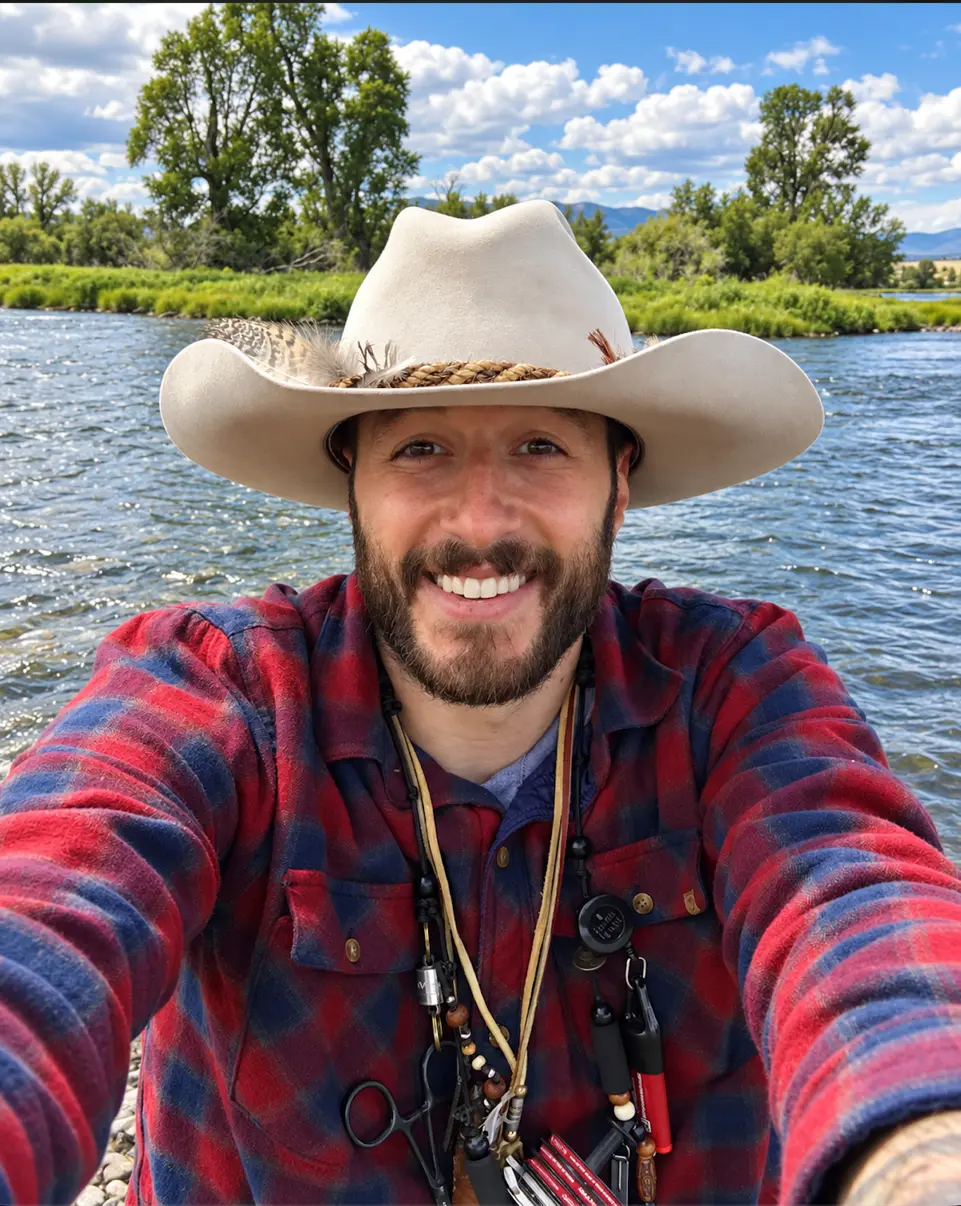
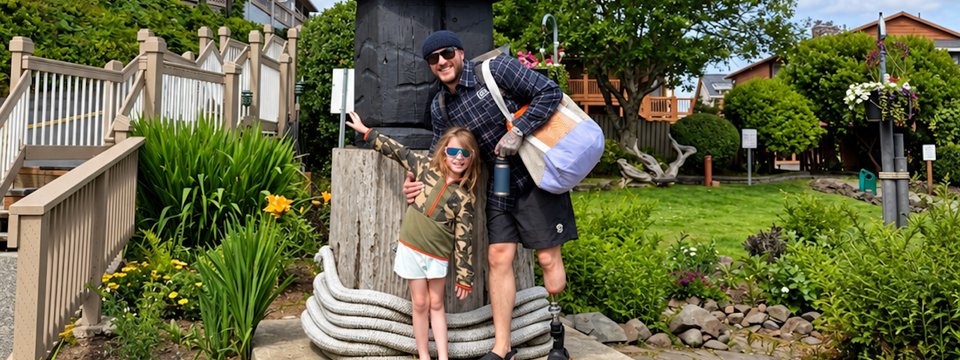
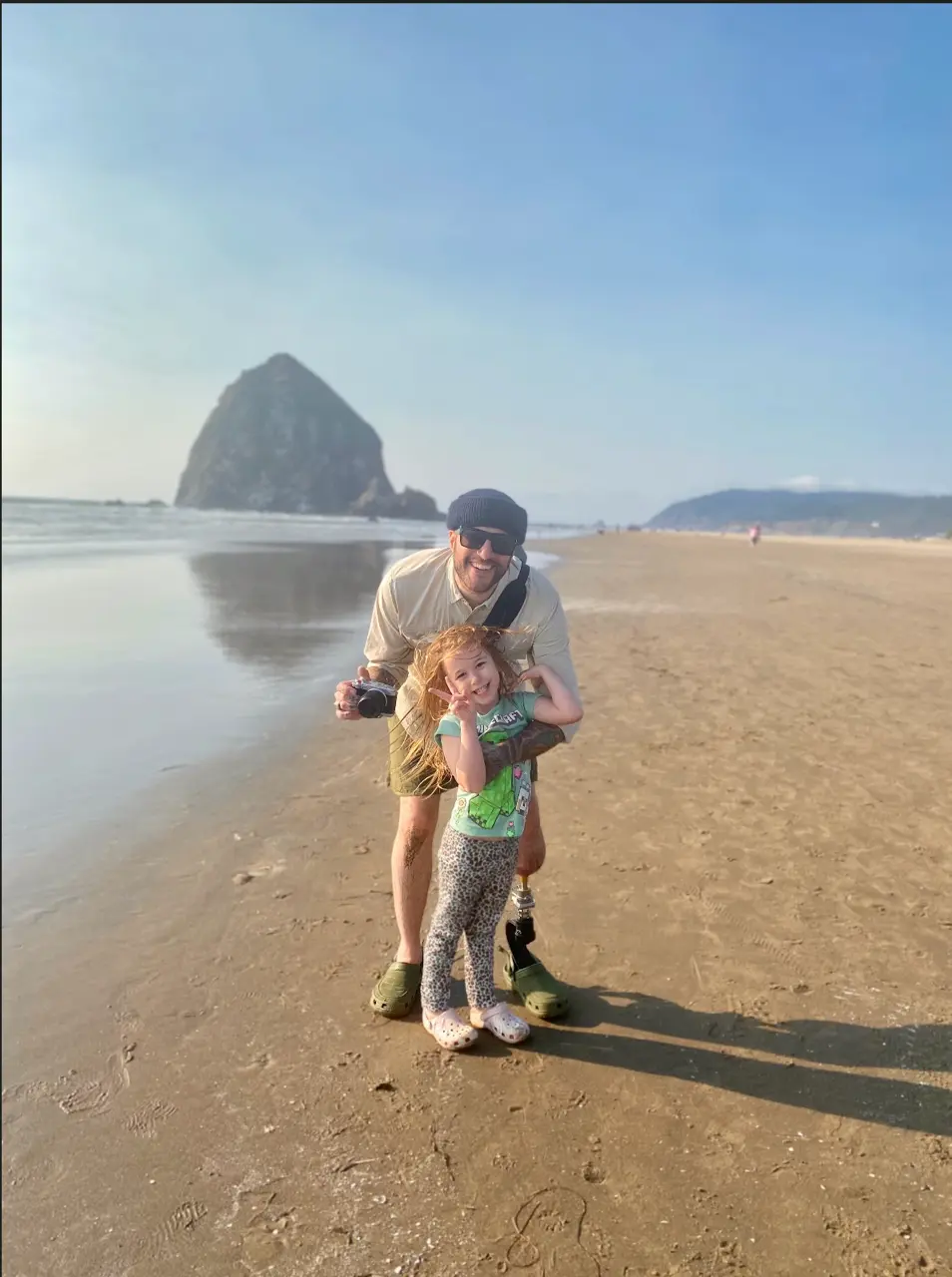
I'm Joshua Ryan Borsuk, a critical care nurse, a father, a left transtibial amputee and an osseointegration prosthesis user. When I think about what I wanted my mobility to make possible, I think about being an active father and not feeling sidelined as I watched my daughter grow up. I wanted to return to work, travel, explore the outdoors and eventually get back to the ocean and surfing.
I hoped to return to the things I could do before my amputation, while understanding that it would be a long journey.
After my amputation, I chose to go straight to OI without first trying a traditional socket prosthesis. My decision to choose OI came from my activity level, researching its potential benefits and talking with people who use socket prostheses.
As a healthcare professional, I’d also cared for patients with prostheses and heard about the challenges they could experience with socket fit, skin irritation and residual limb discomfort. I never used a socket prosthesis myself, but those conversations and my research helped guide my decision. I felt OI offered the best fit for the active life I wanted to return to.
Why someone might consider OI
For many amputees, a prosthesis connects to the body through a socket. A good socket can work extremely well. For some people, though, changes in limb volume, heat, sweat, skin irritation, pressure, pain or an unreliable fit can make the socket difficult to manage throughout the day. You may find yourself planning around these challenges rather than using your prosthesis to take part in the life you want.
OI changes the connection between your body and the prosthesis. An implant is anchored in your remaining bone and passes through your skin to attach directly to the external prosthesis. There's no socket surrounding your residual limb; the load is transferred through the skeleton rather than through pressure on your skin and soft tissue.
This direct connection can also change the feedback you receive from the ground, as vibrations and forces may travel through the implant. Everyone's experience is different, and OI can't promise that every problem will disappear or that you'll have the same results as someone else.
I went straight to OI, so I can't compare it with having personally worn a socket. I am aware, though, of the socket-related challenges many people in our amputee community experience. I can share what I've learned from my own OI journey and rehabilitation. If you're considering it, talk with your medical team about what you're finding difficult and what you hope OI might change.
Quality of life can sound abstract. In everyday life, it might mean wearing your prosthesis through a full workday, playing on the floor with your child, travelling without worrying about socket discomfort or feeling more secure on uneven ground.
Your goals will be different from someone else's, so it's important to be clear about what matters most to you.
A major procedure, with real responsibilities
OI involves major surgery, time for your bone and soft tissue to heal, gradual rehabilitation, daily care of the stoma—the opening where the implant passes through the skin—and long-term follow-up with your medical team. Life without a socket still comes with responsibilities.
Complications can include infection, irritation, mechanical problems, loosening, fracture or the need for further surgery. Outcomes vary between people and may depend on factors such as the implant system, treatment center and individual health. OI won’t be the right choice for everyone. It also can't guarantee a return to sport or performance, or resolve every source of residual limb pain.
There isn't one X-ray, test or appointment that decides whether OI is right for you. Your medical team needs to understand you as a whole person: your bone and soft tissue, general health, pain and mobility, support at home, expectations, and readiness for rehabilitation and ongoing care.
It's important to discuss what the procedure might make possible for you, as well as what challenges could remain.
What rehabilitation was like for me
I began rehabilitation around three months after surgery. I used a training prosthesis called a "stomper," starting by loading the implant with roughly 10 per cent of my body weight. I gradually worked towards full weight bearing, increasing the load at each visit. Every increase felt like progress, but it also took focus and patience.
As a critical care nurse, I understood why the rehabilitation process had to be deliberate and specific. As a patient, I wanted to move faster and get back to my previous level of activity immediately. My mind was ready to go before my bone, soft tissue, strength and balance were ready to follow.
Walking was a major milestone for me, and I don't want to minimise that. It was essential to movement and activity. At the same time, once I could walk, the path back to my hobbies, activities and work became much less clear.
Walking was a milestone, not the whole destination
A gait test could show that I was progressing, but it couldn't tell me whether I was ready to carry my gear over uneven ground, get up from the floor with my daughter, manage a long day of hiking or riding a bike, or work a full shift as a critical care nurse. It couldn't show me how ready I was to react when my surfboard moved beneath me.
I felt that gap most when I thought about returning to surfing, which asks for much more than walking in a straight line. I need to get up from the ground, recover my balance, carry equipment, move over sand, manage fatigue and respond to unpredictable movement. Once I'd learned to walk, there was no standard "return-to-surf" stage waiting for me. I had to work out the next steps myself.
The early stages of rehabilitation are essential. Healing, protecting the implant, gradually increasing the load, building strength and balance, and learning to walk safely all take time, and none of that should be rushed. At the same time, the things you hope to return to can be part of the conversation from the very beginning.
Rehabilitation should help build a bridge from those early milestones back to the parts of life you value. Rehabilitation shouldn't assume that everyone wants to return to sport or become a performance athlete.
Success might mean standing for longer, walking on grass, carrying something safely or getting through a longer day. Those milestones may look small from the outside, but they can mean a great deal when they bring you closer to what matters in your own life.
Questions to bring to your medical team
If you're starting to explore OI, take your time and ask questions. These are some I'd want to discuss:
- What are my options, and why might OI be suitable for me?
- Which of my current problems could OI potentially help with, what might stay the same, and what risks should I understand?
- What would surgery, healing and rehabilitation involve for me?
- What daily care and long-term follow-up would I need, and what support would I have at home?
- How can the goals that matter to me be part of my plan, and how will we measure progress in my everyday life as well as in the clinic?
I don't think the question should simply be, “Is OI better than a socket?”
A more useful question might be: “Are my socket-related barriers serious enough that the possible benefits of OI are worth the risks and responsibilities for me?”
A distance, speed or gait score can show progress, but success also means returning to the parts of life that matter to you.
Walking is an essential milestone; planning for life beyond walking should be part of the journey from the beginning.
Words by: Movao Champion, Joshua Ryan Borsuk