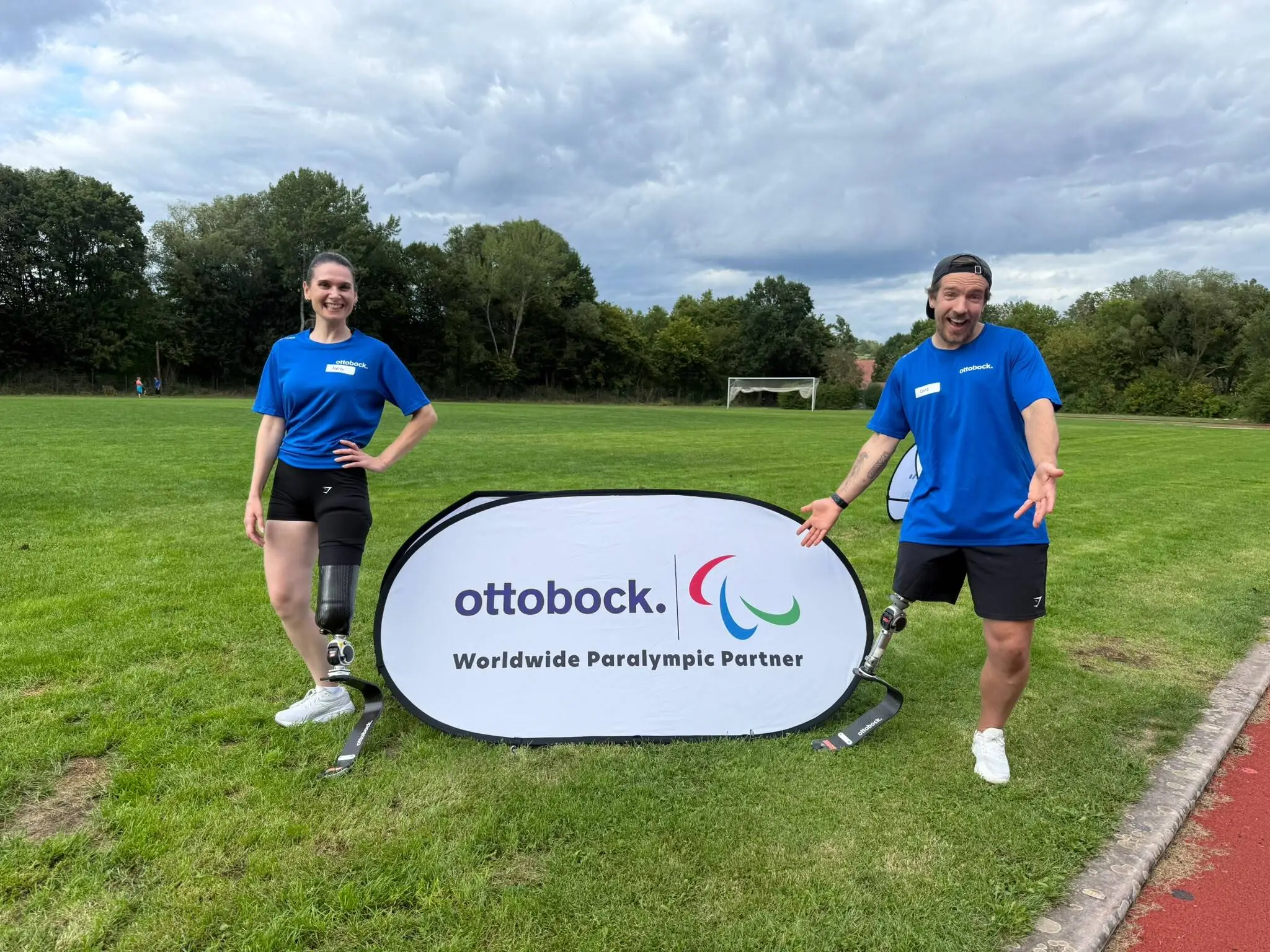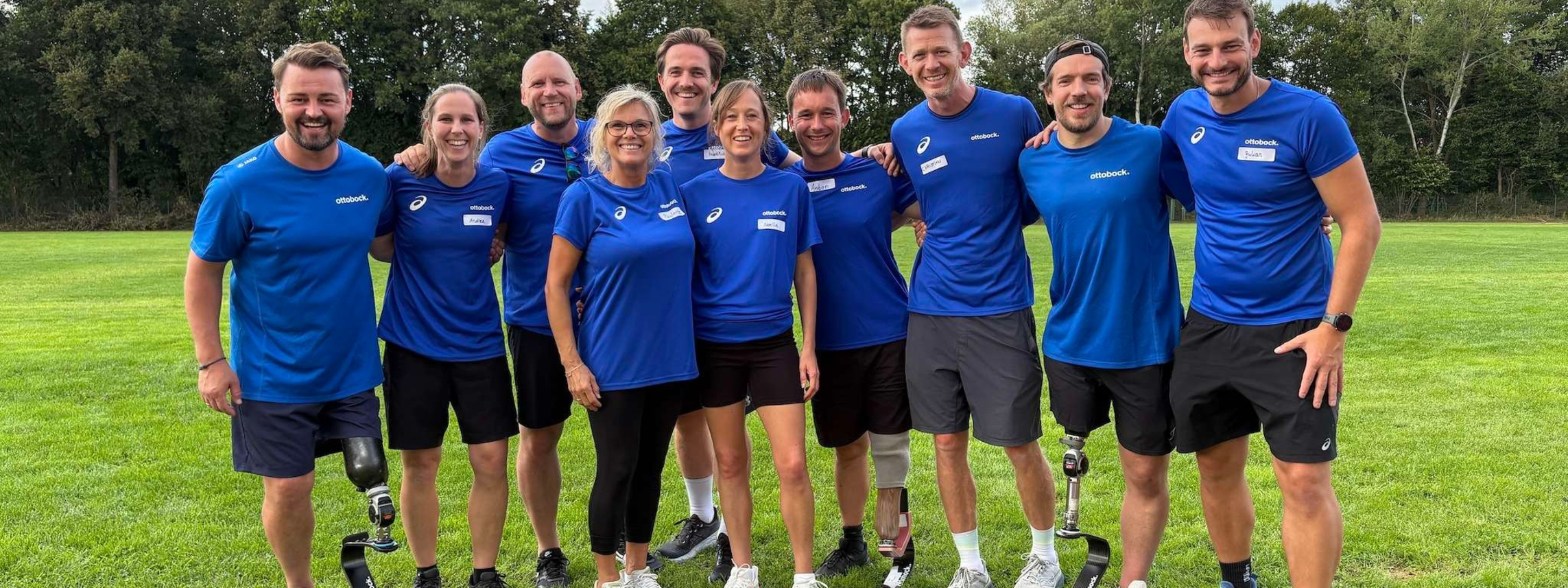
What if you could run again? Inside the Ottobock Running Clinics
Movao Champion Chris George had not run for more than two and a half years when he arrived in Duderstadt, Germany, to train as an Ottobock Running Clinic coach.
Many Movao members will already know Chris from Keep Moving Mondays, his fitness classes delivered in association with LimbPower in our Move with Movao Sports Community. But this time, Chris was taking on a completely new challenge: trying a sports prosthesis for the very first time.
Ottobock Running Clinics were created more than 15 years ago by Paralympic champion Heinrich Popow and have since taken place around the world, helping people with limb loss discover what is possible with the right equipment, coaching and support.
“In my opinion, sport is the best medicine there is, for absolutely everything. That is why it is so important to me to help people become active,” says Heinrich.
Ahead of the latest Running Clinic in Duderstadt, Chris joined seven other aspiring coaches from Germany, Denmark, England, Sweden and Australia for an international Coaches Workshop.
Chris takes his first steps on a running blade
The workshop gave Chris the opportunity to learn from Heinrich and his team, but it also marked the beginning of his own journey with a running blade.
“This was my first time using a sports prosthesis and my first time running in over two and a half years,” Chris explains.
“The initial transition onto a running blade was daunting and completely unfamiliar. This type of leg responds entirely differently to the microprocessor knee I had been using for the previous couple of years, so there was a huge amount to learn, particularly how the leg responds to different movements and directions.”
Despite those initial challenges, Chris was surprised by how quickly the right exercises helped him begin moving on the running blade.
“It is amazing how much you can do within a short space of time. The coaches have such a great range of drills and strategies to get you moving and start building your confidence. Within a few hours, I was able to run a short distance, which is an amazing feeling for someone who has recently been through an amputation.”
Learning how to support everyone
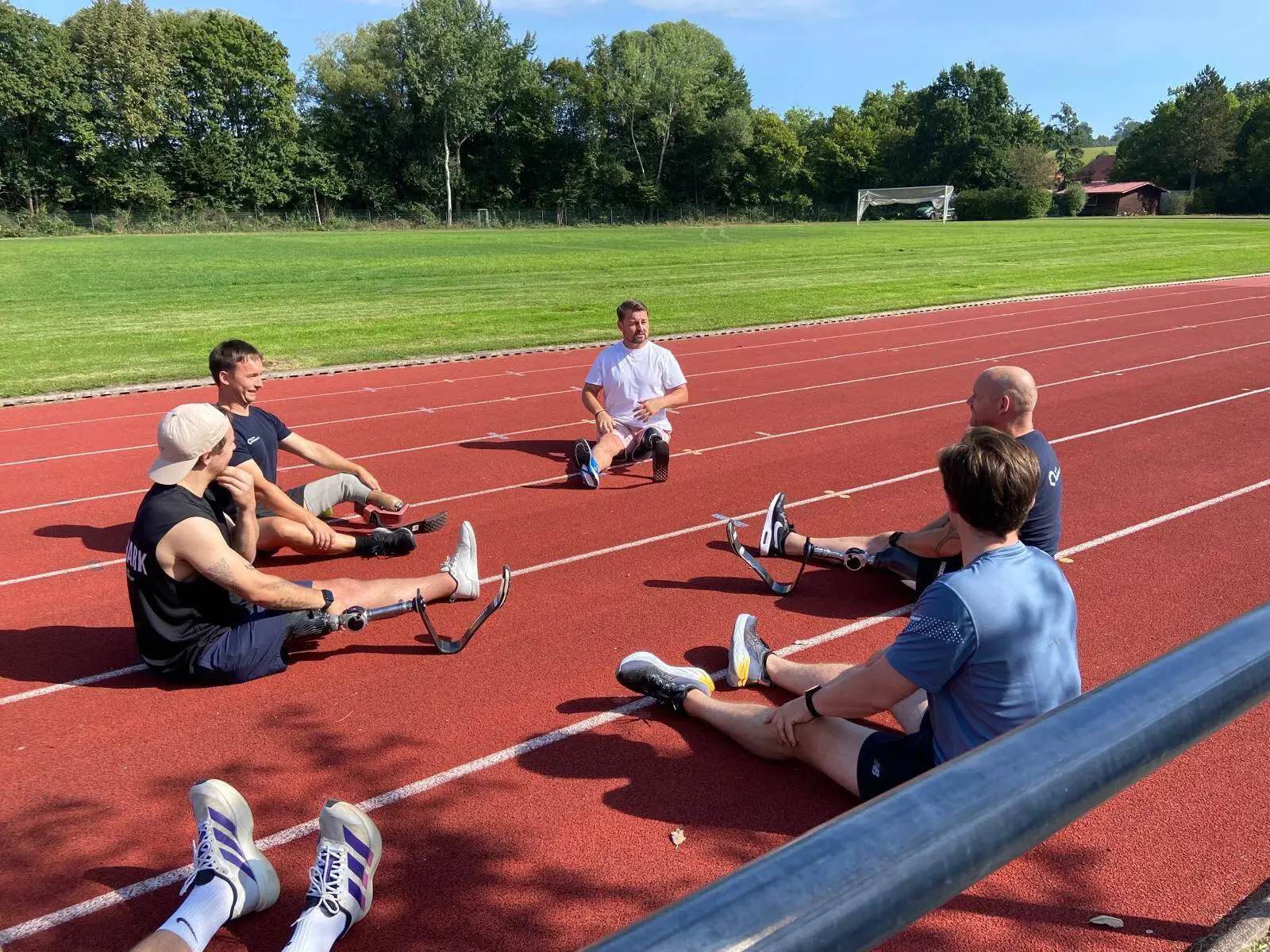
The Coaches Workshop was not simply about learning a list of exercises. Chris and the other aspiring coaches experienced the drills for themselves and learned why they are used.
“We gained first-hand experience of the drills, but we also developed a broader understanding of why we do certain things and how they benefit each person,” says Chris.
Everyone arrives at a Running Clinic with a different body, level of experience and reason for wanting to run. Some may have ambitious sporting goals, while others may simply want to experience running for the first time.
The coaches explored how someone’s type of amputation, previous experience of running and current activity level can affect the support they need.
“We learned how to manage those differences and make the experience as beneficial as possible for each participant.”
That individual approach is an important part of the Running Clinics. Participants are given the space to try, make mistakes and try again, surrounded by coaches and other people with limb loss who want them to succeed.
Putting the training into practice
After the Coaches Workshop, Chris and the other aspiring coaches put their new knowledge into practice at the Running Clinic itself.
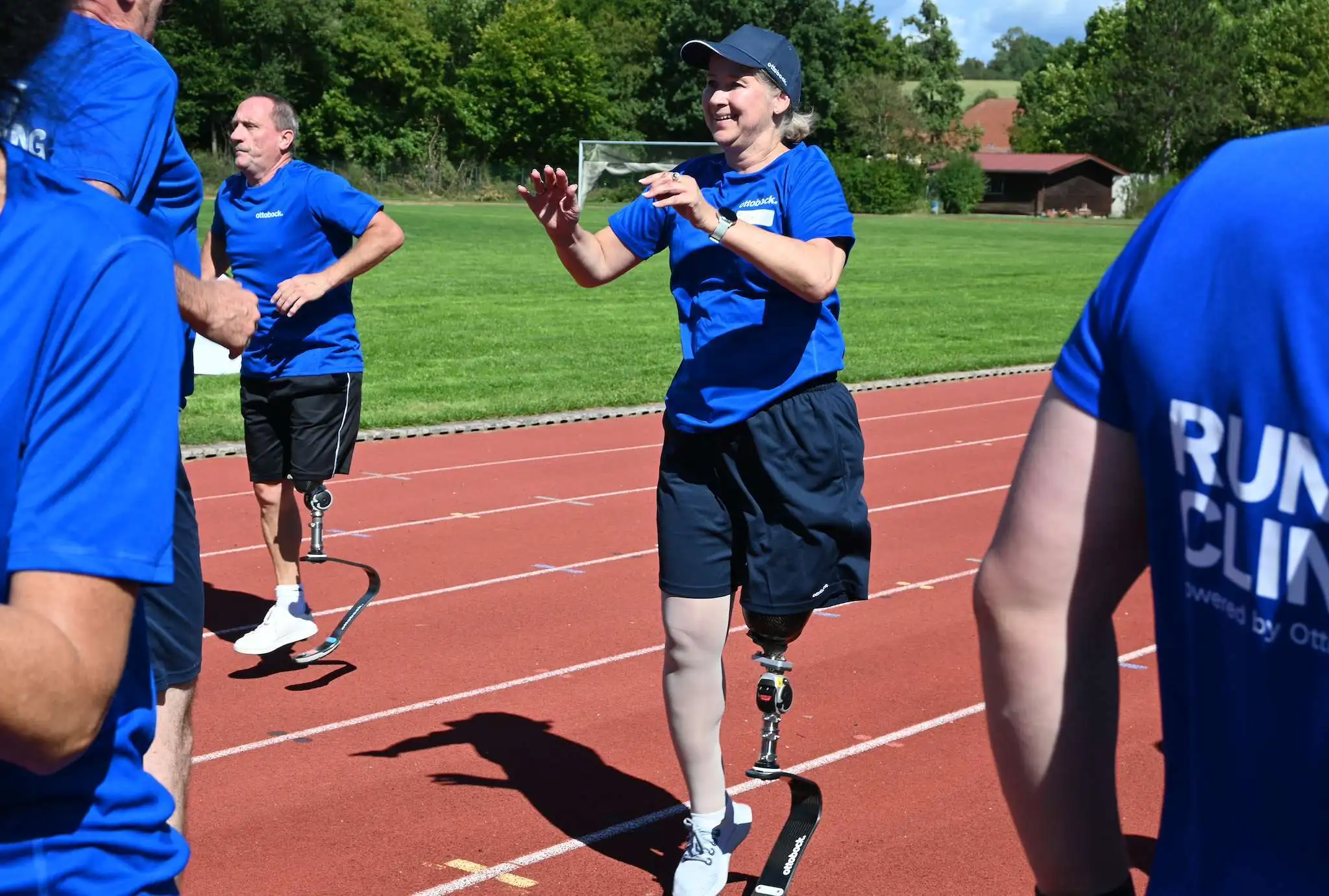
The clinic brought together 18 participants. Some were taking their first steps on a sports prosthesis, while others arrived with more ambitious athletic goals.
The new coaches supported participants during the training sessions and were given opportunities to lead some of the exercises themselves.
For Chris, this was one of the most enjoyable parts of the experience.
“The coaches are all very passionate about helping participants improve their mobility and build towards a more active life, but we did it in a way that was relaxed and fun. It allowed people to interact and build their confidence slowly.”
The activities included games using footballs and tennis balls, alongside mat work, balance exercises and stretching. Each activity helped participants become more comfortable using a sports prosthesis while gradually building their confidence.
The clinic also gave Chris the opportunity to work towards a personal goal. By the end of the weekend, he had completed 400 metres for the first time in over two and a half years.
“It was very slow and there were a few breaks in between, but nonetheless, we did it,” he says.
Another participant achieved something equally special.
“There was also a participant who had not run in over 50 years. The look on his face when he was able to run 100 metres on a running blade was absolutely brilliant. Those are the moments that make the Running Clinics worth it.”
Feeling nervous is completely normal
Trying a sports prosthesis can feel intimidating, particularly if you have not run for many years. Chris wants people to know that those nerves are completely understandable.
“Feeling nervous is completely normal, particularly if you have had an extended time away from running and have never tried a running prosthesis before,” he says.
“You are not going to be running perfectly after a couple of days. It is a difficult skill and it takes a long time to master, but that does not mean you will not be running in some capacity by the end of the weekend.”
Most importantly, nobody is expected to arrive already knowing what to do.
“The coaches are brilliant. They want the best for you and will find a way to support you and meet your particular needs. You are not meant to know where to begin or how to do it. That is what these Running Clinics are for, to show you what is possible and give you a path towards becoming more active after limb loss.”
Running may be the activity that brings everyone together, but the experience is also about confidence, connection and discovering what your body can do.
Would you like to experience a Running Clinic?
Have you ever wanted to learn to run with a sports prosthesis? Perhaps you already run and would like to develop your skills, or maybe you would simply like to find out more about how the Running Clinics work.
Let us know in the comments if you would be interested in taking part in a future Running Clinic and tell us where in the world you are based.
If you have attended a Running Clinic before, we would also love to hear about your experience.