
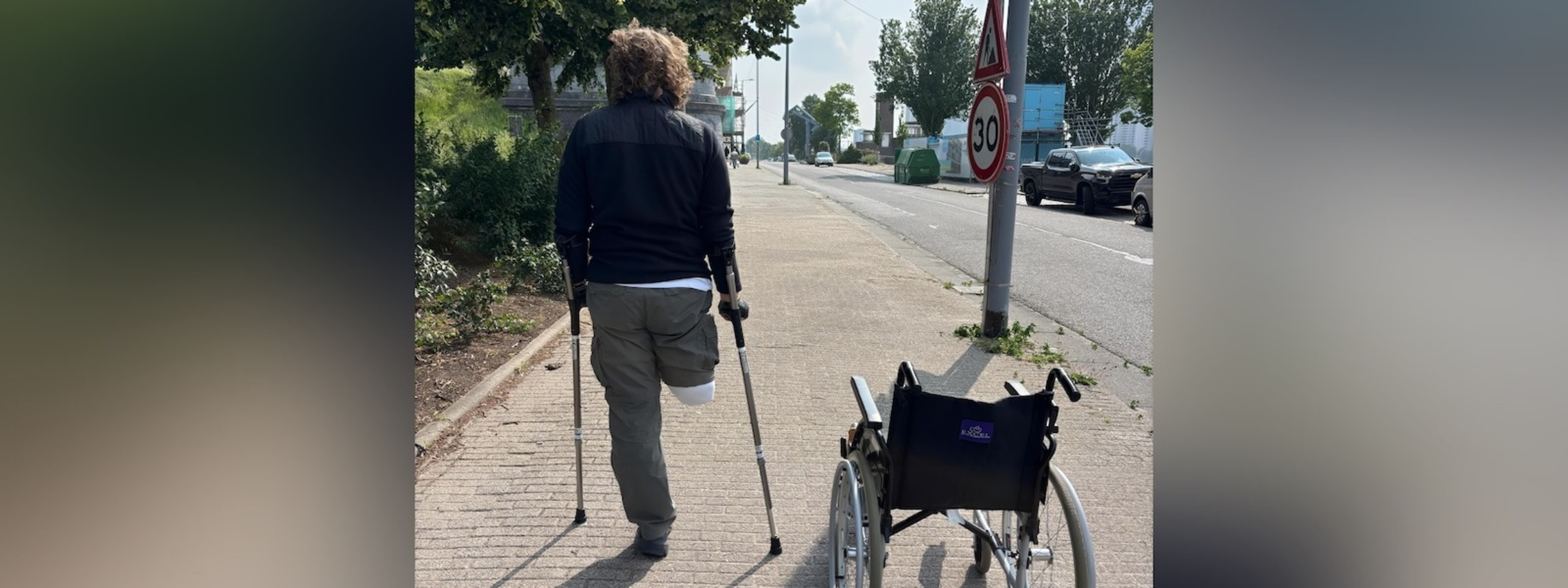
Chris Kunkeler: choosing amputation after years of pain
Chris's story began long before his amputation, when doctors discovered giant cell tumours in his right knee. The condition is extremely rare, and there was very little research or certainty around how best to treat it.
Over the years, Chris underwent numerous surgeries to remove the tumours. At first, he was still able to return to everyday life and enjoy the sports he loved. But gradually, his knee became worse.
In the final few years before his amputation, his world had become much smaller. He could barely walk more than 200 metres.
Watch the full Movao LIVE interview or continue reading the recap below.
Chris explains:
"The pain wasn't occasional, it was constant. It is so hard to describe this type of pain to someone who hasn't experienced it. It could be sharp or blunt, sometimes like a knife cutting into your bone, but it was always there, lingering.
"At night, it was bad enough that my girlfriend would wake up because I was grunting in my sleep. At this stage of my life, sport was no longer an option and even getting to work became difficult."
The possibility of amputation had actually been mentioned when Chris was first diagnosed. A doctor explained that, in the most severe cases, some people eventually choose to have their leg amputated.
At the time, however, it felt like a very distant possibility.
Years later, after his treatment options had become increasingly limited, that possibility became very real.
Chemotherapy hadn't solved the problem, Chris's knee continued to deteriorate, and yet his orthopaedic surgeons were strongly opposed to amputation.
They didn't want to discuss it as an option and, when Chris decided it was the right choice for him, they tried to persuade him against it.
For Chris, that was incredibly difficult. He had lived with the pain for years and had reached the point where keeping his leg no longer felt like the better option.
Eventually, he was referred to rehabilitation specialists with experience in amputation, and those conversations gave him a completely different perspective.
"They explained that I could potentially have a better quality of life without the leg than I had with it. I didn't say it immediately, but after that first conversation I think I had already made my decision."
Preparing mentally and physically for life after surgery
Once Chris had made that decision, his focus shifted.
He couldn't know exactly what life after surgery would look like, but he wanted to prepare himself as much as possible for whatever came next.
One of the most important things he did was speak to a psychologist who specialised in supporting people through amputation.
"For me, preparing mentally was just as important as preparing physically. This was my leg that I had lived with my whole life, so I wanted to make sure I had really processed what I was choosing to do."
Chris also began training three times a week with a personal trainer, concentrating on becoming as strong and fit as possible before surgery.
By this point, he had stopped chemotherapy and was beginning to feel physically stronger again.
"Training gave me something positive to focus on. I knew rehabilitation was going to be hard work, so I wanted to go into surgery in the strongest position I possibly could."
Around two months before the operation, Chris also stopped working so that he could concentrate fully on preparing for such a huge change in his life.
Looking back, his advice to anyone facing a similar decision is to surround themselves with the right support.
"Speak to people who really understand amputation.
"Find good rehabilitation specialists, talk to a psychologist if you can, speak to other amputees and prepare yourself physically.
"You don't have to do it all on your own."
Why amputation felt like relief, not loss
For Chris, the day of his amputation felt very different from how many people might imagine.
After years of chronic pain, treatment and fighting to find a solution, he remembers feeling incredibly calm.
"I had never felt so calm as I did on the day of my surgery. I had spent years fighting the pain and trying to find a solution. By the time the day finally came, I knew this was what I wanted and needed to move on with my life."
And then something happened that Chris had been hoping for, but perhaps couldn't quite believe until he experienced it.
The pain that had controlled his life for years was gone.
"I couldn't believe it; the old pain was gone immediately. There was surgical pain, obviously, but that was completely different. The pain that had been controlling my life wasn't there anymore."
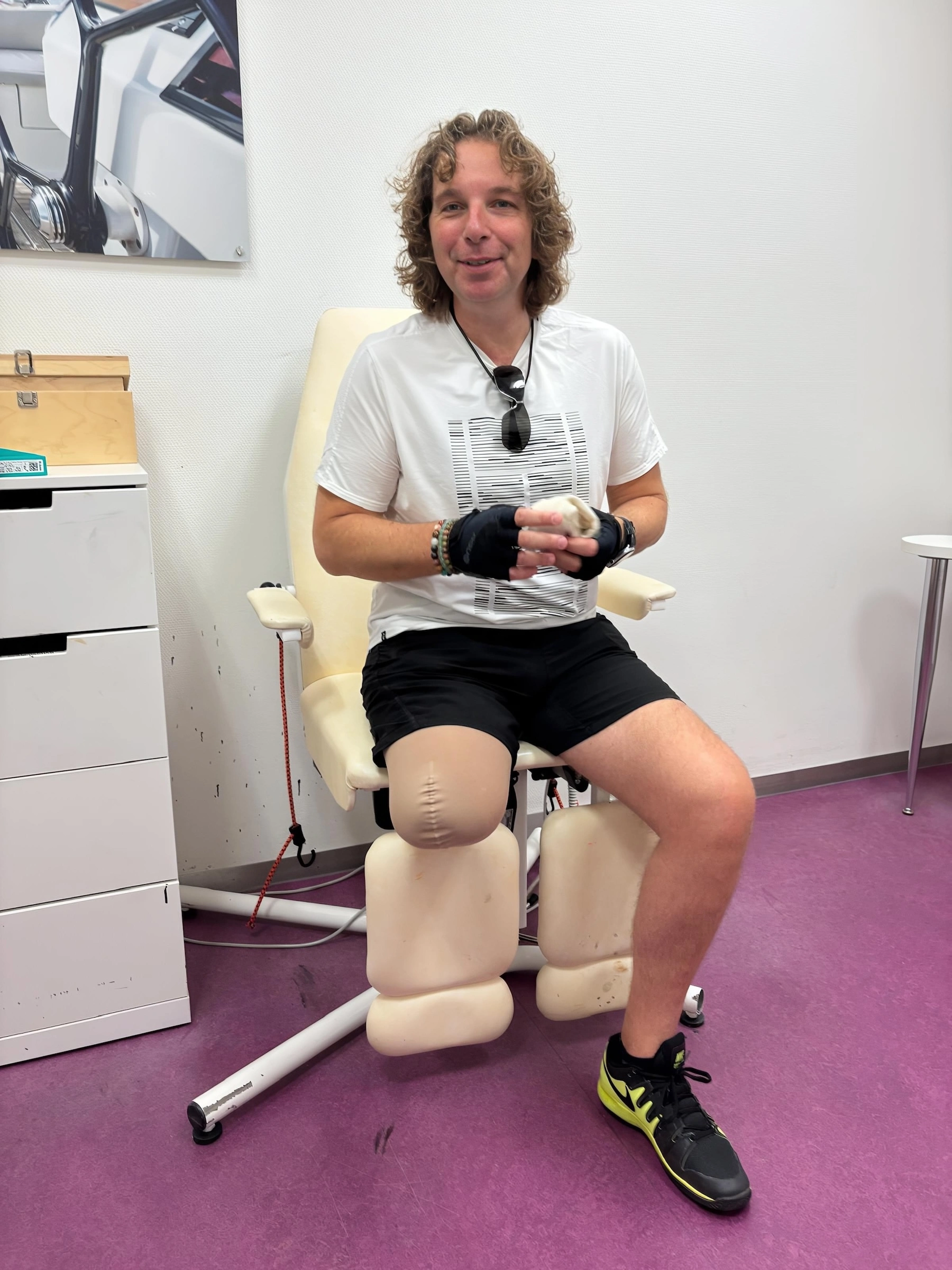
It took Chris around two days before he was ready to properly look at his residual limb for the first time.
When he finally did, he cried.
"I cried for about ten minutes, but it wasn't because I regretted it. It was relief. I knew I had made the right decision for me."
Chris is also very clear that choosing an amputation is an incredibly personal decision.
During our conversation, we spoke about how differently people can experience limb loss.
My own amputation happened when I was a child and wasn't something I chose, while Chris made the decision himself as an adult after years of pain.
Our experiences are very different, and I think that is exactly why these conversations matter.
There is no single experience of amputation, and hearing many different perspectives is one of the reasons sharing our stories on Movao can be so valuable to someone facing similar challenges.
Rediscovering sport after amputation
Sport had always been a huge part of Chris's life.
Before his knee deteriorated, he played tennis to a high level, as well as running, cycling and regularly going to the gym.
Losing the ability to do those things was one of the hardest parts of life before his surgery.
So when the pain finally disappeared, sport became a way of discovering his body again — and seeing what was still possible.
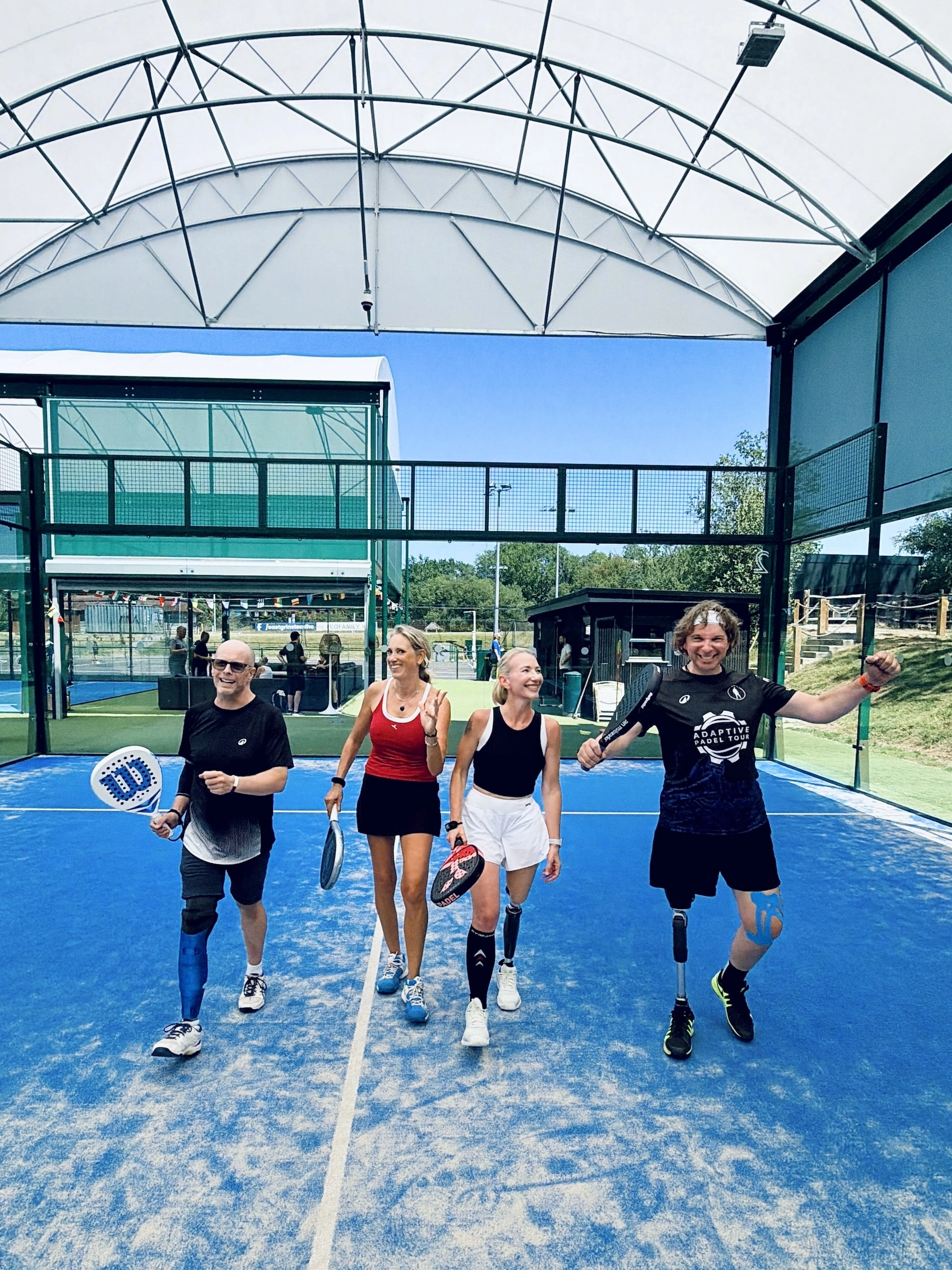
In the year since his amputation, Chris has already tried running with a blade, skiing, snowboarding, mountain biking, climbing and, of course, padel.
"I spent so many years not being able to do the things I loved. Now I don't have that pain anymore; I want to see what I can do."
Finding Movao and the Inclusive Padel Tour
Chris actually discovered Movao before his amputation, while researching what life might look like afterwards.
He searched forums, patient groups and social media and began talking to people who were already living with limb loss.
"I wanted to see real people living their lives. Reading other people's experiences helped me understand that having an amputation didn't mean that everything I enjoyed doing had to stop."
After surgery, Chris began writing about his own experience for friends and family and eventually decided to share his story with the Movao community too.
And then came padel.
As a former tennis player, I had a feeling Chris would really enjoy it, so I encouraged him to give it a try and introduced him to Alessandro Ossola, founder of the Inclusive Padel Tour.
Chris was invited to join one of the end-of-year tournaments in Dubai before he had ever picked up a padel racket!
He didn't quite make that his debut, but shortly afterwards he tried padel with some of his old tennis friends.
That was it. He was hooked.
"I love that it is a team sport and that people with different disabilities can all play together.
"With adaptations like the second bounce, it levels the playing field and players with a disability can still play with everyone else. It has to be one of the most inclusive sports out there."
For Chris, though, the Inclusive Padel Tour is about far more than competition.
"The community is a huge part of it. We call it our padel family, and I have been grateful to meet people just like me who don't focus on what they can't do.
"Everyone is finding their own way, adapting things and seeing what is possible."
That sense of belonging is something that comes through strongly when Chris talks about padel.
It isn't simply about returning to sport. It is about finding other people who understand, sharing experiences and being part of something where nobody needs to explain why they move a little differently.
Chris's advice for anyone facing amputation
Chris's strongest advice to anyone considering an amputation is simple: talk to people.
That includes medical professionals who truly understand amputation and rehabilitation, but also people who have lived through it themselves.
Before his surgery, Chris spoke to several amputees, including a woman in the United States who had the same medical condition and had chosen amputation around ten years earlier.
"Speaking to her was incredibly helpful because she could tell me exactly what her life looked like afterwards and what she was still able to do.
"That meant much more to me than somebody simply telling me everything would be okay."
He also met amputees in the Netherlands and had long conversations about everything from prosthetics and everyday life to mobility and sport.
Those conversations gave Chris something that medical information alone couldn't: a picture of what everyday life after amputation might actually look like.
"But most importantly... take your time. You don't have to make the decision tomorrow.
"Get as much information as you can, prepare yourself mentally and physically and find people you can talk to who have actually experienced it."
And for anyone worried that age might prevent them from returning to sport or trying something new, Chris has another message.
"You're never too old."
At 54, he is certainly proving his point.
He is running with a blade, cycling, skiing, playing padel and even tried climbing during rehabilitation, using a short prosthesis that allowed him to get closer to the climbing wall.
Things may not always be done in exactly the same way as before, but Chris is discovering just how many ways there are to adapt.
His story isn't simply about choosing amputation.
It is about what happened when years of pain finally stopped dictating what he could and couldn't do.
For Chris, choosing to lose his leg meant leaving that pain behind and opening the door to sport, new challenges, friendships and a very different kind of future.
As Chris puts it:
"I spent years thinking about all the things I couldn't do because of my leg. Now I'm much more interested in finding out what I can do without that leg."