Lola Starr: bespoke adaptive sportswear
As an active above-the-knee amputee, I spend a lot of my time wearing sportswear. The stretch makes it easier to fit clothing over my prosthetic socket, but I have nearly always had to cut my leggings to make them work for me.
I must confess, I am no seamstress. Taking a good-quality product and cutting into it is never going to end particularly well. Yes, it works, but it rarely looks or feels quite right.
I often find myself looking down and feeling self-conscious about the scruffy cut fabric. It is frustrating to pay good money for something and then have to hack at it like Edward Scissorhands just to make it wearable.
Recently, I have been stepping away from amputee football and moving from the pitch to the court with my new sporting obsession: padel.
I could talk endlessly about how inclusive padel is, particularly because of the LTA-approved second-bounce adaptation available for above-the-knee amputees and wheelchair players. It also has to be one of the most sociable sports, which is perhaps one of the reasons it is growing so quickly around the world.
People come to exercise, meet new people, enjoy social events and even party courtside with DJs while playing padel. Another great thing about the sport is that we can dress it up a little. Padel fashion is definitely another perk!
However, as an amputee, mainstream activewear does not always fit me properly. Something might look fantastic in the brand marketing campaigns, but that does not mean it has been designed to work around a prosthetic socket.
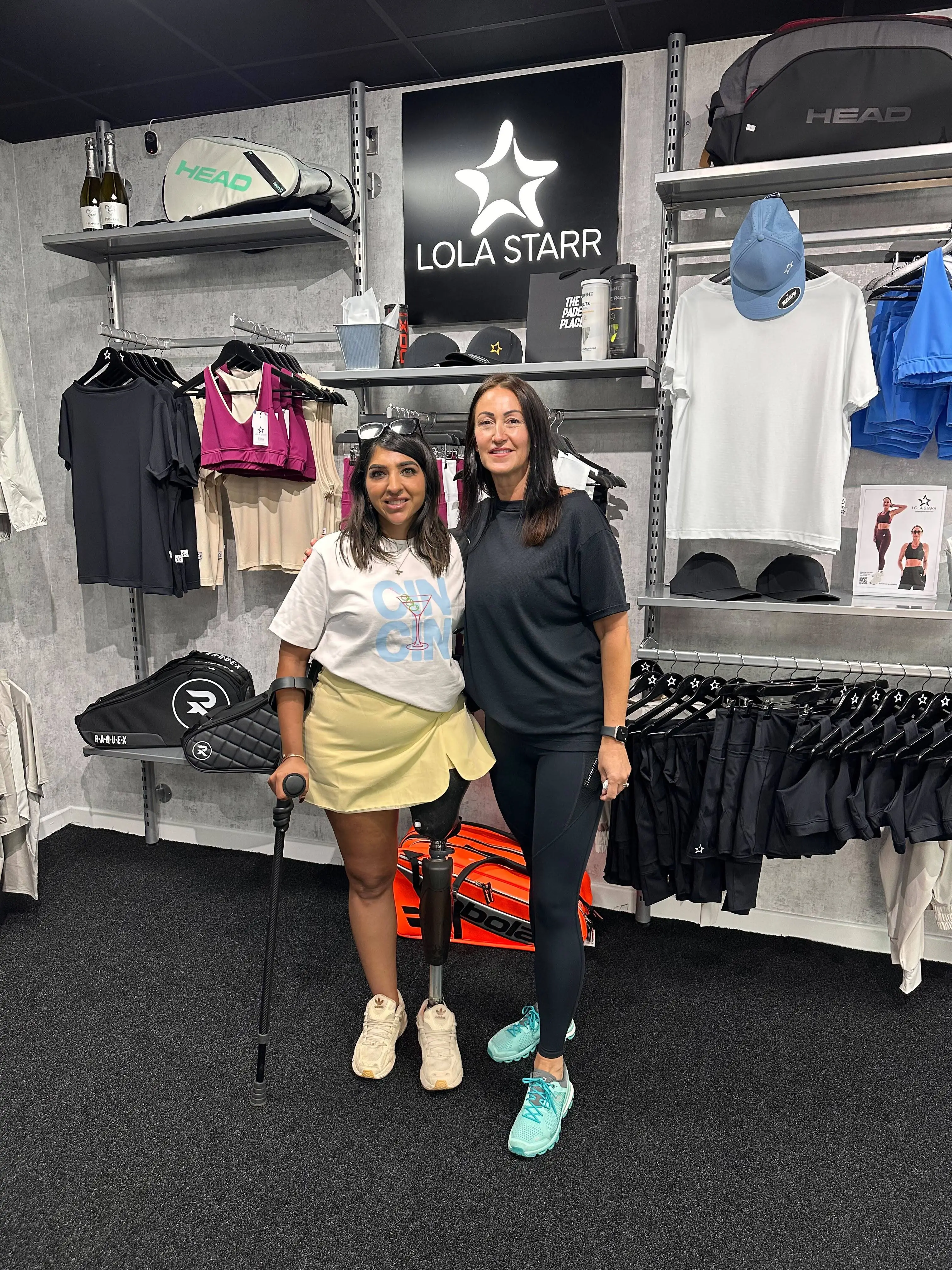
That was until I attended the first UK Padel Awards in Manchester and discovered Lola Starr’s bespoke activewear.
Kate, the co-founder and designer behind Lola Starr, and I began following each other on social media. I loved the look of her designs, but I had one important question:
Just how bespoke could she go?
Could she create something that worked around my socket, fitted my body properly and still looked like beautiful activewear, rather than a pair of leggings that had simply been altered as an afterthought?
The answer was yes.
For Kate, creating my leggings was an opportunity to take the bespoke service she already offered through Lola Starr and explore how it could work for someone with a specific adaptive requirement.
"Working with Rebecca allowed me to bring those ideas to life," she explains. "It challenged me as a designer in the best possible way."
Rather than expecting me to adapt to an existing design, Kate adapted the clothing around me.
We worked together through WhatsApp calls, voice notes, photographs and videos, discussing how the leggings needed to fit around my socket and what would allow me to move comfortably on the padel court.
"Designing around Rebecca's socket made me think differently about how activewear is traditionally created," says Kate. "Instead of expecting someone to adapt to the clothing, I adapted the clothing to the individual. That shift in mindset has had a huge impact on me as a designer."
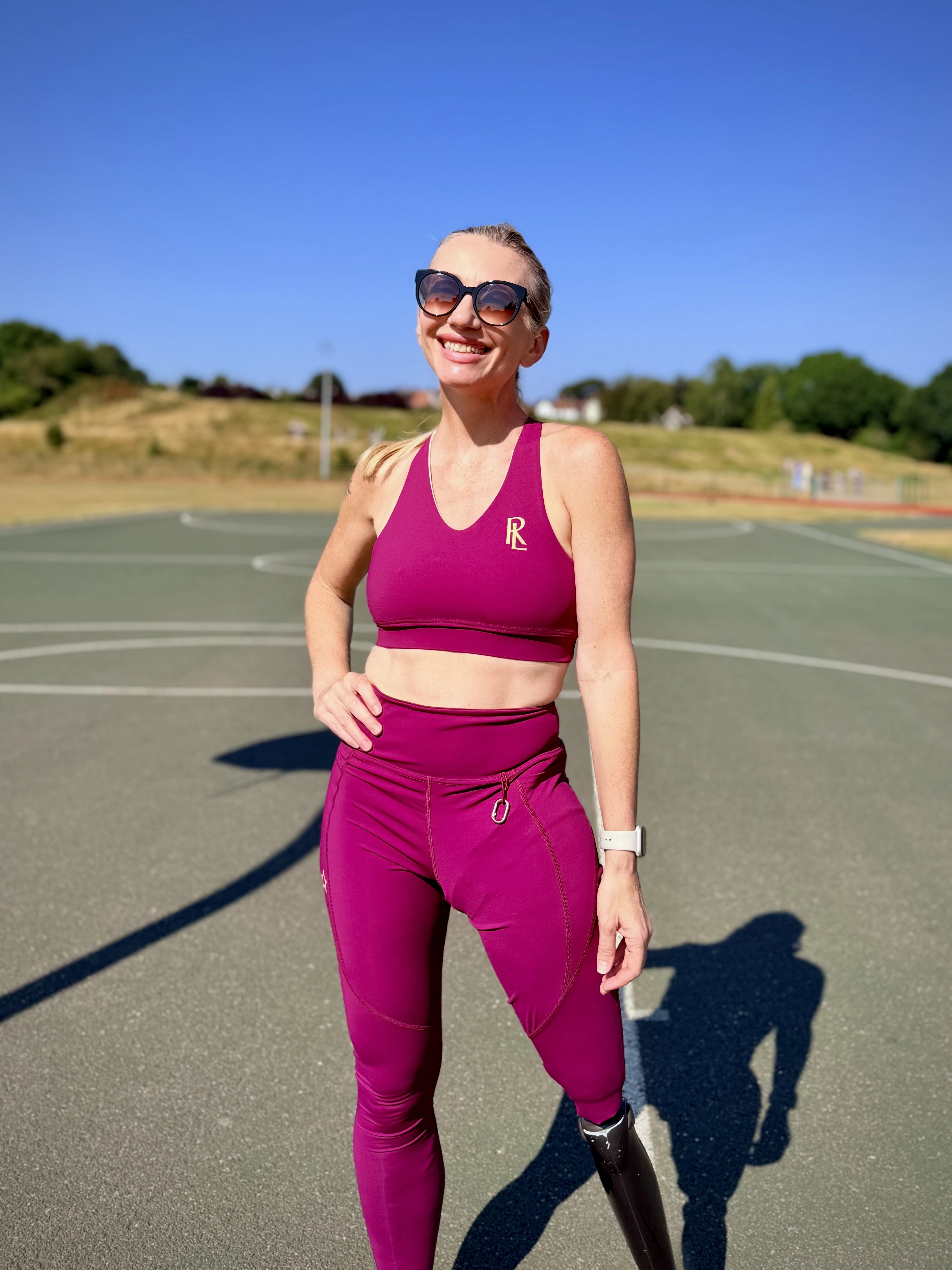
The result was a pair of leggings designed specifically around my body and my prosthesis, complete with my initials RL as an extra personal touch. It might seem like a small detail, but it made the finished piece feel even more special and completely my own.
For Kate, the process was about far more than creating something technically different.
"Every body is different, and every woman deserves clothing that makes her feel confident, comfortable and included," she says. "As a designer, that is exactly what I should be doing."
This belief sits at the heart of Lola Starr. Kate designs pieces to shape, support and enhance a woman's natural figure, but her real focus is on how the person wearing them feels.
"The ethos behind Lola Starr has always been simple: I want women to feel confident in their own skin," she explains. "More importantly, I want every woman to feel seen. Confidence shouldn't depend on fitting into a standard pattern."
When Kate completed her first adaptive design, she felt an enormous sense of pride. It was not simply because she had created something technically different, but because she had made something that helped me feel seen, supported and able to move without compromise.
"Seeing Rebecca so happy and hearing her feedback was heart-warming," she says.
Since we shared photographs of my adaptive Lola Starr leggings on Instagram, Bee Katyal, another above-the-knee amputee, contacted Kate to discuss having her own bespoke pair created. I was delighted to hear that she chose the same colour as mine. It is such a gorgeous shade, and I am so excited to see her wearing hers with the same confidence I feel in mine.
For Kate, this has highlighted just how many people have individual clothing requirements that are still overlooked by the wider fashion industry.
However, she does not believe adaptive fashion always needs to exist as a completely separate category.
"I believe good design starts with listening to the individual," she says. "If we design with people in mind from the very beginning, rather than expecting them to fit into a standard product, clothing naturally becomes more inclusive for everyone and every body type."
For Kate, bespoke design can mean many different things. It could be a different leg length, co-branding for a business or activewear designed around a prosthetic socket. The principle remains the same: design around the individual, rather than expecting the individual to adapt.
"If I can help more people feel confident, comfortable and included through thoughtful design, then that is exactly the direction I want Lola Starr to continue growing in."
For years, cutting my leggings felt like the only option available to me. It allowed me to wear the activewear I needed, but there was always a compromise in how it looked and how it made me feel.
Working with Kate showed me what can happen when a designer truly listens.
My Lola Starr leggings were not created by taking a standard product and making a last-minute adjustment. They were designed around me from the very beginning: my body, my socket, my sport and the way I wanted to feel when I stepped onto the court.
That is what truly inclusive design should look like.
If, like me, you are tired of adapting your clothing to fit your body, you can find out more about Lola Starr’s bespoke adaptive activewear and explore what Kate could create for you here