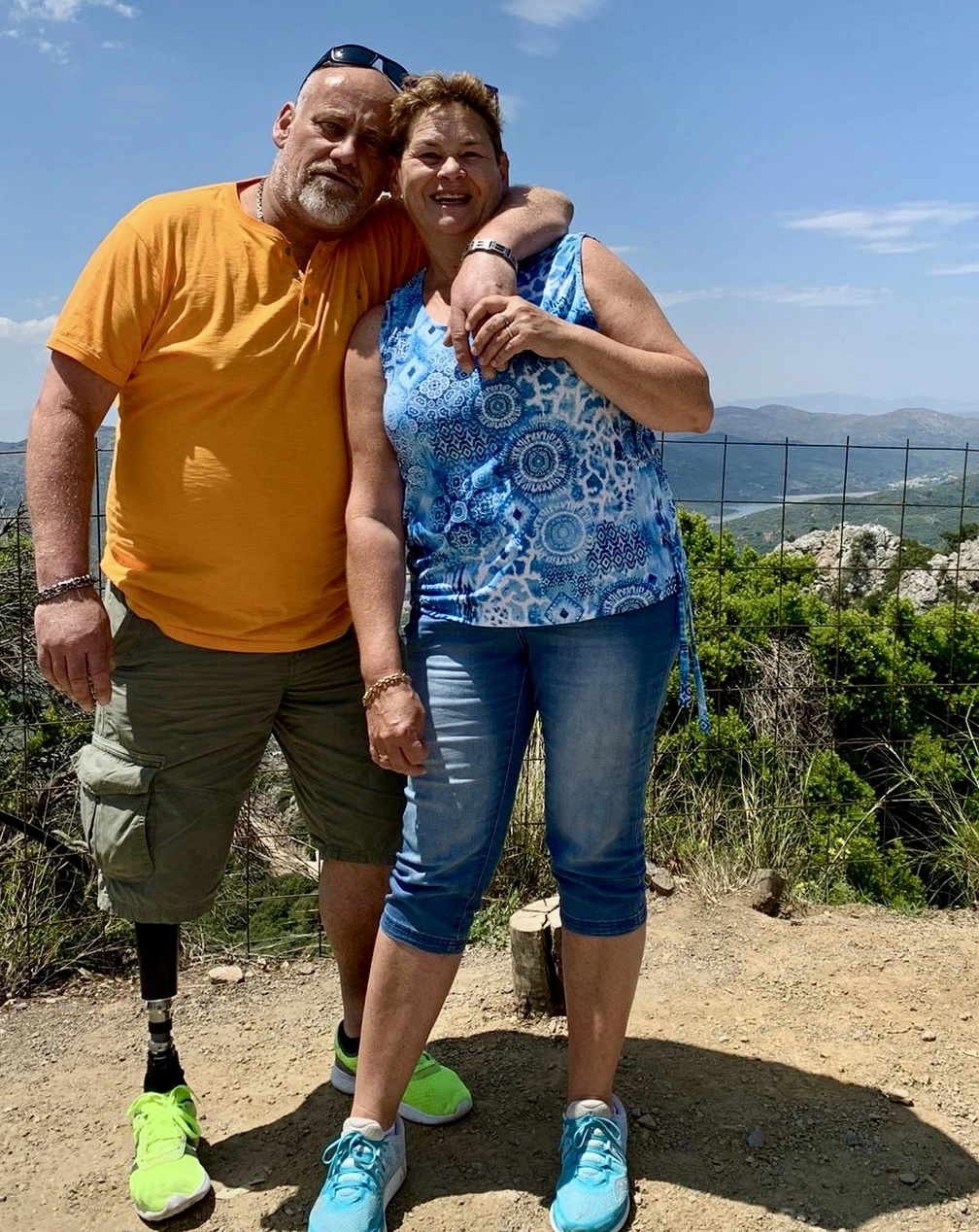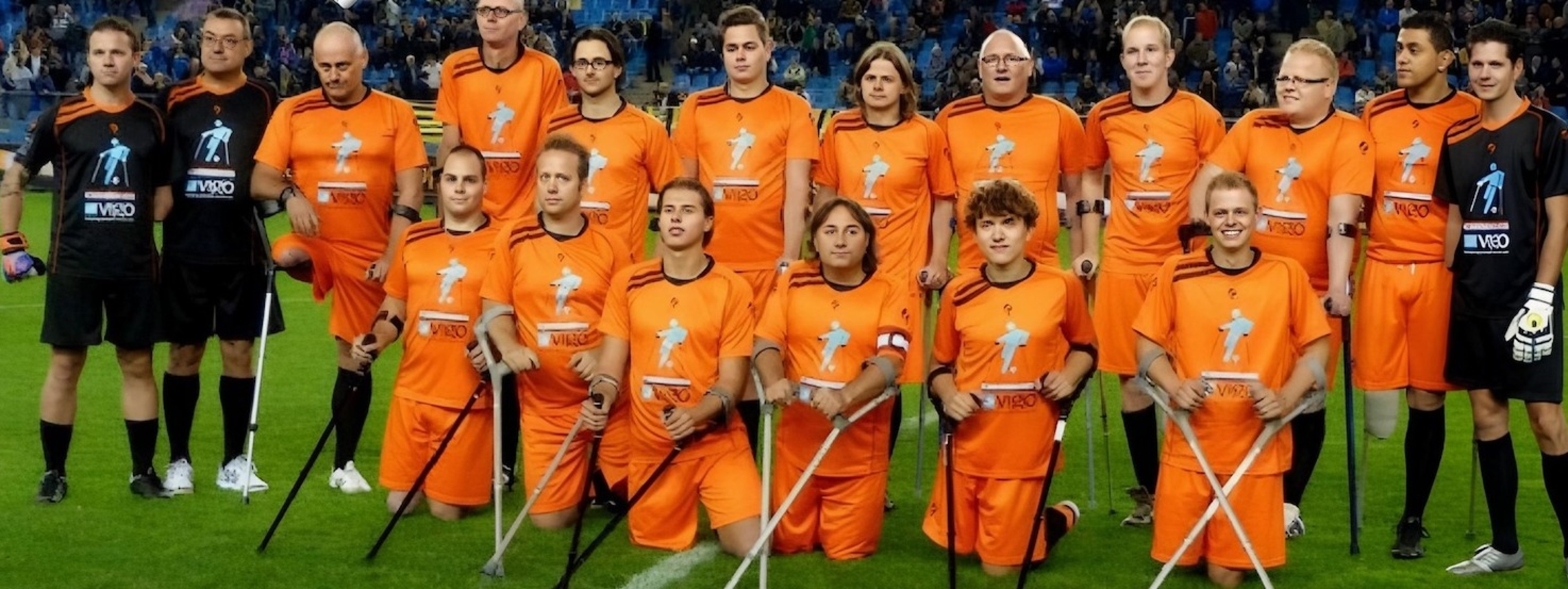
Back on the pitch eight months after amputation
“Here, it felt like home.”
During an indoor football match in 1988, Tiny injured his right knee. At the time, the surgeon believed it was just a ligament strain and sent him home with a compression bandage. Not long after, during a diagnostic procedure, it became clear that something more serious was going on — his anterior cruciate ligament had torn, and his first operation followed in 1989.
“From that first operation in 1989, I ended up back in hospital at least once every year,” Tiny says. And the years that followed became a cycle of ongoing treatment. In 1996, after another operation, he developed a high fever and was diagnosed with MRSA, a hospital-acquired infection. “At my request, I was transferred to the Maastricht University Medical Centre, as they specialise in bone infections. That’s where they decided to carry out an arthrodesis — essentially a joint fusion procedure to fix the knee in place.”
Although the procedure stabilised his knee, it also meant living with a permanently stiff leg. Over time, this began to cause increasing problems, placing more and more strain on his body and gradually affecting his overall mobility. From around 2006, this started to take a real toll, with the strain increasing significantly and leading to further complications.
Reflecting on that period, Tiny explains, “The orthopaedic specialist told me that if nothing changed in my walking pattern, I would likely end up in a wheelchair within one or two years. I said straight away — I absolutely didn’t want that. I want to stay independent and keep doing things for myself for as long as possible.”
With that in mind, there was only one option left: amputation of his right leg. “With the right rehabilitation and a prosthesis, I would be able to learn a better walking pattern again. That would also stop the rapid wear on my spine,” Tiny explains.
“I made the decision to amputate, and I’ve never struggled with it. I’m not ashamed of anything. The amputation and my prosthesis mean that I can still do so much and stay independent for as long as possible.”
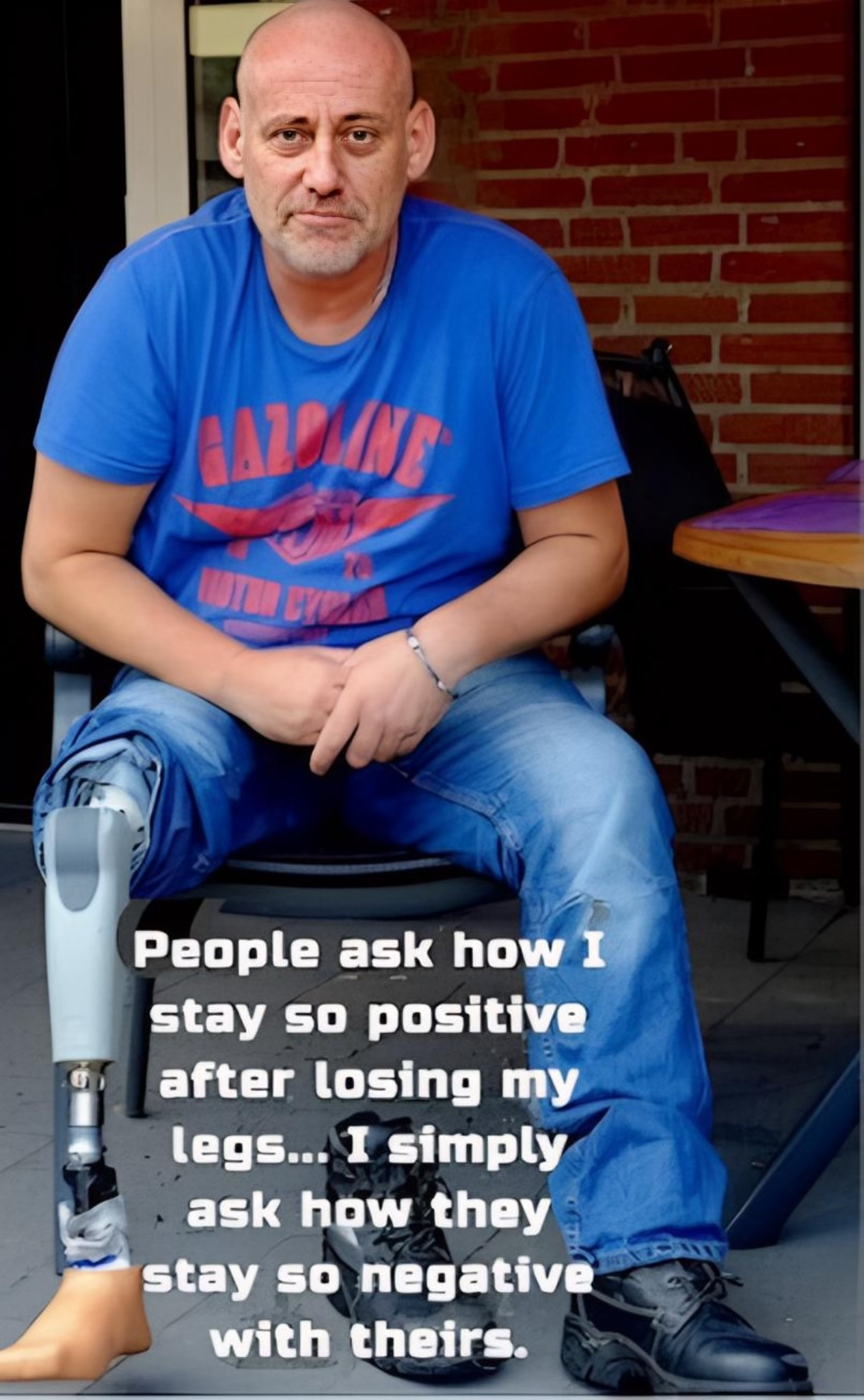
Two weeks after his amputation, Tiny started his rehabilitation at De Hoogstraat Rehabilitation in Utrecht. “I had a really good feeling straight away. It felt like home, and on my very first day, I met everyone on my treatment team,” he says. That early sense of trust stayed with him, and what stood out most was how well the team communicated.
“My physiotherapist already knew what I had discussed with the occupational therapist. Information was constantly being shared. Even the rehabilitation doctor came in and knew exactly what had been talked about, without even opening my file — that felt really reassuring.”
As his rehabilitation progressed, there were moments that stayed with him. “The first time I saw my prosthesis was actually one evening after dinner. I walked past the workshop and saw my right shoe — the one I had handed in — sitting on a table, with my prosthesis attached to it.” The next day, he tried it for the first time.
“I was happy it had finally arrived, but at the same time, I felt incredibly unsure and a bit afraid of falling. It felt like my very first driving lesson; I was that nervous. I was allowed to take the prosthesis back to my room, and I spent the rest of the day practising and getting used to the weight.”
And then, step by step, things began to open up again. Within eight months of his amputation, Tiny was playing for the Dutch amputee football team. “I had assumed that after my amputation I wouldn’t be able to play football again, and I had already started to accept that. Then I saw an advert from KorterMaarKrachtig calling for amputees to come and play in a newly forming Dutch football team.” He signed up, and soon a group of enthusiastic players from all over the country came together.
That same positive mindset now drives him to support others. He shares the story of a girl from his neighbourhood who had also undergone an amputation, but had a very difficult experience with rehabilitation and her prosthesis. She stopped wearing it, lost confidence, and eventually struggled to even get out of bed.
“I started visiting her regularly, helped her to come out of that situation, and worked with her on rebuilding her self-image,” Tiny says. She later joined De Hoogstraat Rehabilitation, where she received the right support, and her confidence began to grow again.
“It’s so important that we can share our experiences and support each other,” Tiny says.
If you’d like to connect with Tiny — aka Movao member Martin v Beurden — do feel free to reach out and say hello.