Sepsis & amputation: Embracing self-acceptance and discovering Padel
Published on February 23, 2026
Day-to-day life as a disabled person is hard. That’s something Sheena Varsani says openly and honestly — and it’s a truth so many of us, myself included, can relate to. We show up smiling online, doing amazing things, but the everyday reality still carries weight. As Sheena puts it, “We try to put on a show and do as much as we can, but our day-to-day is very difficult as a disabled person.”
In this deeply moving Movao LIVE conversation, Sheena shares what her journey of sepsis and amputation really looked like — the trauma, the rebuilding, finding peace and self-acceptance, the joy, and finally, finding freedom and her love of sport again.
Continue reading this interview recap with Sheena, or check out the full, unedited video below on YouTube for even more heartfelt moments!
Sheena was just 21 when her life changed forever. Out with friends, she suddenly felt unwell and headed straight home to bed. At the time, Sheena lived with her mother, who, coincidentally, had flown to India that very day. The following morning, family and friends grew worried, calling and knocking to check in. After locating a spare key, they discovered Sheena was extremely unwell and rushed her to a walk-in medical clinic.
Sheena later explains: “The doctor who saw me didn’t take the basic vitals — he hadn’t taken my temperature or blood pressure — and I felt sick in front of him. Had he done that, he would have seen that for a healthy 21-year-old, those vitals were abnormal.”
Sheena was sent home, but her condition rapidly deteriorated. This part of her story is something she has no recollection of; she was delirious. Her sister called an ambulance, and upon arrival at the hospital, Sheena was diagnosed with toxic shock syndrome, severe sepsis, and admitted straight into intensive care.
While she lay unconscious in an induced coma, her family endured the hardest days of their lives, facing agonising decisions — something Sheena remains deeply grateful for. “I can’t imagine being in that situation and having to make all the decisions for someone else, but they did — and I wouldn’t be here without them. I am forever grateful.”
What many people don’t realise is that both of Sheena’s legs became infected. One, thankfully, recovered. The other didn’t. When Sheena woke up, her left leg had been amputated above the knee.
Waking up wasn’t the dramatic moment people often imagine. “It was very surreal. A bit of a blur as well. Everyone thinks you wake up, look down and burst into tears — but it wasn’t like that,” Sheena explains.
“I just remember everyone’s smiles after being unconscious for two weeks — the doctors, the nurses, my family, the physios — they were all there by my bedside, and they had to tell me what had happened.”
As she slowly registered what had happened, her body hadn’t yet caught up with her mind. “My nerves were still so active that I could still feel my leg there. I didn’t even register that what they were telling me was true. I honestly thought I was dreaming.”
It wasn’t until she was moved from intensive care to the ward — when the medication wore off, the pain kicked in, the catheter was removed, and she had to go to the bathroom for the very first time — that reality finally set in. “That’s when the reality really hit,” she says. “That’s when the sadness, the tears, and the emotions really, really came alive.”
During those first months, her family and friends became her anchors, making a huge difference in her recovery. She explains that she was being spoon-fed and was truly at her lowest point. But alongside her loved ones, her rehabilitation team played a huge role in her healing. Instead of worrying about a distant future full of unanswered “what ifs”, they taught her to focus on the small, daily wins.
“They really reined me in. When I was worrying about prosthetics and everything ahead, they told me to stop thinking so far forward and just focus on the small improvements every day — and to celebrate the little victories. Every day, I got stronger, and when I joined the hospital gym, I could really see the progress I was making. That helped me more than anything.”
We continued to talk about our shared experiences of growing up as young female amputees in a world without social media, with few role models and little disability representation — and how deeply isolating that felt.
Sheena shares, “There was no visible community back then and no easy way to find people who understood. I did feel very isolated as a young woman trying to grow into adulthood and adjust to a completely new reality — so I had to figure things out on my own.”
One of the things that made a real difference during that time was the shared prosthetic fitting waiting rooms pre-COVID. Women would talk, laugh, vent, and support one another — that small sense of connection mattered. Now, post-COVID, with everyone in separate rooms, Sheena reflects on how much harder it must feel for new amputees trying to find support and connection in those early days.
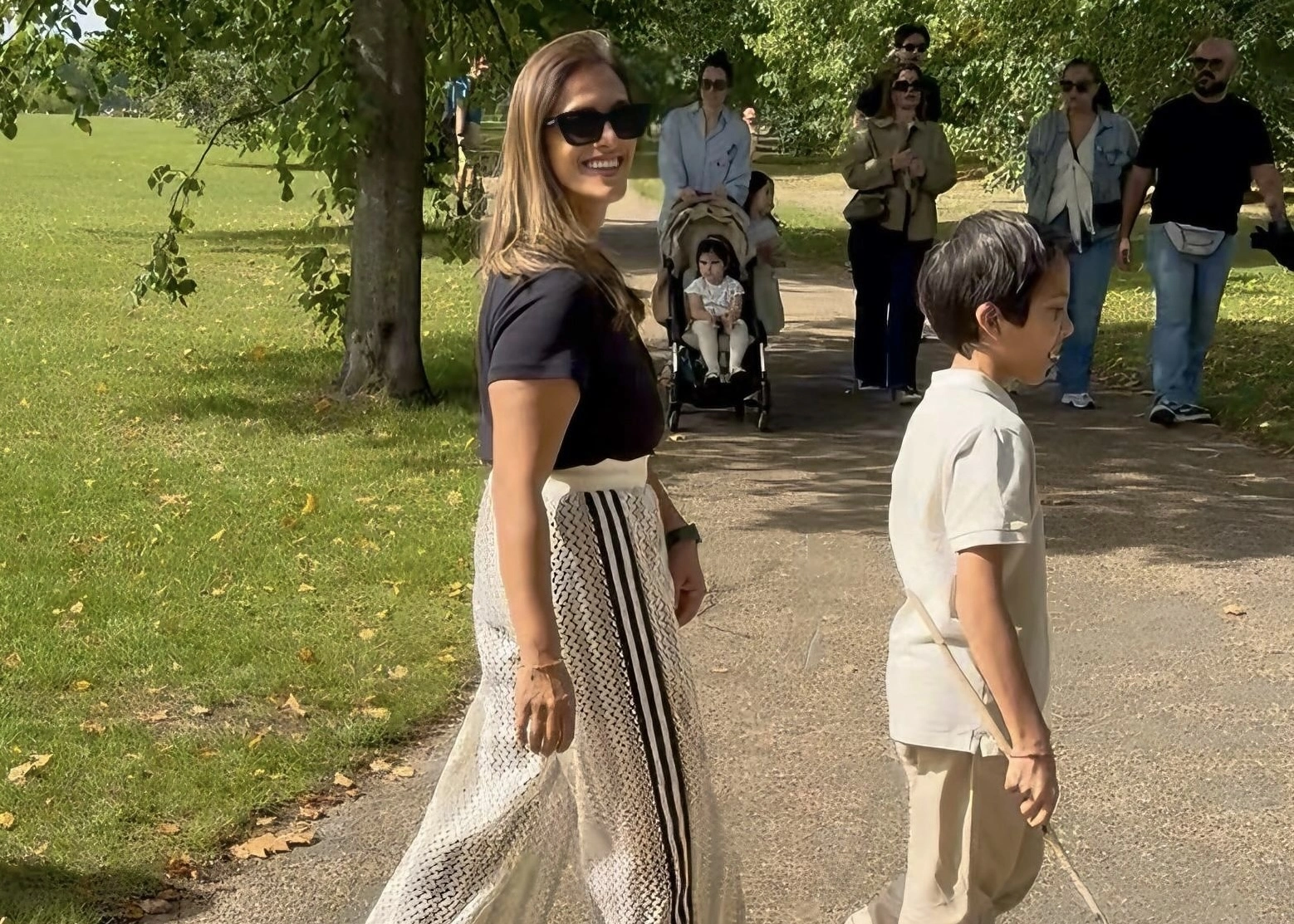
Years later, Sheena became a mum to her son, Archie — something she had always dreamed of, but also held worries about, especially around the physical changes and the reality of carrying a baby as an amputee.
“I realised very quickly my husband wasn’t going to be the person who could support me with my worries,” she laughs. “He just said, ‘What’s the problem? We’ve got this.’ He didn’t meet me as a vulnerable new amputee — he met me as this fierce, confident woman. So, he thought I could handle everything, but I still had all these questions he couldn’t answer.”
Pregnancy brought new worries about socket fit, balance, and safety, as she was using a mechanical knee at the time. Through the incredible support of her prosthetist, Sheena was connected with other amputee mums who shared invaluable advice and reassurance. “I had an appointment with other mums and was able to ask any questions about their pregnancies and births. It gave me huge comfort and so much peace of mind.”
Community once again made a difference, and asking for help transformed everything.
Sport slowly returned to Sheena’s life. As a young person before amputation, she had loved being active — but after losing her leg, the sports she once loved no longer felt the same. So, she tried completely new ones: skiing, golf — sports she had never imagined herself doing. It was a challenging time, especially given the limited adaptive sports communities, but it ultimately led her to discover adaptive skiing.
“Learning to ski with Disability Snowsports completely changed my life,” she says. “Going on their adaptive ski holidays opened a whole new world of freedom and exhilaration — being in the mountains with like-minded people was like nothing else. It was completely empowering.”
Racing down mountains on one ski and outriggers gave her something powerful back: her love of sport.
But it was padel that truly lit the fire.
Sheena and I first met at the LimbPower Games — a lunch-queue conversation where I tried to recruit her for amputee football. But I quickly discovered she had an instant passion for para-standing tennis. I had just learned about the Inclusive Padel Tour through Alessandro Osola, and as soon as I mentioned it to her, her eyes lit up — I knew instantly this was her sport.
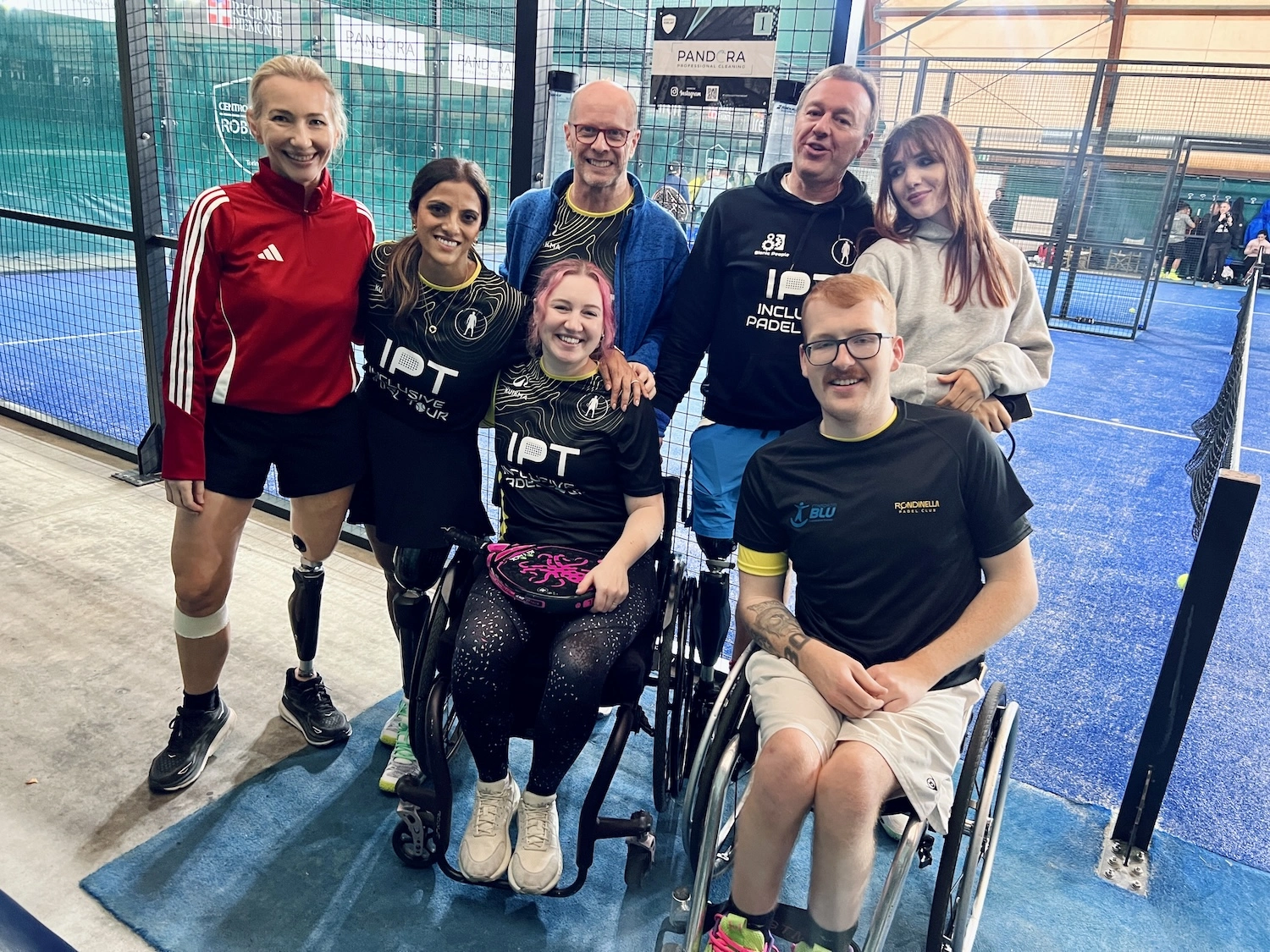
Padel, Sheena explains, is fast, social, and beautifully inclusive for all ages, abilities, and disabilities.
“Padel is extremely social — it’s fast-thinking and fun. All mobility levels can participate; you don’t have to be super pro or super fit to pick up a racket and play. You’re never alone on court, you play in doubles, and the enclosed court keeps the ball in play. It’s super inclusive, where disabled and non-disabled players can play together — everyone belongs. It’s about confidence and community, not competition. It’s a whole lot of fun, and I’m really proud to be part of this movement.”
Through the Inclusive Padel Tour, Sheena found far more than a new sport. She found her tribe.
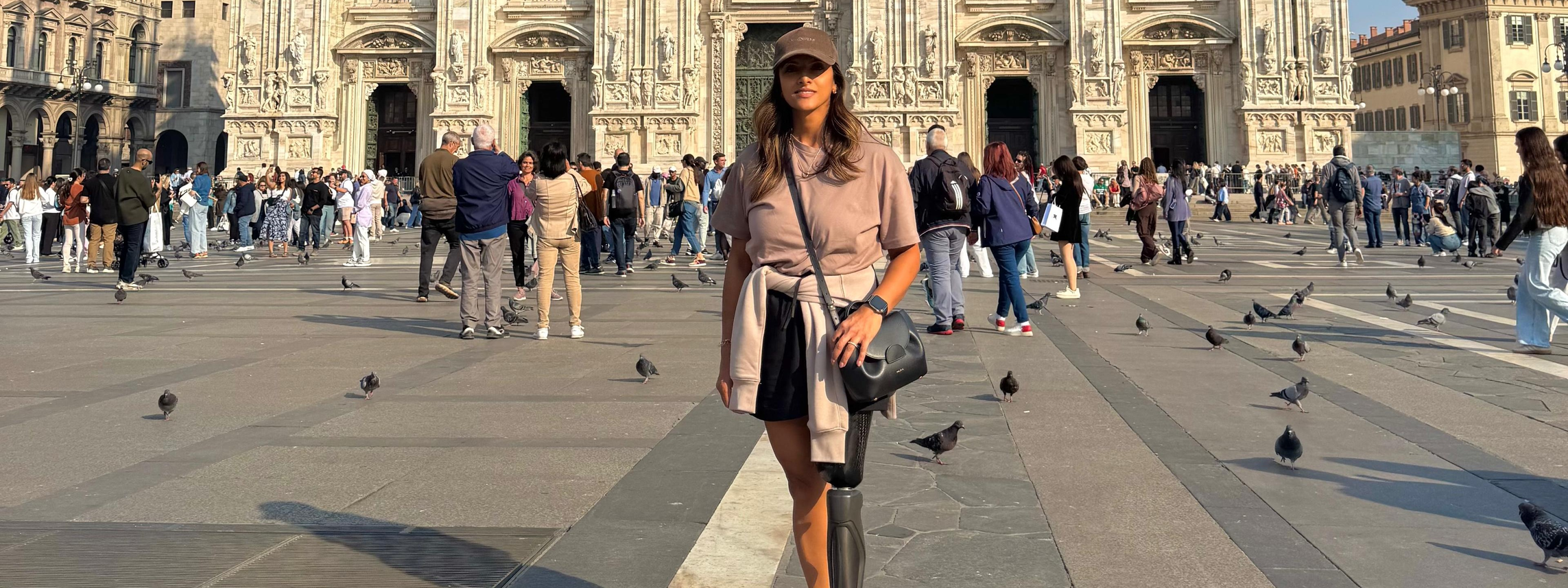
One of the most powerful moments in our conversation came when Sheena spoke about “coming out loud and proud” as an amputee. For years, she covered her prosthesis. Blended in and stood back in the crowd.
“Because I always had my prosthesis covered, I could mix into society, and no one really knew I was an amputee,” she says. “Even at work, no one really knew — I just blended in. But I later realised that this brought its own difficulties, because no one could see your struggles or how hard things really were.”
She explains how the exhaustion of navigating busy cities as an amputee — and the mental load of always managing this invisibly — eventually took its toll.
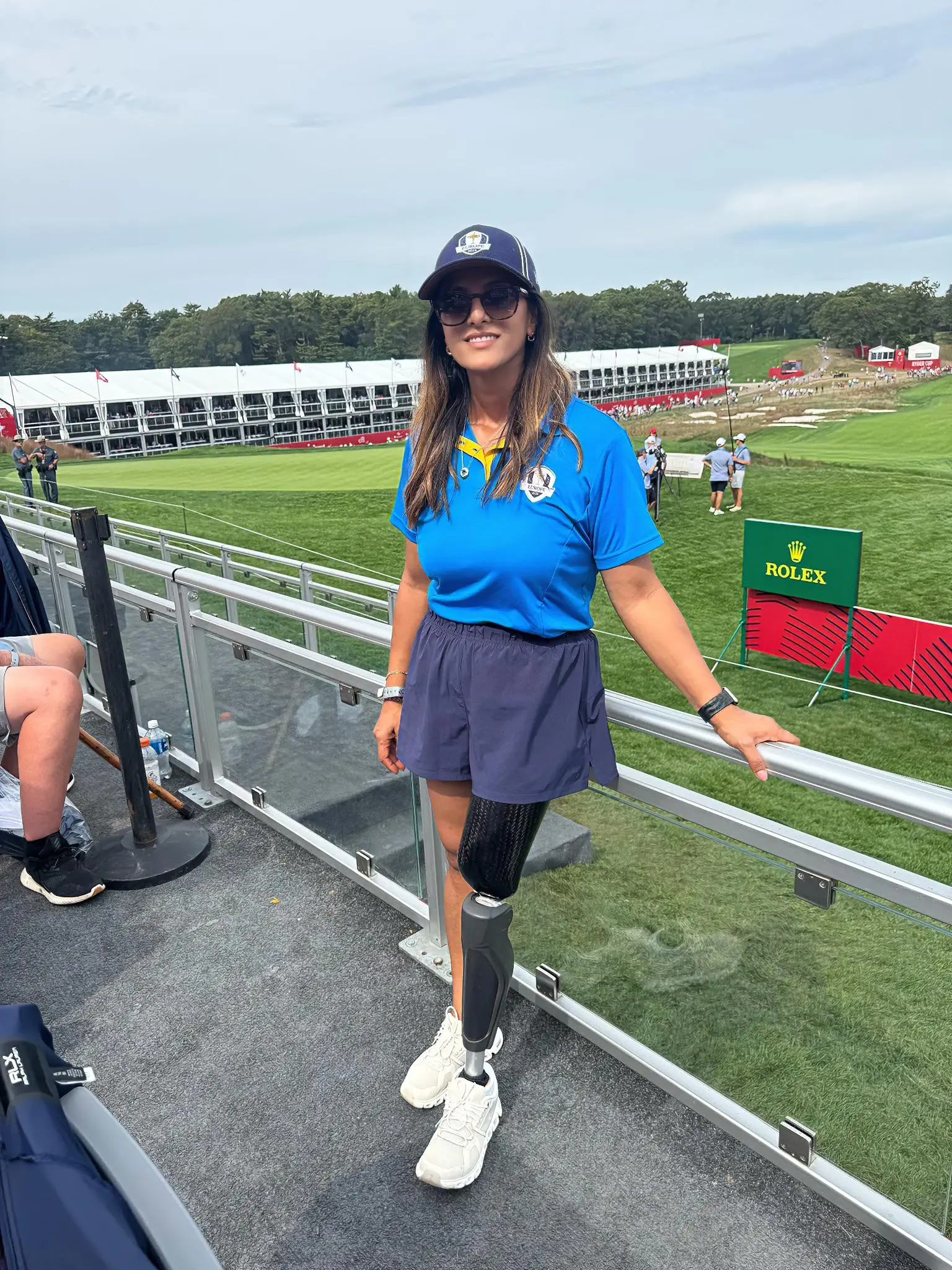
“When I finally got my C-Leg, I didn’t want a cover on it. It gave me this mental freedom and opened my eyes to so many more opportunities and what I could do. That’s when I started playing more sports, went on holiday, and wore shorts for the first time in 16 or 17 years. And it was just… liberating.”
She stopped worrying about people staring. She stopped hiding. And she felt free.
Looking back, the advice she would give her younger self is simple, but deeply moving: “Firstly, be kinder to yourself. Stop the comparisons. Stop the ‘what ifs’ and the societal pressures and the fears of not being good enough in any social situation — with your job or with your partner. I was good enough; I just let that anxiety build up.”
“Also, it is okay to ask for help. Let people in. Strength isn’t about doing everything alone — it’s about allowing other people to support you as you grow.”
Most of all, if anyone takes anything from this conversation, it is this: recovery as an amputee isn’t just physical. As the conversation closed, Sheena emphasised that our disability is so visible and focused on the body, but our mind goes through trauma too.
“I never gave myself the time to process what had happened. I suppressed it — and it caught up with me later as post-traumatic stress.”
So, take your mental well-being just as seriously as your physical recovery.
Because healing isn’t just about learning to walk again.
It’s about living again.
And I can certainly vouch for the fact that true freedom means not hiding anymore and being your true self — whether it’s found in community, sport, family, or in finally embracing self-acceptance 💛